Christoph von Dohnányi – A Totally Underrated Conductor

Christoph von Dohnányi

Why are conductors get so much more well known that others? The classical music industry has it’s own mechanisms of getting attention. I’m not sure I’ve fully understood them yet.

In any case, let me take a recent release by German conductor Christoph von Dohnányi as trigger to write about this conductor I really like a lot, but probably isn’t as famous as he could (or should?) be?

Von Dohnányi, born in Berlin in 1929, started his training as… a lawyer. Yes, he went to law school in Munich before deciding that music was more his thing. Well to be fair, he had some family history, his father Ernst (Ernö) von Dohnányi  was a pianist and composer.

You could assume that  Dohnányi’s talent was rather quickly recognized, given that in his early years he worked with giants like Leonard Bernstein and Georg Solti.

Later on, he became conductor of major orchestras like the Cleveland Orchestra, that Georges Szell had really turned into a world class ensemble, and the Philharmonia orchestra, of Karajan and Klemperer fame.

He also worked with many other leading orchestras, be it in Boston, New York, Paris, or Vienna.

His recording of the Mendelssohn symphonies with the Vienna Philharmonic are still among my absolute favorite versions, especially for no. 3 and 4.

Nevertheless, I as said initially, I don’t see his name pop up as often as you think as one of the great conductors of our time.

Schubert’s Symphonies

I’ve said it before, I’m not a big fan of Schubert’s symphonies in general. OK, there is the beautiful Unfinished, but anything before that to me is only of passing interest. On the other hand, Schubert obviously was an absolute genius for chamber music (e.g. here, and here), piano music (see this review), or the Lied. Unfortunately, he passed away way too early. You can only wonder what Schubert’s music would have been had he reached the age of Beethoven or Brahms.

I also have somehow a difficult connection to his so called Great Symphony, or no. 9 in C-major.

Side note: Actually C-major is a really boring key. It’s the one you play on a piano if you just leave out all the black keys. By musicologists and composers it is often described as noble and majestic. I personally like minor key quite a bit more. But let’s close the parenthesis here.

What really annoys me (well that’s a strong word) about Schubert’s symphony no. 9 is what Robert Schumann called the Himmlische Längen (heavenly length) of this work, there are just some repetitions too many for me.

But that minor annoyance set apart, it is still a beautiful piece of music.

Especially when it get’s played by a conductor I really like…..

Schubert: Symphony No. 9 – Live in Concert – Christoph von Dohnányi – Philharmonia Orchestra (Signum Classics 2016)


Schubert: Symphony No. 9 Live In Concert Christoph von Dohnanyi Philharmonia Orchestra Signum Classics

Another parenthesis here: what do you plan to do when you’re about to turn 87 years old? Still working? Probably not.

Well, not so for our hero of the story here, who recorded this beautiful album at the age of 86, in a live performance.

What do I like about this recording?

Well, in a nutshell it has just the right balance of gravitas and lightness that this work needs. You have the big sound of a major orchestra, but there is never anything static about it, always positive tension, and most of all, a lot of fun and joyfulness.

I suggest you read this insightful interview with the conductor about this particular recording here on Prestoclassical.

My rating: 4 stars

You can find it here (Qobuz), and here (Signum Records)


Recommended: Julia Hülsmann Trio – Imprint

The Jazz Piano Trio

I’ve said it before, we really do live in the Golden Age of the Jazz Piano trio (actually, I’ve even started a discussion thread on this prior to starting this blog, see here (http://www.computeraudiophile.com/f15-music-general/are-we-living-golden-age-jazz-piano-trio-18603/)

Women in Jazz?

Are we living in the Golden Age for female Jazz musicians? Probably not yet. Traditionally, in Jazz women were pretty much set to the role of singer. If they could play the piano, even better (e.g. Nina Simone, Diana Krall, or more recently Sarah McKenzie), all fine, but go find a female instrumentalist, and you’ll have a much harder time. Carla Bley, Hiromi, Maria Schneider, and that’s were my list (from memory) ends.

Hold on, there is one more (actually 2-3 more, watch this space for future articles):

Julia Hülsmann

Julia Hülsmann, German, is one of these exceptions (and actually, has studies with Maria Schneider in the past).

Her regular trio is featuring two other excellent musicians, Mark Muellbauer on bass and Heinrich Köbberling on drums.

I discovered her during the release concert of her album Imprint at Moods in Zurich, back in 2011, and this album to this day remains my favorite one of her.

Since then I’ve also seen her play live with Theo Bleckmann music from her latest release of Kurt Weill music (to be reviewed another time) at Nochtspeicher in Hamburg.

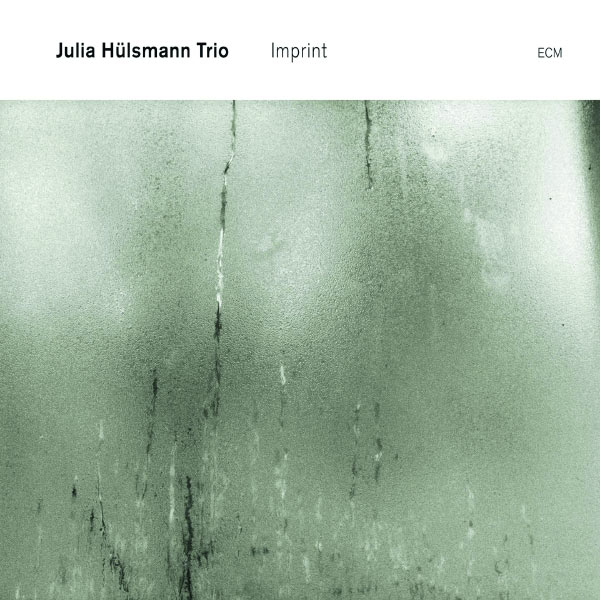
Julia Hülsmann Trio: Imprint (ECM 2011)

Julia Hülsmann Trio Imprint ECM 2011

Imprint is her second album on ECM after the equally exciting The End Of Summer. 

My favorite tracks are Grand Canyon, with a great rhythmic drive,  Zahlen bitte, which starts with a great drum solo by Köbberling, and Ulmenwall. The album is typical ECM house style, very lyrical, and very well recorded.

My rating: 4 stars

You can find it here (Qobuz), and here (HDtracks)

Argerich vs. Angelich – Liszt’s B-Minor Sonata

Gramophone

The new July issue of Gramophone appeared rather early on my iPad (I’m not into paper subscriptions any more).

As usual, impatient that I am, I jump immediately to the Editor’s Choices, starting with the Recording of the Month. This time, Nicolas Angelich recent Dedication Liszt/Schumann/Chopin album. Cool, I think to myself, another great recording to check out of Liszt’s b-minor sonata.

Liszt’s b-minor sonata

I’m not a huge fan of Liszt in general (too much, especially his orchestral works). But there are certain works I really like, including most of all his great b-minor sonata.

My favorite version by the way is Michael Pletnev’s recording on DG by the way (maybe to be reviewed at some point in the future).

In any case, I must admit, I didn’t really even get to listen to the entire Angelich album, I stopped about 5 minutes into the b-minor sonata. I was really stunned. Liszt was supposed to be the greatest virtuoso of his time, and this version, well, let’s just say, it didn’t touch me at all.

To be fair, my taste may not be universal, as I really liked Katia Buniatishvili’s recording on Sony, which was anything if not controversial, to say the least (some just hated it, stating is was too much…).

But again, this post won’t be about Angelich (which I have yet to properly listen to beyond my 5 minute trial) nor about Pletnev or Buniatishvili, but about one of the greatest pianists  of all times:

Martha Argerich

Yes, the fiery Argentine pianist. She has a very particular sound and style (in a blind test on Swiss radio, two experts blindly identified her vs another artist on 5 out of 5 different pieces, and even I got 3 out of 5), and once you’ve heard her, you’ll never forget her.

So I recently found myself buying her legendary debut album, remastered and released as a 24/96 download (I had bought in on CD ages ago, but hadn’t listened to it regularly enough).

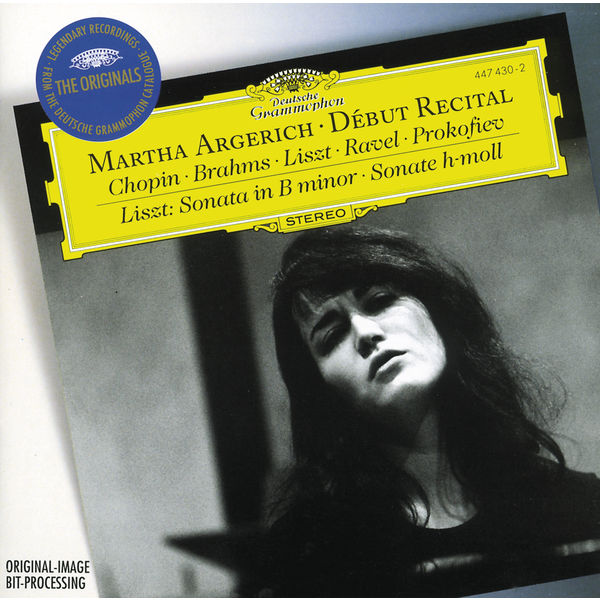
Martha Argerich: Debut Recital (DG)

Martha Argerich Debut Recital Deutsche Gramophon 24 96

Wow.

Somehow, the Chopin competition really means something. Look at the winners, Pollini, Blechacz (see here), Yundi, and Argerich! (well, this year seems to be a bit of an outlier, see my comment here). Basically she was a pure genius from day one.

Her Chopin barcarolle, so beautiful. And the Scherzo no. 3, my favorite! Her Brahms is ok, not outstanding, but when we get to Liszt, all hell breaks loose! Already the Hungarian Rhapsody is full of fire and energy, her trademark, but go to b-minor, and check out every savory moment, from the quiet introvert moments to the amazing prestissimo (track 17).

If this leaves you bored, you’re probably deaf.

And now go back to your streaming provider of choice and check out the Angelich against it, and I guess you’ll understand what I mean.

My rating: 5 stars plus!

You can find it here (Qobuz) and here (Prostudiomasters)

Note that getting the 24/96 remaster is not necessarily a must, unfortunately the original recording was already rather poor, and even the remaster still sounds rather like a shoe box.


UPDATE June 11: Another word about the Angelich recording that I browsed over a little bit superficially above.

The Angelich album not only got high praises from Gramophone as mentioned above, but also a Choc from Classica magazine, and this recording of the b-minor sonata was just selected in their June 2017 issue as best version in a blind test comparing 10 recordings out of the ones released in the last 20 years.

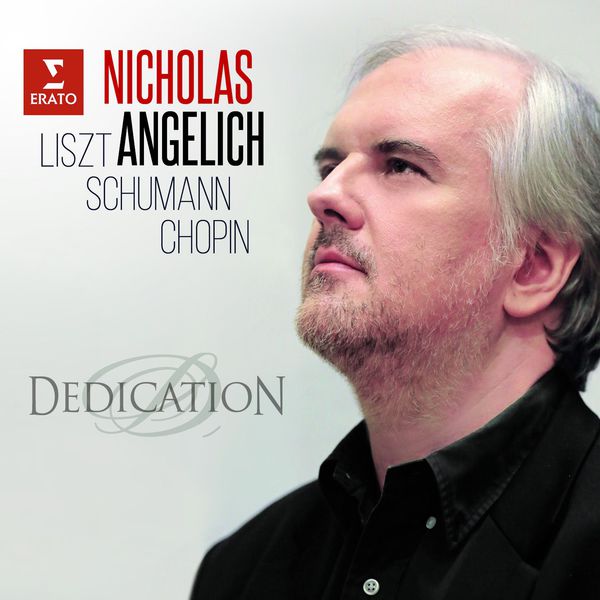
Nicholas Angelich Liszt Schumann Chopin Dedication Erato 2017

Triggered by this I listened again to Angelich. Well, to be fair, it is a good recording. However, I still prefer much more the more extreme versions like Argerich, Bunatishvili, etc. For me, this extreme work requires extreme playing. I find the Angelich a bit too “middle of the road”. But given that several reviewers I really respect disagree with me, you have to check it out.

Recommended: Ted Rosenthal Trio – My Funny Valentine – A Review

This album was flagged to me some time ago by fellow music lover Melvin, and I must admit it is really nice.

I’ve been collecting piano trio albums for quite a while now, and this was a great new discovery for me.

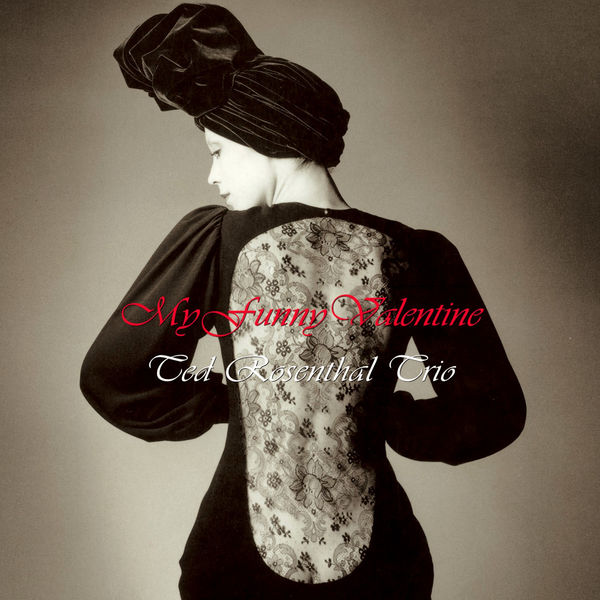
Ted Rosenthal Trio: My Funny Valentine (Venus 2008)

Ted Rosenthal Trio My Funny Valentine 2008

NYC based Ted Rosenthal plays here with George Mraz and Al Foster.

This album reminds me a lot of Oscar Peterson, and actually, George Mraz at some point has played with Oscar.

This album is all about relaxed swing, some may think it is a bit too “straight”, but if you like this kind of style (e.g. Oscar Peterson’s Night Train) you should really give it a go.

Beyond Mraz, Al Foster really is the driving force behind this album. This drum legend, who has played with all of the great Jazz names from (Miles Davis, Herbie Hancock, Joe Henderson, Wayne Shorter, etc. etc., it’s nearly easier to list who he hasn’t played with).

Already the starting track is really nice: You’d Be So Nice To Come Home To, a standard I have on more than 10 albums, including Keith Jarrett (it’s on At The Blue Note), this could easily become one of my favorite versions.

Another highlight follows: the title track, My Funny Valentine, a beautiful ballad of nearly 7 minutes.

And you’ll find another great classic near the end of the album: Summertime, in a truly enjoyable version.

Recommended!

My rating: 4 stars

You can find it here (Qobuz, as 16/44 download) and here (Acoustic Sounds, the original SACD)

#GERUKR differently: Brahms Piano Concerto no. 2 with Gilels (UKR) and Jochum (GER)

No, this is blog is not suddenly turning into a sports blog.

To explain the title hashtag to my non-EU readers: we currently have the Football Euro Cup 2016  going on in France (the real football, not the one where guys in funny plastic armor carry an egg around and jump at each other), and Germany just won against the Ukraine 2:0.

Emil Gilels

Let me instead write about my favorite Ukrainian of all times (and no, it’s not Vladimir Klitschko, and this is still not a sports blog): Emil Gilels. Born in Odessa, which seems to be a hotbed for great musicians, he is probably one of the best Brahms players I’ve ever heard.

Brahms Piano Concertos

More than one year into the life of this blog dedicated to Brahms in the subtitle, and I still haven’t written about the piano concertos yet. There are several reasons. a) there are among my absolute favorite pieces of music ever. b) there are just so many outstanding versions out there, I’m still not sure which one really is my favorite.

Especially for his 2nd piano concerto, which could also be called symphony with piano (as unlike the typical romantic piano concerto of the time, piano and orchestra are very interwoven), the Golden Age for the recordings were the 1950s and 60s. You can pretty much buy all versions the great Georges Szell has ever recorded (Fleischer, Curzon, Serkin), take the absolutely brilliant recoding by Serkin with Erich Leinsdorf on RCA, etc. etc. etc.

And then there is Gilels. So far, my favorite Gilels version always was the great version with Fritz Reiner and the Chicago Symphony, again on RCA. His later recording on Deutsche Grammophon I bought later on CD, but listened to it much less.

Today, I ended up buying the new remaster of this recording, which features both concertos and the Fantasias op. 116.

Brahms Piano Concertos – Emil Gilels – Eugen Bochum – Berliner Philharmonic (DG 1972/2015)

Brahms: The Piano Concertos Emil Gilels Eugen Bochum Berliner Philharmoniker 24/96 DG 1972 2015

Gilels plays here with Eugen Jochum, a German conductor I mainly associated with his great Brucker cycles (both his EMI and DG cycles are excellent). And in a way this is fitting.

Especially in the slower parts, Brahms sounds a bit like Bruckner (which Brahms would probably have taken as an insult, he didn’t have a very high opinion of Bruckner). There are quite a low of slow moments. But slow with so much tension.

The 2nd concerto is in any case the much more mature (written in his 40s) piano concerto compared to the energy of the first concerto written in Brahms’ early 20s. So the slowness actually adds something. And Gilels manages to align perfectly with Jochum and the excellent BPO. There are so many more nuances in this recording that I’ve never heard in any other version.

Will this become my preferred version ever of no. 2? Honestly, I don’t know. In any case it is one of the absolute best out there, and it will always stay close to my heart.

I won’t comment today on concerto no. 1, which is equally contained on this release. Suffice it to say it is very good, but I’ll write more about it in a later post.

My rating: 5 stars

You can find it here (Qobuz), discounted at the time of writing this, and here (Prostudiomasters)

Schumann’s Cello Concerto by Jean-Guihen Queyras – A Review

A Trilogy

This is now the third and presumably album of an exciting series by three outstanding musicians.

The German violinist Isabelle Faust (yes, I’m a big fan, see here or here), the Russian pianist Alexander Melnikov, and the French cellist Jean-Guihen Queyras are all great musicians individually, but get even better when they play together.

An excellent example is their recording of some Beethoven Trios on Harmonia Mundi some years ago, and Faust’s and Melnikov’s collaboration on Beethoven’s and Brahms’ violin sonatas are among my absolute favorites (the latter made it as part of my top 5 classical albums in 2015).

In this particular project, the three have decided to attack Schumann, and to couple one of his 3 piano trios with one of his orchestral solo works, playing with the Freiburger Barockorchester under Pablo Heras-Casado, on Harmonia Mundi.

Faust started, coupling his piano trio with his relatively unknown violin concerto back in early 2015. I really like this album.

Some month later Melnikov got his chance to play the famous piano concerto (see my 4 star review here) with piano trio no. 2.

So here we are at release no. 3, focusing obviously on the Cello concerto, and the remaining trio no. 1.

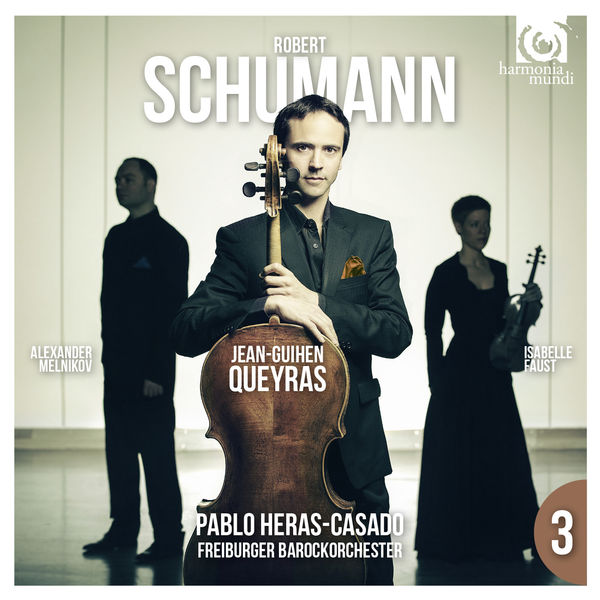
Schumann: Cello Concerto and Piano Trio No. 1 – Jean Guihen Queyras – Pablo Heras-Casado – Freiburger Barockorchester (Harmonia Mundi 2016)

Schumann: Cello Concerto / Piano Trio No. 1 Jean-Guihen Queyras Alexander Melnikov Isabelle Faust Pablo Heras-Casado Freiburger Barockorchester 2016 Harmonia Mundi

I expected quite a lot from this album, given that I really liked the two predecessors. However, on the Cello concerto I’m not exactly getting what I expected.

Schumann to me is one of the highest points of romanticism. I really like the energy, passion, and drama in his orchestral works. However, both Queyras and Heras-Casado chose a more subdued approach here, and I unfortunately constantly feel I’m missing something.

To explain what I mean, let me refer to my two personal reference versions for this concerto, by the legendary Jacqueline du Pré (playing with Daniel Barenboim), and even more, Janos Starker with Antal Dorati and the London Symphony. Do you hear the passion,  the power?

Here is a Youtube example of du Pré:

Maybe I just need to listen to the Queyras version more to get used to it, but so far it just doesn’t pull me in enough.

Obviously, we are talking about an excellent soloist (I really like his Bach Cello Suites for example) with a great orchestra, so fundamentally this remains a good recording, it is just not my cup of tea.

However, going back to the chamber music, all is well. These three trios, spread over 3 albums, will remain my reference version of these works for a foreseeable future.

My rating: 4 stars, averaging 3 stars for the Cello Concerto and 5 stars for the trio.

You can find it here (Qobuz) or here (Prostudiomasters)

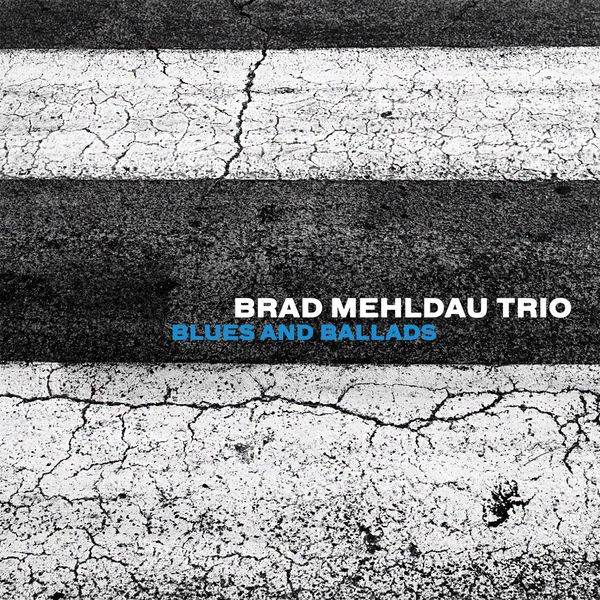
Brad Mehldau Trio: Blues and Ballads – A Review

Brad Mehldau

I have an ambiguous relationship to Brad Mehldau’s music. On the one hand, I’ve featured him both in my 25 Essential Jazz albums, and My Top 10 Jazz Covers of Pop Songs, which means there is stuff he’s done I really love and would rate 5 star.

I also liked his recent 10 Years Solo Live album which I have yet to review, and had a ticket for one of his recent solo concerts (which unfortunately I couldn’t attend as a gastric flu had knocked me out).

On the other hand, there are albums I just loathe, and give them a solid two stars (really not my cup of tea), e.g. Largo.

Nevertheless, I’ve been following him quite closely, you just never know what you get next.

Blues and Ballads (Nonesuch 2016)

So obviously, the moment the new trio album came out (just some days ago), I started streaming it.

So, are we in two or five star territory here?

Brad Mehldau Trio Blues and Ballads 24 88 Nonesuch 2016

Actually, neither nor.

My first impression here is “quite nice”. And not in the indirect sense that the word nice these days is quite regularly used, I actually kind of like it.

There are some beautiful ballads, several of them 9 or 10 minutes long (something I  often appreciate, as it gives the music more time to develop).

Some of my favorite tracks are the two last ones on the album And I Love Her, and My Valentine. These two alone, for my particular taste, make the album worth checking out.

On the other hand, when we go to the first part of the album title, the Blues part, I’m less convinced. There are tracks I personally could easily live without, e.g. Cheryl, where to my ears the trio tries to sound like Monk but doesn’t really succeed.

Another really enjoyable track is the Jon Brion cover Little Person, confirming again that Mehldau plays an important role in bringing the contemporary Pop repertoire into Jazz.  


So overall, a slightly mixed bag, but I still like the good tracks of the album enough to recommend the entire thing. Will I buy this (which I do for my personal favorites and to support the artist) or stick to streaming? Time will tell, but I wouldn’t be surprised if I end up clicking on the buy button eventually.

In any case, give it a try!

My rating: 4 stars (this is one more of the cases where I was hesitating to give 3.5 stars, but I don’t want to stray away from my own rating scale, and the good songs on this album are really worth it).

You can find it here (Qobuz) and here (Nonesuch’s own online store)

Classical Life

A classical music blog by music critic Tim Mangan

This Week's Music

Making Classical Accessible

From my Macbook to the Net

Evaporation of my thoughts and observations

Elestra

Author: Artienne

My Life in Music

Playing, Singing and Listening

ArsX3

A brand new journal reviewing books, cinema, music

LawrenceEz's Blog

Creative and Performing Arts: Writing, Classical Music, Photography

Laetitia Strauch-Bonart

Contemporary Politics & Culture

sibling revelry

reveling in all things classical

It's A Raggy Waltz

I collect jazz on vinyl, I dig the Dave Brubeck Quartet, & I write about it

La Musica

By two cousins

thejazzbreakfast

Dishing it out from the heart of England

only jazz

random thoughts about music that matters to me

The Culture Project

Exploring the world of literature, wine, art, music and more.

René Spencer Saller

The music causes me to dream of fabulous empires, filled with fabulous sins.

Breaking Baroque

Blog of Tafelmusik Baroque Orchestra and Chamber Choir

Tasting Nirvana

Eating your Dosha

Shadow of Iris

Poetry, fiction, short stories, more ...

The Immortal Jukebox

A Blog about Music and Popular Culture

April Greene

Writer + Editor

a pianist's musings

A history of your favorite classical music.

Classical music for all

Boris Giltburg's blog

I HEAR VOICES

An orchestra seat in the web space