My Reflections on the 2016 Gramophone Awards (Part III): Instrumental

You can find Part I (concerto) and part II (Baroque Vocal) of this blog post here and here

Instrumental

Again, one of my absolute favorite categories, and some beautiful gems this year.

Let’s get right into it:

Bach/Beethoven/Rzewski: Variations – Igor Levit (Sony 2015)

Igor Levit Bach Goldberg Variations Beethoven Diabelli Variations Rzewski The People United Will Never Be Defeated Sony 2015

I’ve already reviewed this fantastic album, by one of the pianists I admire most these days. What else is there to say but “wow”, or 5 stars?


Brahms: The Complete Solo Piano Music vol. 3 – Jonathan Plowright (BIS 2016)
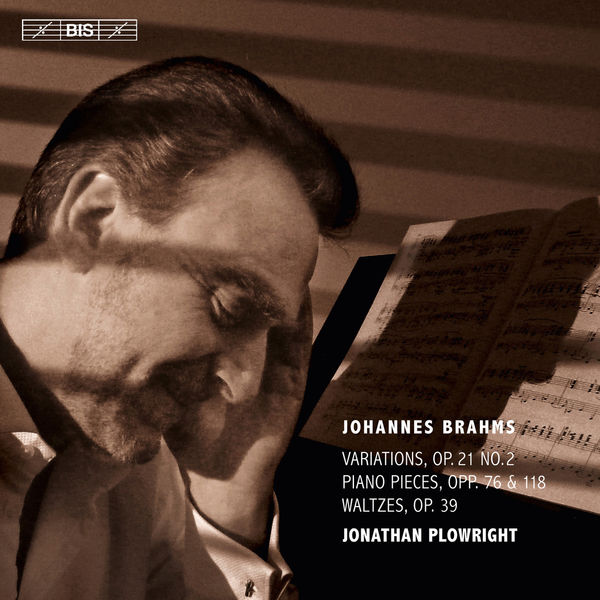
Brahms: The Complete Solo Piano Music, vol. 3 - Jonathan Plowright (BIS 2016)

I cannot really comment on this album very much, as BIS has a restriction on streaming albums for the first 6 months I believe, so I wasn’t able to hear more than 30 secs of each track, which really isn’t enough to review.

I must admit, that past releases from Plowright’s Brahms recordings (e.g. Sonata No. 3) were ok, but not so great that I was particularly motivated in purchasing this album blindly.

Plus, I’m not sure if Op. 21 no.2 and the Waltzes are essential Brahms (I love op. 76 and 118 though). Will check back when it frees up for streaming.


Grieg: Lyric Pieces – Stephen Hough
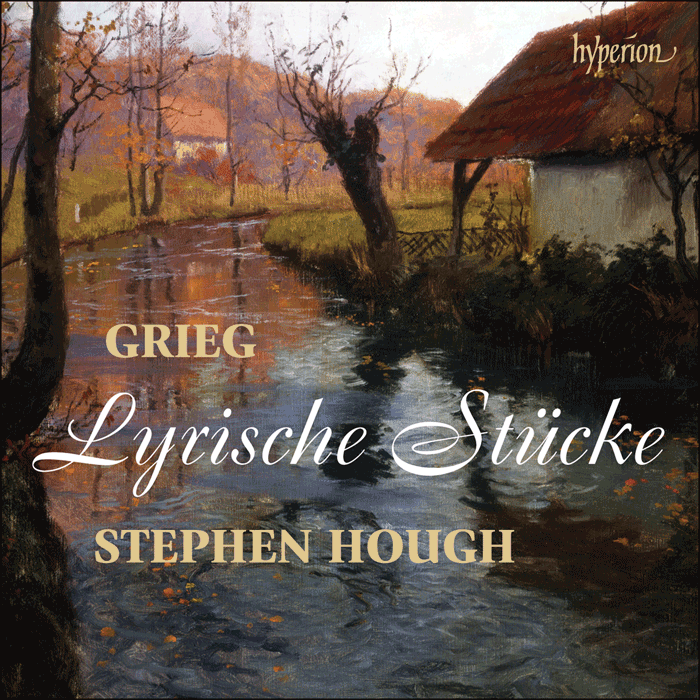
Grieg Lyric Pieces Stephen Hough Hyperion 2016

Hyperion is another one of the labels that refuses streaming, but unlike BIS not only for the first 6 months, but permanently. On the one hand, I get the point that artists make peanuts on streaming, so it is not something some labels want to endorse.

I must admit that even though I have a subscription to a lossless streaming services that let’s me listen to any album in full CD quality, when there’s something I really like I usually purchase the album anyhow. And in the few years I had access  to streaming, I got so used to being able to listen to an album fully before buying, that Hyperion is actually losing money with their policy on me. But I guess I’m rather the exception.

Long story short: again, only 30 secs samples available to me. Not enough to judge. First impression is quite positive though. I really like Grieg’s little gems so I may end up buying this anyhow.


Ravel: Complete Works For Solo Piano – Bertrand Chamayou
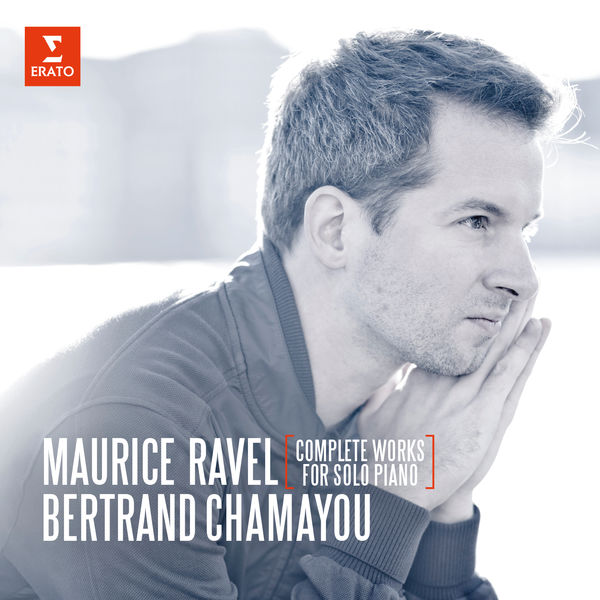
Ravel: Complete Works For Solo Piano - Bertrand Chamayou Erato 2016

This album was my surprise of the year.

As mentioned previously, the so-called French impressionists (Ravel and Debussy) are usually only partially my cup of tea. So I wasn’t particularly excited when this came out, by a young French pianist I’d never heard about.

But then this album received a Gramophone Editor’s Choice AND a Choc from Classica. This really is rarer than you’d think, as my two favorite classical magazines rarely agree (Classica was only lukewarm on the Brahms Plowright above, for example).

So I went and checked it out, and Erato nicely enough IS available for streaming.

And what can I say: I don’t see how you could play these works any more beautifully than what Chamayou does here. Just magic. Go and loose yourself in the magic of the opening Jeux d’eau, take the amazing Gaspard de la Nuit, or even simple stuff like the Haydn inspired Menuet, all is just perfect. Nothing is ever Kitsch or Too Much, this is painted with a very light brush, his style doesn’t remind me of the Impressionism of a Monet, but more of the Pointilism of a Seurat, if you get the analogy.


My rating: 5 stars

Eugène Ysaÿe: Sonatas for Solo Violon – Alina Ibragimowa (Hyperion 2016)

Ysaye: Sonatas for solo violin - Alina Ibragimova Hyperion 2016

Let’s make this one quick: I really like Ibragimova, don’t know a lot about Ysaÿe (beyond that he was a Belgian superstar). Thanks to Hyperion’s no streaming policy, this is not likely to change any time soon. I’ve read a lot of positive reviews about this elsewhere, so don’t let my ignorance scare you off.


Scarlatti (D): 18 Sonatas – Yevgeny Sudbin (BIS 2016)
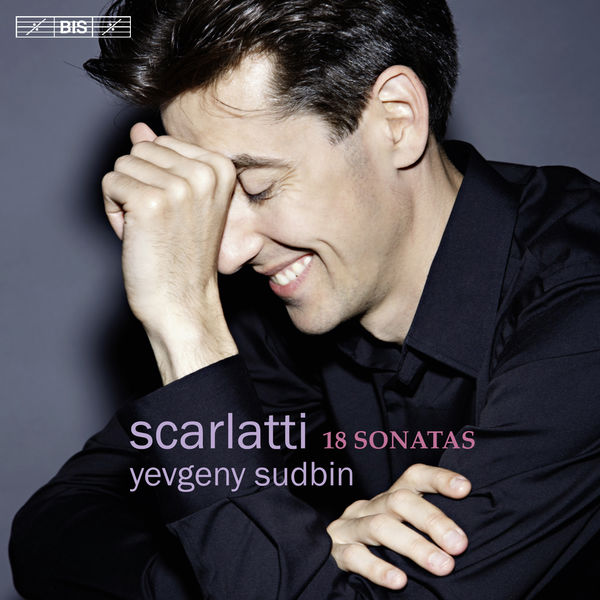
Scarlatti: 18 Sonatas - Yevgeny Sudbin BIS 2016

And here we go again, BIS’ no streaming policy will stop me for another couple of months or so to listen to this album.

What I can say is that I’m a big fan of Sudbin, but my expertise on Scarlatti is rather light anyhow, so I wouldn’t take my judgment very seriously even if I had listened to the album.

Be warned, this album also received some “meh” reviews, it’s apparently not everybody’s cup of tea.


Conclusion?

You may complain, only two albums I properly bothered to comment about? Well, as a policy I rather shut up where I don’t know what I’m talking about or am unable to properly review.

But in any case, both the Levit and the Chamayou are such exceptional albums, that we’re already very well served here.

So, who will win? 2 days ago Gramophone announced the 3 finalists, namely Levit, Chamayou, and Sudbin.

My prediction: Chamayou will win the category, and I hope Levit will win the “Artist of the Year”, a public poll (I already voted for Mr. Levit, but votes are closed since end of July now).

As always, I’d love to hear your feedback!


You can find the albums here:

Levit: http://www.qobuz.com/fr-fr/album/bach-beethoven-rzewski-igor-levit/0886444998161

Brahms Plowright: http://www.eclassical.com/labels/bis/brahms-the-complete-solo-piano-music-iii.html

Grieg Hough: http://www.hyperion-records.co.uk/dc.asp?dc=D_CDA68070

Ravel Chamayou: http://www.qobuz.com/fr-fr/album/ravel-complete-works-for-solo-piano-bertrand-chamayou/0825646026777

Ysaÿe Ibragimova: http://www.hyperion-records.co.uk/dc.asp?dc=D_CDA67993

Scarlatti Sudbin: http://www.eclassical.com/labels/bis/scarlatti-18-sonatas.html


Recommended: Brahms Cello Sonatas by Marie-Elisabeth Hecker

OutThere Music – Alpha Classics

In the old days (i.e. 1980s and previous), you basically had a number of big guys in the classical music industry, Deutsche Grammophon, Philips, RCA, Decca. Minor labels didn’t play such a big role, as most of the important artists were all signed to one of these major labels.

These days, while the big guys are still around (as brands that are part of large conglomerates), the smaller labels really strive.

BIS, Chandos, Hyperion, Harmonia Mundi, all of the really produce excellent classical albums, and if you were to check my 4 and 5 star recommendations on this site, I bet (but haven’t checked) that the independents probably outweigh the former majors by 2:1 at least.

Alpha Classics, now part of the Belgian/French OutThere Music, is one of those labels, that produces an outstanding number of great recordings, featuring great artist like Céline Frisch (see my review of her Well-Tempered Clavier here), Nelson Goerner, Alexis Kossenko’s Les Ambassadors (see my review of their Telemann album here), or Café Zimmermann (review of their Bach albums coming up).

One more strong point about most of these labels is that they do care about the sound quality of the recordings, which is not always guaranteed with the majors, who often tend to “over”-produce a recording.

Brahms’ Cello Sonatas

Brahms two cello sonatas were the first work of chamber music I ever owned by Brahms. I was lucky and started with a very nice version, with Leonard Rose on cello and Jean-Bernard Pommier on piano.

Since then, the cello sonatas have always been around, and I’ve constantly been on the lookout for the “perfect version”. On the way, I collected at least a dozen of versions, my most recent additions (both good) are Torleif Thédeen and Roland Pötinen on BIS and Ophelie Gaillard and Louis Schwizgebel-Wang on Aparté Music (note that both are independent labels…)

But to quote U2, I still haven’t found what I’m looking for.

Until now, at least for sonata no. 2.

Brahms Cello Sonatas – Marie-Elisabeth Hecker – Martin Heimchen (Alpha Classics 2016)

I had already started listening to this album briefly, as my streaming provider of choice, Qobuz, has a list of recommendations, where this album popped up.

Brahms Cello Sonatas Marie-Elisabeth Hecker Martin Heimchen Alpha Classics 2016 24 96

Being the Brahms fan I am (see my blog title), I obviously went to check it out.

I was pleased by what I heard in the first two movements of sonata no. 1, but not blown away. Well played, but not so different from many other recordings I’ve heard. So I got distracted and never got to the end of the album. Big mistake.

The July issue of my favorite classical music magazine, Classica, just came out, and had the album as a “Choc”. Usually, our tastes match quite well, so I gave it another virtual spin on Qobuz.

And guess what, once I got to the F-major sonata, I was blown away. In spite of being the later of the two sonatas (by approximately 20 years), this one is the much more passionate one.

And here finally you get all the passion I’ve always been waiting for. Hecker (winner of the famous Rostropovich award in 2005) and Helmchen (Concours Clara Haskil 2001) just play with so much energy, it just sucks you in.

Therefore, sonata no. 2 is the true highlight of this album for me, while the search continues for the e-minor sonata.

Nevertheless:

My rating: 5 stars (worth it for the 2nd sonata!)

You can find it here (Qobuz) and here (Prostudiomasters)

Schumann’s Cello Concerto by Jean-Guihen Queyras – A Review

A Trilogy

This is now the third and presumably album of an exciting series by three outstanding musicians.

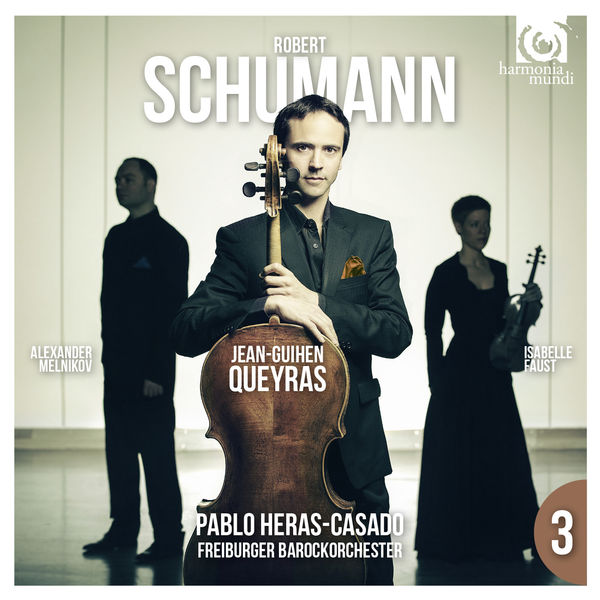
The German violinist Isabelle Faust (yes, I’m a big fan, see here or here), the Russian pianist Alexander Melnikov, and the French cellist Jean-Guihen Queyras are all great musicians individually, but get even better when they play together.

An excellent example is their recording of some Beethoven Trios on Harmonia Mundi some years ago, and Faust’s and Melnikov’s collaboration on Beethoven’s and Brahms’ violin sonatas are among my absolute favorites (the latter made it as part of my top 5 classical albums in 2015).

In this particular project, the three have decided to attack Schumann, and to couple one of his 3 piano trios with one of his orchestral solo works, playing with the Freiburger Barockorchester under Pablo Heras-Casado, on Harmonia Mundi.

Faust started, coupling his piano trio with his relatively unknown violin concerto back in early 2015. I really like this album.

Some month later Melnikov got his chance to play the famous piano concerto (see my 4 star review here) with piano trio no. 2.

So here we are at release no. 3, focusing obviously on the Cello concerto, and the remaining trio no. 1.

Schumann: Cello Concerto and Piano Trio No. 1 – Jean Guihen Queyras – Pablo Heras-Casado – Freiburger Barockorchester (Harmonia Mundi 2016)

Schumann: Cello Concerto / Piano Trio No. 1 Jean-Guihen Queyras Alexander Melnikov Isabelle Faust Pablo Heras-Casado Freiburger Barockorchester 2016 Harmonia Mundi

I expected quite a lot from this album, given that I really liked the two predecessors. However, on the Cello concerto I’m not exactly getting what I expected.

Schumann to me is one of the highest points of romanticism. I really like the energy, passion, and drama in his orchestral works. However, both Queyras and Heras-Casado chose a more subdued approach here, and I unfortunately constantly feel I’m missing something.

To explain what I mean, let me refer to my two personal reference versions for this concerto, by the legendary Jacqueline du Pré (playing with Daniel Barenboim), and even more, Janos Starker with Antal Dorati and the London Symphony. Do you hear the passion,  the power?

Here is a Youtube example of du Pré:

Maybe I just need to listen to the Queyras version more to get used to it, but so far it just doesn’t pull me in enough.

Obviously, we are talking about an excellent soloist (I really like his Bach Cello Suites for example) with a great orchestra, so fundamentally this remains a good recording, it is just not my cup of tea.

However, going back to the chamber music, all is well. These three trios, spread over 3 albums, will remain my reference version of these works for a foreseeable future.

My rating: 4 stars, averaging 3 stars for the Cello Concerto and 5 stars for the trio.

You can find it here (Qobuz) or here (Prostudiomasters)

Quatuor Ebène & Gautier Capuçon play Schubert’s String Quintet – Can’t get enough of it

On my absence

2016 has been a very bad year for me posting-wise so far. Last year I was usually able to stick to my self-imposed posting schedule, of about 2 per week.

Since the beginning of the year this frequency has plummeted. Sorry for that. There is a couple of reasons involved, too much business travel, late nights at the office, some long week-ends / short vacation, and most recently, a nasty gastro-intestinal flu that isn’t fully over yet. Plus there’s been a bit of a writing block on the occasional days that I could have written.

Well anyhow, I really hope you should be able to read my posts more often in the future, fingers crossed.

Thanks in any case for your loyalty, my dear readers. Very much appreciated.

Schubert’s String Quintet

Yes, I’ve written about it before. Schubert’s string quartet, to me personally the highest peak that chamber music ever reached (sorry LvB fans).

I’ve already recommended the Pavel Haas Quartet’s version here, the Takacs also have done a beautiful version.

So there is obviously no need to talk about it again.

Quatuor Ebène

Well, actually there is. The reason is called Quatuor Ebène. This French quartet is noteworthy not only for being one of the leading classical string quartets of our time, but also do crossover, i.e. interpret Jazz and contemporary musical classically.

I must admit the term crossover usually makes me run away as fast as I can, as it is usually just horrible André Rieu / David Garrett / Vanessa Mae etc. trash (sorry, but I really can’t help it, that’s about the only word that expresses what I feel about this stuff).

But obviously to every rule there is an exception. Ebène is one of the few classical artists to really pull this off well!

Back to Schubert.

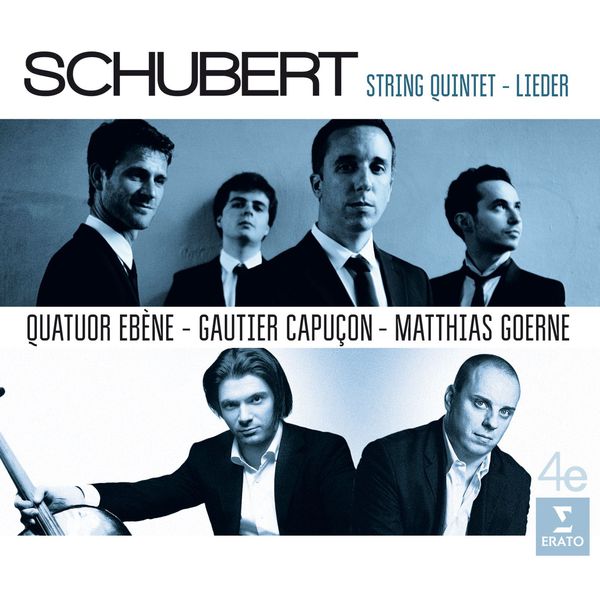
Schubert: Quintet & Lieder – Quatuor Ebène – Gautier Capuçon – Matthias Gerne (ERATO/WARNER 2016)

Schubert String Quintet - Lieder - Quatuor Ebène - Gautier Capuçon - Matthias Goerne  ERATO 2016

I would have checked out this album even without a “Choc” from Classica and an Editor’s Choice recommendation by Gramophone. But obviously, having the highest possible endorsement from both of my favorite classical magazines helped.

Let’s write about the Quatuor first. They are joined by Gautier Capuçon on 2nd cello. Gautier is the younger brother of the well-known violinist Renaud.

So what makes this recording so special? Two words spring to mind, rough and fresh. Rough isn’t meant that this is not high quality playing, far from that. But there is a real direct quality in the playing, that let’s you notice all the little angles and details than more polished recordings.

I’ve mentioned the energy that sets apart the Pavel Haas Quartet’s reading. You’ll find some of this here, but overall this is even more “chamberesque” (is this a word?) and intimate in this reading with Ebène.

This recording never just let’s you enjoy it, this album forces you to live the music.

The String quintet is already nearly 1h long, so many other artist would have just stopped there. Here however, you get an interesting bonus. Schubert is obviously famous for his Lieder (songs), and many of his chamber works are inspired by his songs (e.g. Death and the Maiden, see also here).

Usually, these songs have a piano arrangement. I must admit, I’ve never heard them with a string quartet supporting the singer. Well, here we go. And obviously, you don’t just get any kind of singer, you get Matthias Goerne, a Schubert legend. It is surprising how well this works. This is really way more than just a filler.

My rating: 5 stars – absolutely worth checking out, even if you already own the Haas or another reference version.

You can find it here (Qobuz) and here (Prestoclassical)


My Must-have Mozart Albums

This post was directly triggered by a question I got to my last post on Mozart’s Violin Sonatas:

To quote jpas1954:

If someone, like me, wanted to listen to Mozart but didn’t know where to start, what would you recommend?

I figured instead of hiding it in the blog comments, I may as well make a post out of it.

So here we go.

The first 3 I already immediately answered from the top of my head, now a post with some additional recommendations,based on some more thinking about it.

The Clarinet Concerto

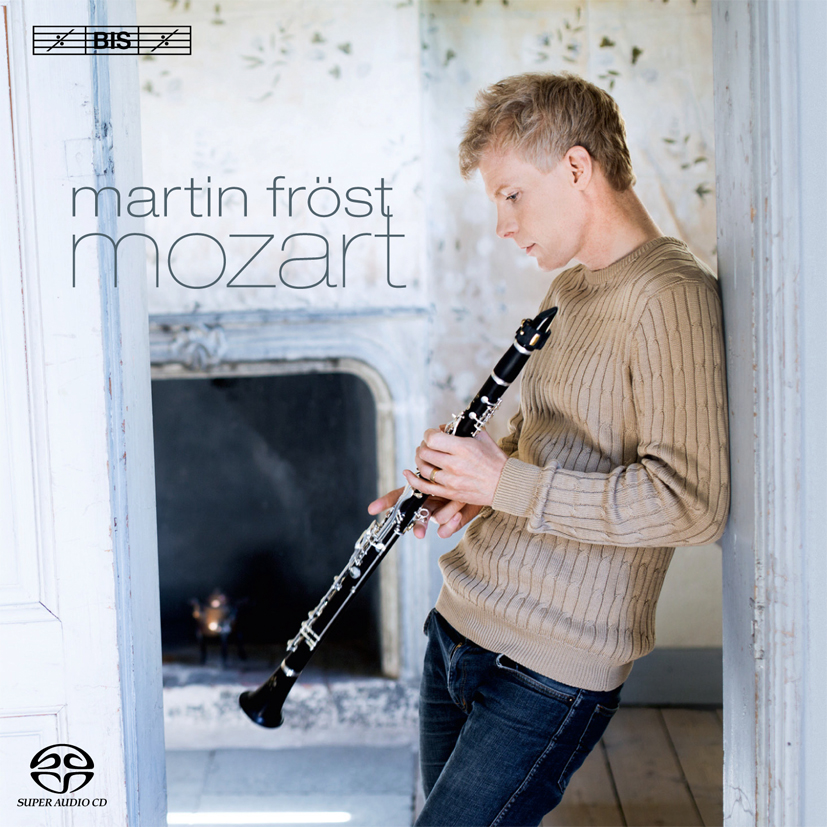
Take the second movement of the clarinet concerto, and you’re in heaven. The brillian Clarinetist Martin Fröst has recorded this twice, I prefer his second recording with the Deutsche Kammerphilharmonie. On top of the clarient concerto, you also get the beautiful Kegelstatt Trio, and a less well known Allegro, with brilliant guests such as Leif-Ove Ansdnes or Janine Jansen.

Mozart Clarinet Concerto Kegelstatt Trio Martin Fröst Deutsche Kammerphilhamonie Bremen BIS

The Late Symphonies

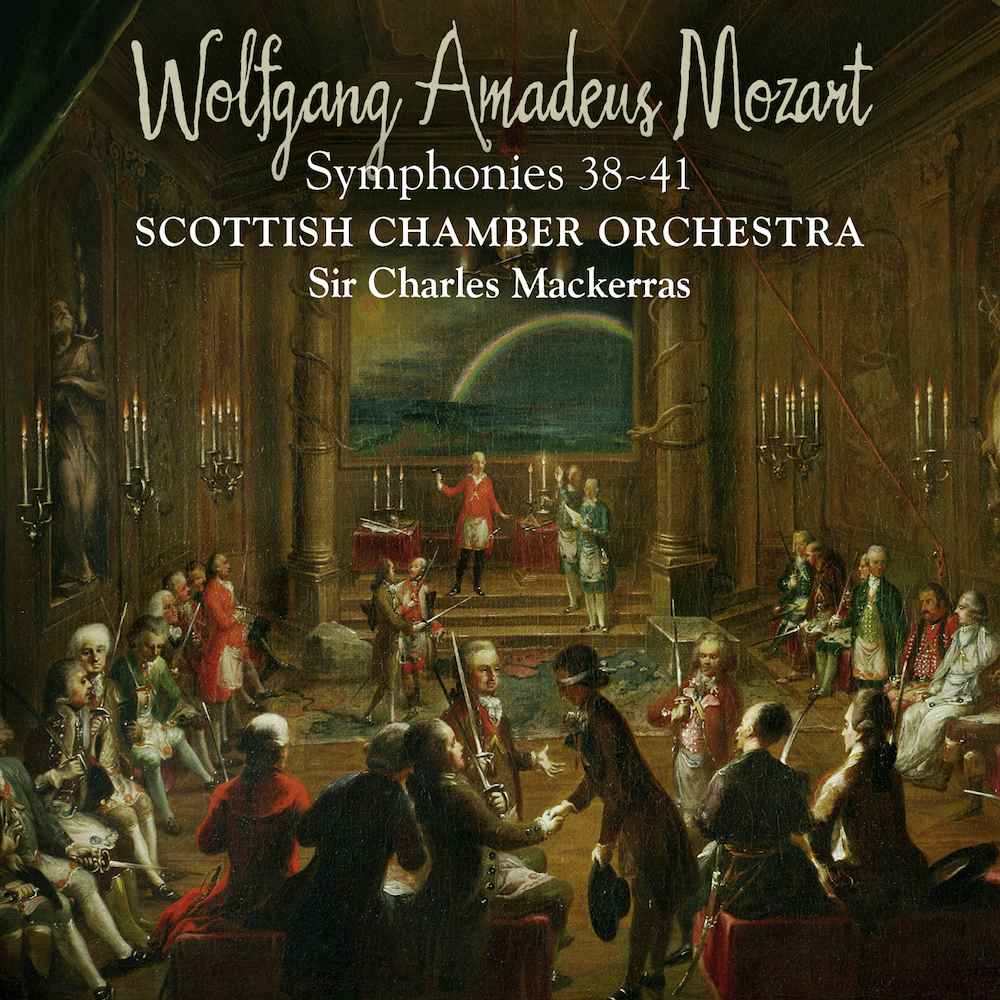
For a newbie, I’d focus on the late symphonies 38-41, with the famous no. 40 a-minor and no. 41 “Jupiter”. My favorite version is by Charles Mackerras. He also has recorded the symphonies twice, once in Prague, once with the Scottish Chamber Orchestra. I prefer the latter, but the former is a good one if you want to get all 41 symphonies rather cheaply (and still very well played).

Mozart Symphonies 38-41 Charles Mackerras Scottish Chamber Orchestra Linn 24 88

Piano Concerto no. 20 & 25

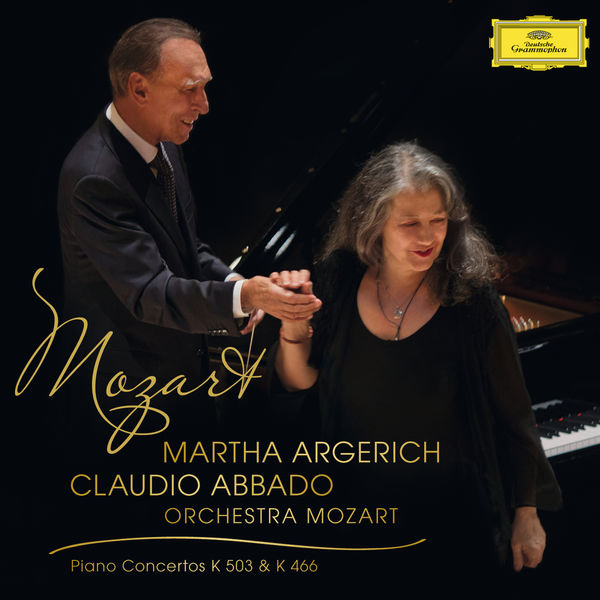
So many good recordings out there. But as I just admire Martha Argerich very much, I had to put this one out there. Is it the best? Probably not, but it is very special, and one of the last recordings of Maestro Abbado.

Mozart Piano Concerto 25 & 20 Martha Argerich Claudio Abbado Orchestra Mozart

Good alternatives on fortepiano include Bezuidenhout and Brautigam, and on modern piano the Perahia recordings are also outstanding.

The Violin Concertos

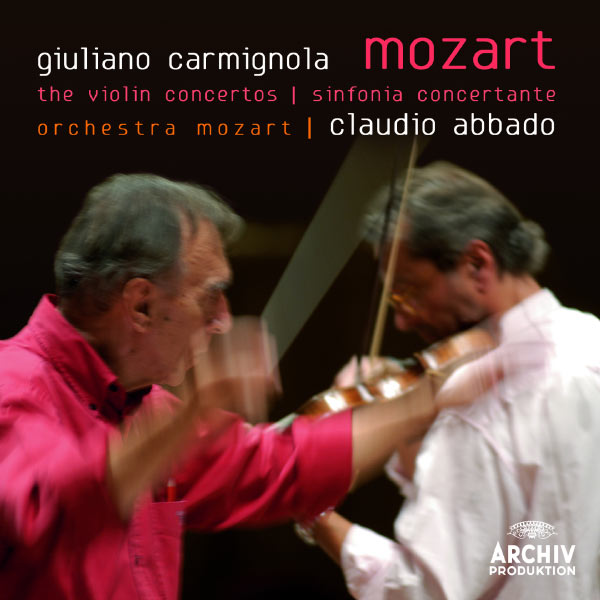
Again Abbado with his own Orchestra Mozart,  and this time the brilliant Giuliano Carmignola (see my review of his outstanding Four Seasons here), have recorded one of the best versions of the violin concertos and Sinfonia Concertante out there.

Mozart Violin Concertos Giuliano Carmignola Claudio Abbado Orchestra Mozart DG Archiv

Another very good version is Richard Tognetti with the Australian Chamber Orchestra.

Solo Piano Works

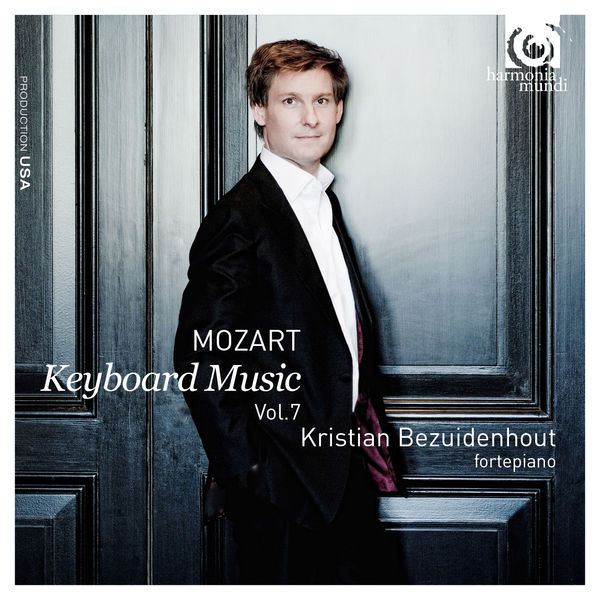
Kristian Bezuidenhout is one of the best Mozart players of these days. His latest release of the complete piano works, vol. 7, is particularly well-played.

Mozart Keyboard Music vol. 7 Kristian Bezuidenhout Harmonia Mundi

For modern piano, try Uchida or Brendel.

The Requiem

Sadly, never finished, so you only get versions that were completed by others, like Mozart’s pupil Süssmayr.

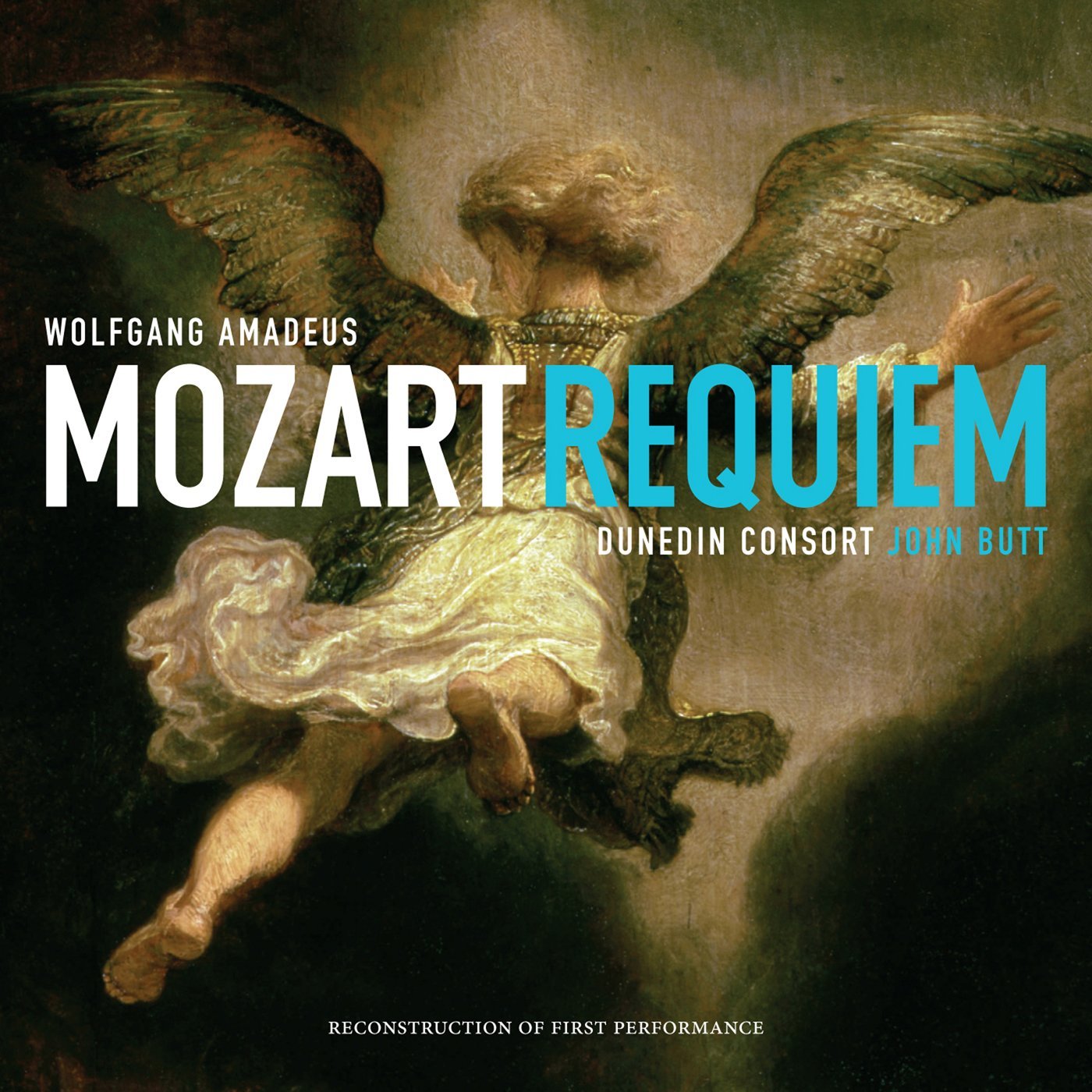
Again, so many great versions out there; this recent release by the Dunedin Consort is excellent both on the playing and on the recording quality.

Mozart Requiem Dunedin Consort John Butt Linn Records

Alternatives include Gardiner, Harnoncourt, and many others.

The Violin Sonatas

See my previous post on Rachel Podger.

Mozart Complete Violin Sonatas vol. 2 Rachel Podger Gary Cooper Channel Classics

And finally, the Operas: Idomeneo

i’ll certainly write more about my favorite operas Don Giovanni, Le Nozze di Figaro, and Cosi Fan Tutte (see my review of Nézet-Séguins version here) in the future, all are absolute must-haves. Let me promote here the Opera that was Mozart’s own favorite apparently (at least some booklet told me at some point): Idomeneo

René Jacobs Mozart is always worth discovering, not always very orthodox, but certainly exciting.

This one is really very good, and is among the top Idomeneos out there.

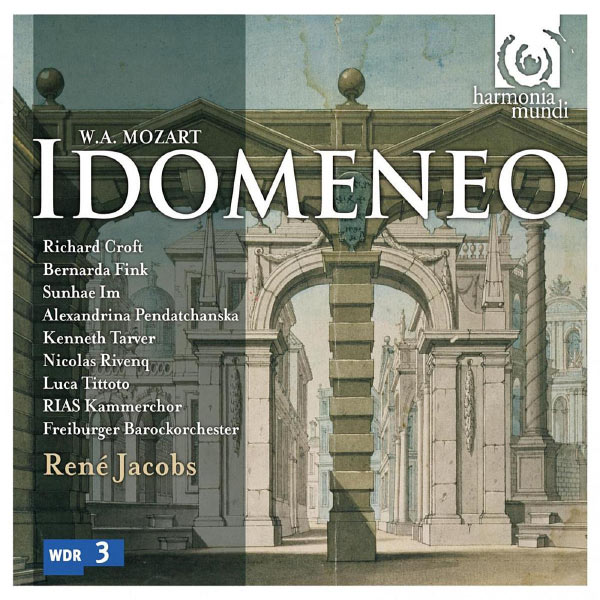
Mozart Idomeneo René Jacobs Freiburger Barockorchester Harmonia Mundi

This is certainly only an early starting point.

I still need to write about the string quartets, the Great Mass in c-minor, the piano quartets, the horn concertos, etc. etc. etc.

But you need to start somewhere, and for a newbie, you probably have an excellent starting point here.

Please add and suggest other alternatives in the comments!

You can find the recordings here:

Clarinet Concerto: here

Symphonies: here

Piano concerto: here

Violin Concertos: here

Solo piano: here

Mozart Requiem: here

Idomeneo: here

Rachel Podger’s Magnificent Mozart

Wolfgang Amadeus Mozart

When I was young and just started listening to classical music, I had a slight disdain for Mozart. “Too easy”, for kids, or similar stereotypes.

How wrong I was. Sure, pretty much every single Mozart piece has something immediately pleasing to it, something that even a non-classical music listener usually easily grasps, and mostly likes.

What I completely missed how hard it is to make something sound easy AND interesting at the same time. The more I discovered the music of Mozart’s now mostly forgotten contemporaries (Stamitz, Salieri, Michael Haydn, etc.) , the more you discover what is really missing there and what makes Mozart’s music so unique.

Mozart’s violin sonatas

When you think about chamber music, and the very simple but elegant form of violin sonatas, usually  people think of Beethoven first, with his famous Kreutzer sonata, or sometimes Brahms (see my review of Brahms sonatas with Isabelle Faust here).

Mozart isn’t the first composer that springs to mind when talking about this genre. Probably this is partially due that quite a number of them were written when he was really young. Luckily, he stuck to this form throughout his life, and ended up writing 36 of them.

Rachel Podger

I’m a big fan of Rachel Podger. She is usually focusing on Baroque music and has recorded some outstanding albums here (more about this later on this blog).

However, she also ventures into Viennese classical music. And how well she does. She has recorded the complete Mozart sonatas in a total of 8 volumes. She plays here with Gary Cooper, who plays a beautiful fortepiano.

Let me arbitrarily talk about vol. 2 here, but honestly, all 8 volumes are worth getting.

Mozart Complete Violin Sonatas vol. 2 Rachel Podger Gary Cooper Channel Classics

On each volume Podger mixes more mature works with some of Mozart’s very early works (e.g. KV7 here). And while it is clearly evident that this is not mature Mozart (the boy was approximately 8 years old when he wrote this, and probably helped by his father), even this one is worth discovering.

But you also get the outstanding KV481 on this album which dates from the same time of his great Da Ponte operas (Don Giovanni, Figaro etc.).

As an additional bonus, Channel Classics is a label that care a lot about recording quality, and this is one more example of it.

My rating: 4 stars (5 stars+ playing, but the inclusion of the early sonatas gives 1 star off, making it just not AS essential as some other works).

You can get it in it’s native recording format of DSD here (Native DSD), note that not all players do support this format. Otherwise you can also purchase the full 8 CD box here much cheaper if you prefer physical media (Prestoclassical). At this point in time, there’s even a special offer ongoing.

Brahms Latest Work: The Clarinet Sonatas by Coppola and Staier

I’ve said it before, I’m a big fan of Andreas Staier. His Diabelli-Variations are outstanding (see review here). Therefore, I was rather disappointed not to like his recent release of the Bach harpsichord concertos (see here). It appears now that most other reviewers don’t share my opinion by the way. I’m still not convinced unfortunately.

But from Bach, let’s move more than a century later.

I haven’t reviewed any Brahms album for a while, which is weird given that he appears in my blog title.

Brahms’ Clarinet Sonatas op. 120

I must admit I wasn’t historically a big fan of these sonatas, I found them not very accessible.

These sonatas, as well as the Clarinet quintet & trio, were triggered by Brahms meeting the famous clarinet player Richard Mühlfeld.  But with Andreas Staier, I had to give them a go, so I went ahead and purchased this 2015 Harmonia Mundi album.

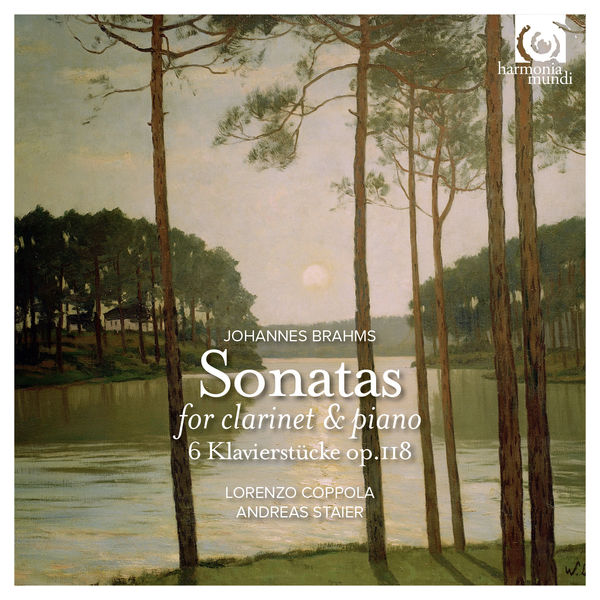
Lorenzo Coppola Andreas Staier Brahms Clarinet Sonatas Harmonia Mundi 2015

Andreas Staier plays a Steinway on this album, which could be considered somewhat unusual given that he is known for playing historical instruments. Well guess what, this Steinway actually is from 1875, apparently the type that Brahms really appreciated.

On clarinet, we get the Italian Lorenzo Coppola, who plays a 2001 reproduction of a historic clarinet which is very similar to the one Mühlfeld played.

So we’re getting really close to what Brahms could have listened to in his final years. And all over sudden, the full beauty of these late works really becomes apparent.

6 Klavierstücke op. 118

However, to me (with my piano background), the true highlight on this album are Staier’s version of the 6 piano pieces op. 118. Let me clarify first of all that I love Brahms late piano pieces from op. 116-119, and op. 118 is a particular favorite of mine.

And here, especially the second Intermezzo (track 6) is played more beautifully than on any of my other recordings (I’ll be writing about some of them soon). Staier uses tons of rubato, but it comes fully naturally. There is so much intensity in this playing that I’ve had them on constant repeats quite regularly recently. Or take the “Romanze”, truly romantic indeed.

As usual on Harmonia Mundi, this is well recorded.

My rating: 4 stars for the clarinet sonatas (rating my preference of the repertoire here, not the playing), 5 stars for the op. 118.

P.S. If you like op. 120, you should know that there is also a version of these sonatas replacing the clarinet by a viola. The well-known viola player Nils Mönkemeyer has just released an album on Sony playing these sonatas.

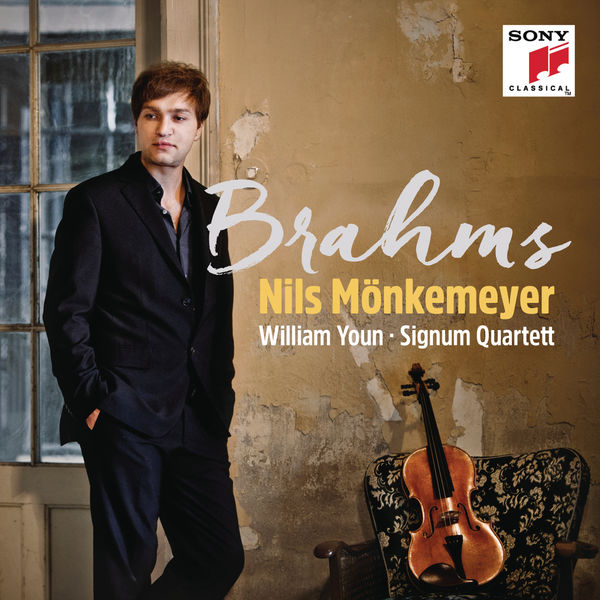
Nils Mönkemeyer Brahms Sony 2015

This album is really quite beautiful and also worth checking out.

You can download the Coppola/Staier here (Qobuz) or here (eclassical)

Classical Life

A classical music blog by music critic Tim Mangan

This Week's Music

Making Classical Accessible

From my Macbook to the Net

Evaporation of my thoughts and observations

Elestra

Author: Artienne

My Life in Music

Playing, Singing and Listening

ArsX3

A brand new journal reviewing books, cinema, music

LawrenceEz's Blog

Creative and Performing Arts: Writing, Classical Music, Photography

Laetitia Strauch-Bonart

Contemporary Politics & Culture

sibling revelry

reveling in all things classical

It's A Raggy Waltz

I collect jazz on vinyl, I dig the Dave Brubeck Quartet, & I write about it

La Musica

By two cousins

thejazzbreakfast

Dishing it out from the heart of England

only jazz

random thoughts about music that matters to me

The Culture Project

Exploring the world of literature, wine, art, music and more.

René Spencer Saller

The music causes me to dream of fabulous empires, filled with fabulous sins.

Breaking Baroque

Blog of Tafelmusik Baroque Orchestra and Chamber Choir

Tasting Nirvana

Eating your Dosha

The Immortal Jukebox

A Blog about Music and Popular Culture

April Greene

Writer + Editor

a pianist's musings

A history of your favorite classical music.

Classical music for all

Boris Giltburg's blog

I HEAR VOICES

An orchestra seat in the web space