Alina Ibragimova and Cedric Tiberghien at Boulez Saal – Fantastic!

New Year Resolutions

As most of you, I have made a couple of New Years resolutions. Among them was, not suprisingly, exercise more and eat healthier. Well, 7 days in and, while improving, I’m far from where I want to be (although slightly better than last year).

Another resolution was to go to more concerts. There are so many fantastic concerts out there, and I have the privilege of often being in places that offer excellent musical performances on a regular basis. Berlin is a case in point, where I happened to be quite a bit recently.

So, I guess starting with my first concert on January 6 is a good starting point for the last resolution. Let’s see how I continue from here.

A lot of firsts

This concert was a lot of “firsts” for me. First concert of the year, first time I’m listening to a concert performance of any of the three composers on the program (more about that later), first time I see Alina Igrabimova and Cedric Tiberghien in concert, first time the two are actually mentioned on this blog (beyond a small side note in passing), and first time a Berlin´s new Pierre Boulez Saal.

Pierre Boulez Saal
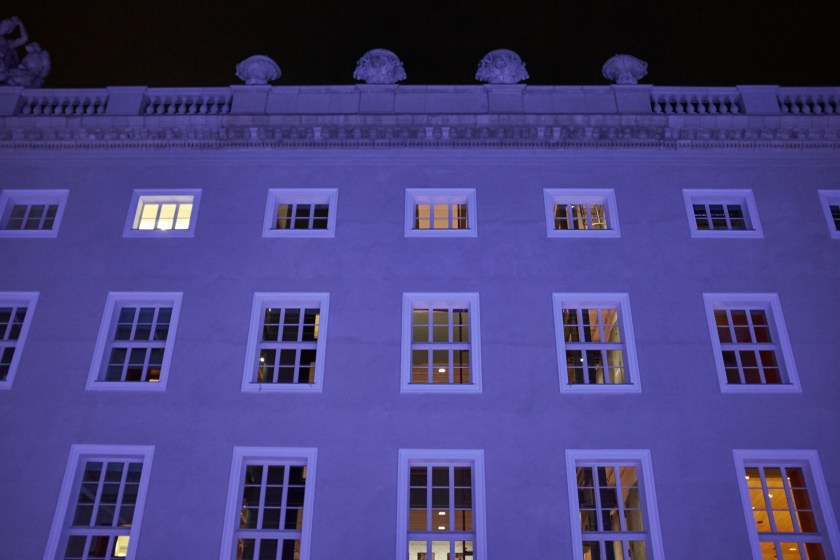
Barenboim-Said Academy (exterior) (c) Musicophile 2018
The Exterior of the Barenboim-Said Academy hosting the Boulez-Saal (c) Musicophile 2018

The Pierre Boulez Saal is the latest of the classical music venues in Berlin. It was built as part of the Barenboim-Said academy. It formally opened in March of 2017. It was planned by architecture legend Frank Gehry as a Salle Modulable, i.e. with a lot of flexibility.

Entering the building, I really like the architecture of the overall hallway, with a nice mix of traditional and modern elements over the several floors.
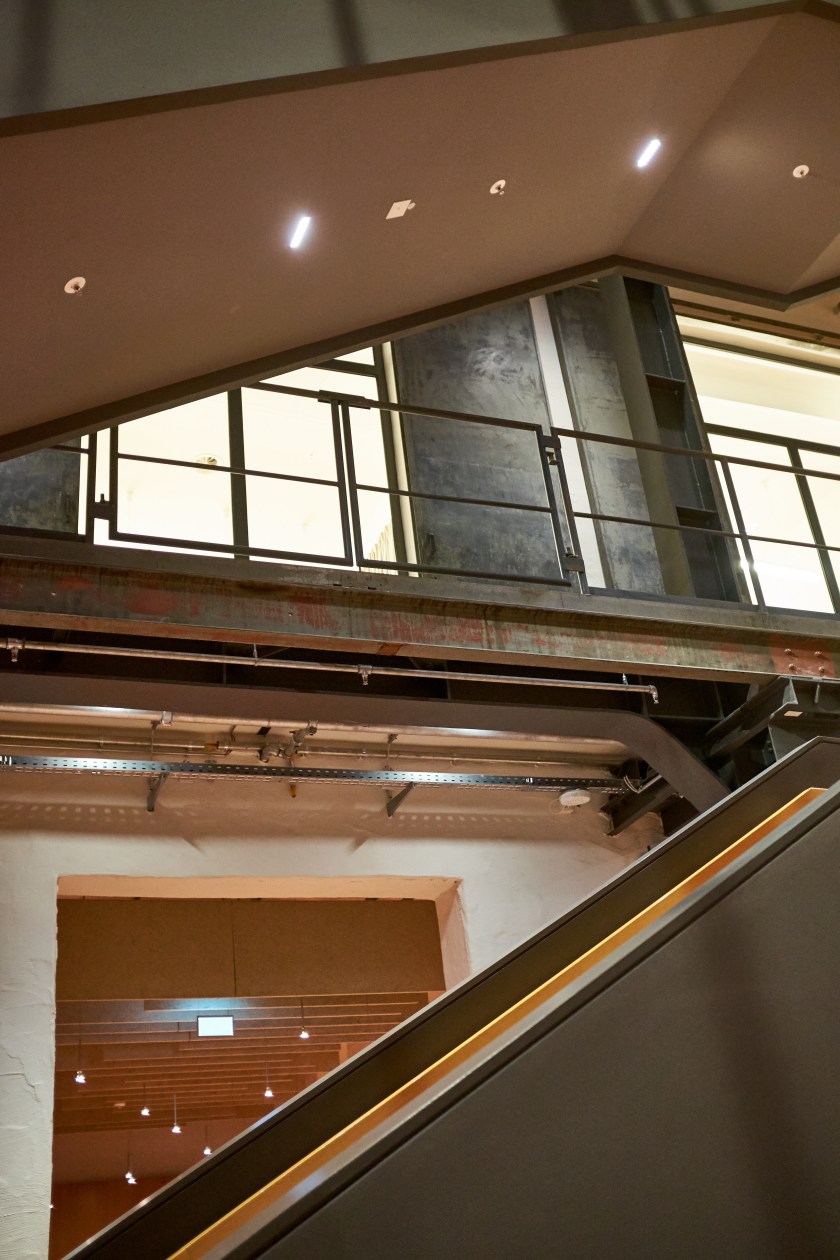
Boulez-Saal (Detail) (c) Musicophile 2018
Barenboim-Said Academy (detail) (c) 2018 Musicophile

However, entering the Boulez Saal itself, I was a bit underwhelmed. Being a big Frank Gehry fan, I kind of expected more. It kind of reminds me of a smaller Roman amphitheater, just more wood, less stone.

And honestly, who designed the patterns covering the seats? This weird mix of blue and red reminds me of some of the public transport seats in Europe that use complex patterns to deter graffiti. I don’t expect the typically 50+ classical music audience to be big into graffiti, so no idea what went on here.
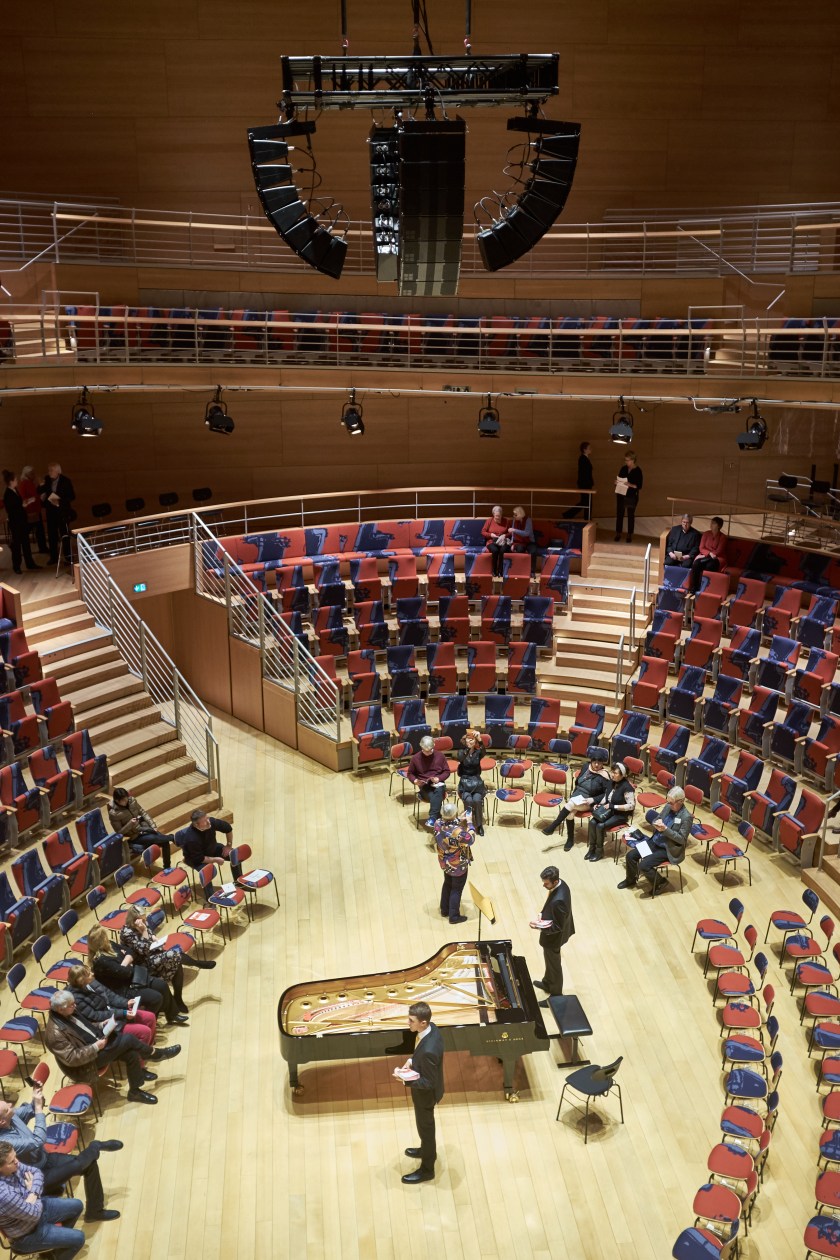
Boulez-Saal (c) Musicophile 2018
Boulez-Saal – interior (c) 2018 Musicophile

But well, I shouldn’t be too negative, the acoustics were quite nice, you have excellent visibility from pretty much all seats, and to really honor the concept of a roundish concert hall, the piano was turned during the break having the artists face the other way in the second half of the concert.

Anyhow, there is quite an intriguing concept behind the hall, and it is hard to take pictures in there (and unfortunately forbidden during the concert, so no pictures from the artists here…), therefore I suggest you check out this video:


Alina Ibragimova and Cedric Tiberghien

Two young, brilliant artists that I’ve never mentioned on my blog in 2+ years. How come? I actually like both.

The reason is more or less technical. Both mainly record for Hyperion, and Hyperion doesn’t allow streaming. As mosts of my initial reviews are typically based on streaming (I like to sample before I buy), I haven’t really formally reviewed any of their recordings yet. However, the samples I was able to listen to were, plus the raving reviews everywhere, really made me curious.

32 year old Ibragimova has some highly praised albums, including her Bach solo sonatas, Ysaye´s solo sonatas, the Beethoven and Mozart sonatas with Tiberghien, and a really enjoyable recording of the Bach violin concertos. Tiberghien is not only her regular duo partner, but has also done some very nice solo recordings that are worth checking out.

So I was very enthusiastic to be able to see both of them live.

Ibragimova and Tiberghien At Boulez Saal playing Ysaye, Vierne, and Franck – January 6, 2018

In my recent review of Sabine Devielhe´s album Mirages, I already mention that I’m really not an expert on French composers.

And actually, to be fair, the first one isn’t even French but Belgian, Eugene Ysaye. I had heard about him, but never the Poème élégiaque that started the performance. As rare as it is for me, it is actually very refreshing hearing a piece of classical music performed for the very first time. You have a much more open reception.

And I was blown away. This relatively short piece was inspired by Shakespeare´s Romeo and Juliet, and you could certainly hear all the passion of this inspiration in there. Ibragimova played with a wonderful intensity, and Tiberghien was the perfect partner, never overshadowing, which the powerful sound of a Steinway can easily do.

Next came a composer I literally had to google. Louis Vierne. You may say Louis who? Turns out he’s relatively well known in France, but his reputation beyond the French borders is still very low. So I had no idea what to expect.

A violin sonata from a composer mainly known as an organist? Again, I was very positively surprised. My personal highlight was the second movement, Andante. I was literally mesmerized by the beauty of it. Isn’t it enjoyable that there is still so much beautiful music to be discovered?

After the break, we got my personal highlight of the evening, César Frank´s A-Major sonata. This piece I was much more familiar with, both from historic recordings with Heifetz, and from Isabelle Faust´s recent album on Franck and Chausson.

Regular readers of this blog will know that I’m a Faust fanboy. But what Ibragimova and Tiberghien did last night was even significantly better than Faust´s excellent recorded performance. Given that this was a live event, the performers took quite some liberties on timing, but only to the benefit of this music. The audience, like me, was extremely enthusiastic.

As an encore, we got a beautiful work of one of Vierne´s pupils, Lili Boulanger, the less-well known sister of Nadia Boulanger, who unfortunately passed away at the young age of 24. The Nocturne was again of outstanding beauty.

Overall, an evening of extreme emotional intensity and passion

My rating: 5 stars

Sabine Devielhe – Mirages: Beautiful!

Sabine Devielhe

Yes, I’m a fan. She has such a beautiful voice, no idea what angels sound like, but you’d hope they have a similar sound.

I love her 2016 Mozart album (see my initial review here, my comment on the same album winning the Gramophone award in that category, and that I named this among my top 5 classical albums of 2016).

Note that her Rameau album with Alexis Kossenko Le Grand Théatre de l’Amour is also outstanding.

I was also very close to put this into my Top 5 Classical Albums of 2017, I simply didn’t because I simply felt more comfortable writing about repertoire that I’m more familiar with. Consider this a late addition.

French composers

I must admit I’m really not a great expert on French music. I like the occasional Rameau, my understanding of Berlioz is pretty much limited to the Symphonie Fantastique, I know a handful of works by Franck, only dabble a bit in Debussy and Ravel, and that’s it.

Half of the names on this album I had barely heard of (Charles Koechlin, Ambroise Thomas), some were fully new to me (Maurice Delage, André Messager), and I’m also only very superficially familiar with the works of Delibes and Massenet, the two big names of French opera (after the obvious Bizet).

So keep this in mind when I write a “review” that it is hard to objectively judge something that you literally hear for the first time and have no reference in mind.

Sabine Deviehle – Mirages – Franz Xaver Roth – Les Siècles – Alexandre Tharaud (Erato 2017)

Sabine Devielhe - Mirages - Alexandre Tharaud - Les Siècles - Francois-Xavier Roth (24/96) Erato 2017

As mentioned, this is a rather unfamiliar repertoire for me. We start with André Messager, who has an impressive track record managing opera houses (Opéra Comique, Covent Garden, Opéra de Paris), but also did quite a bit of composing. This starts with an aria from his opera Madame Chrysanthème. from 1893. A beautiful melody if there ever was one. And then you get the angelic (sorry for falling into clichés…) voice of Devielhe, and you get immediate bliss.

Next is an extract from Claude Debussy´s Pelleas et Melisandre, one of the two works of the entire album I actually knew. Unfortunately, very short, beautiful nevertheless.

Lakmé is probably Leo Délibes most famous opera, written in 1880. And yes, even if you’ve never heard the name of the composer, you’ll most likely have come across his Flower Duet, which obviously gets featured on this album as well (we get a total of 3 tracks from Lakmé here, spread accross the album). Why am I so confident you know the Flower Duet? Well, it´s one of those pieces that developed a life on its own in movies and commercials. Don’t believe me? Scroll to 1:05 of this Youtube video:


4 consecutive tracks are devoted to Maurice Delage´s Poémes hindous. What? Exactly, no idea. Wikipedia tells me these (composed in 1912) are Delage´s most recorded work. I´ve been collecting classical music for 20+ years now, and I had never heard of the guy. Doesn’t matter, this is beautiful and an excellent discovery!

Another great revelation for me were a number of songs recorded with the great Alexandre Thauraud on piano, from Debussy, Stravinsky, Berlioz, and Koechlin.

Overall, in spite of Devielhe’s outstanding vocal capabilities, this album never turns into impressive self-serving vocal gymnastics, but is a a beautiful window into the French vocal repertoire.

Note to self: I should probably find a replacement adjective for beautiful here, as it pops up wait to often in this review.

Well, if you look up “beautiful” in http://www.thesaurus.com you’ll find, among others, dazzling, delightful, elegant, angelic, bewitching, and radiant. I couldn’t have summarized this album better.

My rating: 5 stars

You can find it here (Qobuz) and here (HDtracks)

P.S. By the way, on this album I haven’t read a single negative review, it gets highest praise from all my typical sources (Gramophone, Classica, etc.).

This will be my last post for 2017, hopefully you’ll stick around and we’ll meet again in 2018!


You can find the album here (Qobuz) and here (AcousticSounds)


My Top 5 Classical Albums of 2017

It is starting to be a tradition now; this is a third time I´ll be writing about my top 5 classical albums of the year (see here for 2016, and here for 2015).

It´s been a busy year both professionally (completely unrelated to this blog) and musically, with a lot of excellent recordings being published, my blog being listed among Musicaroo´s Top 100 Independent Music Blogs, and me reaching 200 blog posts this summer.

It´s probably a bit late for Christmas shopping, but if you’re still looking for something to put under the tree (or whatever other holiday you’re celebrating right now, if any), or if you just would like to make yourself a nice present, here’s my selection for 2017. For download links to each album, please follow the link to the original review.


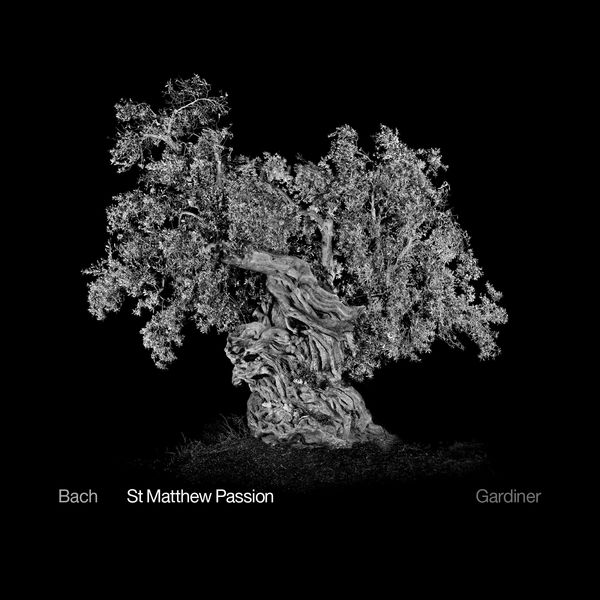
Bach: St. Matthew Passion – John Eliot Gardiner

Bach St Matthew Passion John Eliot Gardiner SDG 2017 24/96

I may be a bit biased here as I heard Gardiner perform this live as part of the same European tour as when this was recorded, but while I’ve been not always convinced by Gardiner´s recent recordings, I feel this is one that will stand the test of time as a reference.

See my original review here.


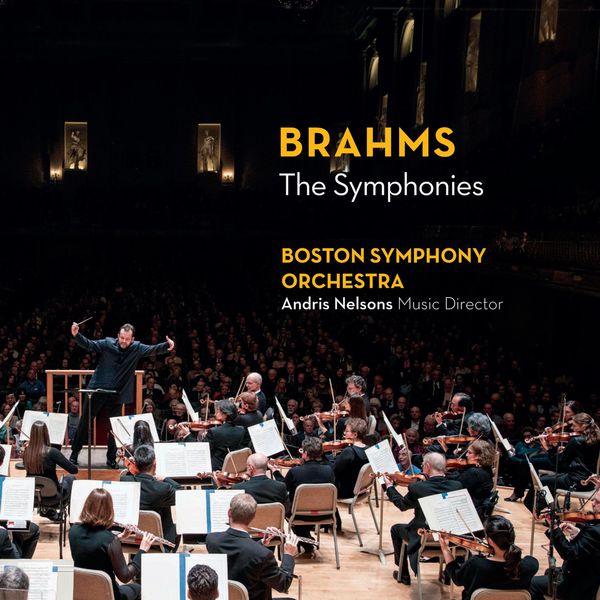
Brahms: The Symphonies – Andris Nelsons – Boston Symphony Orchestra

Brahms: The Symphonies - Andris Nelsons - Boston Symphony Orchestra 24/192

Brahms being in the subtitle of my album, he is obviously featured on a regular basis.

Note that this album may not be of universal appeal. This is really not the new lean style of “historically informed”, with lean orchestras, which I actually often really like. This is “old-style” Brahms, big, broad, and romantic. I feel it works especially well for the first symphony, in the big tradition of the Klemperers and Walters of this world (not yet Furtwängler and Toscanini).

In, any case if you answer yes to “Aimez-vous Brahms?”, you need to check this box out.

You’ll find the original review here.


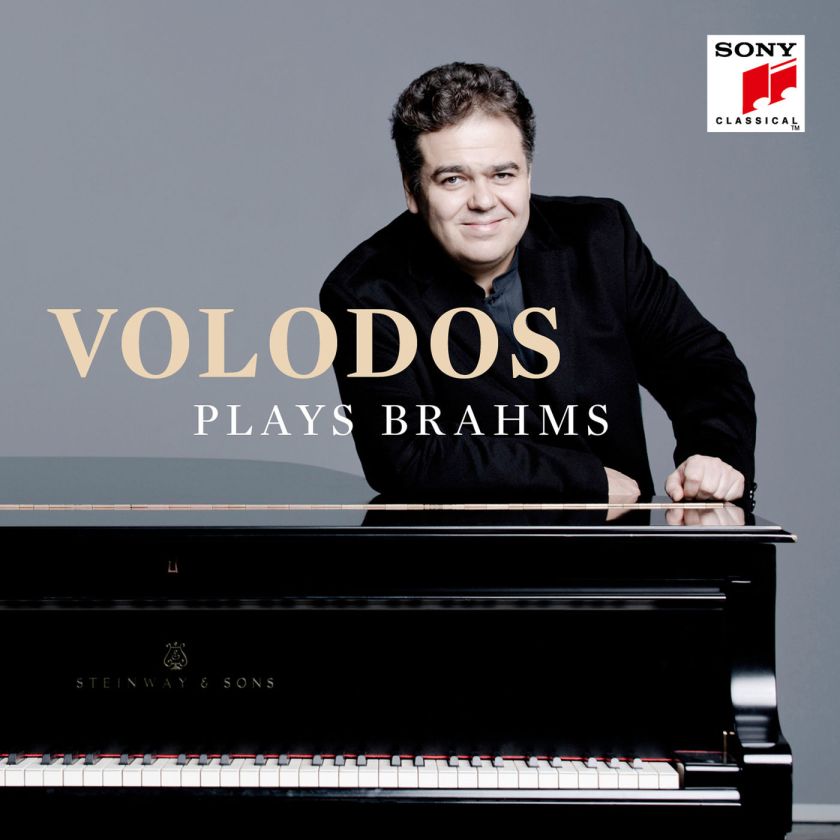
Volodos Plays Brahms

Arcadi Volodos Plays Brahms (24/96) Sony Classical 2017

And yes, 2 out of 5 for the grandmaster from Hamburg. Another Brahms album.

And this time I can get rid of any disclaimer, this is just outstanding in any way. While playing with all his virtuosity power, these little (underrated) gems of Brahms here really get the treatment they deserve.

A must have for any Brahms fan.

See my original review here.

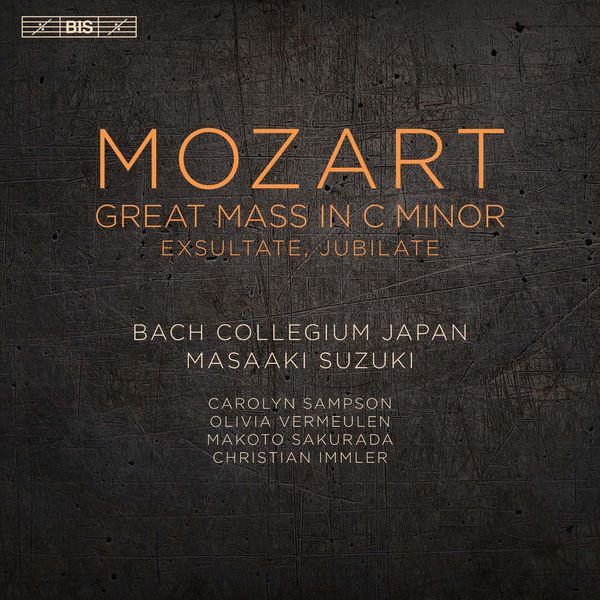
Mozart: Great Mass in C – Masaaki Suzuki – Bach Collegium Japan

Mozart: Great Mass in C Minor Exsultate Jubliate Bach Collegium Japan Masaaki Suzuki Carolyn Sampson Olivia Vermeulen Makoto Sakurada Christian Immler


This gets a special treatment by me, because it is probably one of the most beautiful pieces of music ever written.

Masaaki Suzuki and his Bach Collegium have never produced a bad album to my knowledge. The “worst” you get from this excellent Japanese ensemble is recordings that are a bit too polished and tame to my taste.

But here, none of that. Just beauty! This could well become a new reference recording for this work.

You’ll find my original review here.

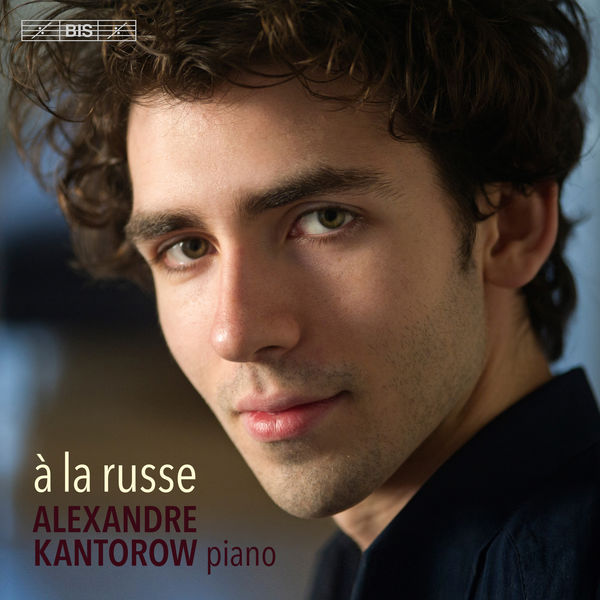
Alexandre Kantorow: A La Russe

Alexandre Kantorow A La Russe BIS 2017 (24/96)

This album again may not be of universal appeal. A slightly more eclectic selection of music, a very young pianist, and a lot of extremes in one album.

I still preferred it to let’s say the extreme perfection of Zimerman´s new Schubert recording (another contender for this list), simply because of the piano performance of Stravinsky´s Firebird. I’m not even a particular fan of Stravinsky in general, but this recording is simply out of this world.

You can find my original review here.


What do you think?

So, this is my list, what would be yours? Please share! As always, I appreciate your feedback and ideas!

In the meantime, let me wish all of you Happy Holidays!


P.S. 

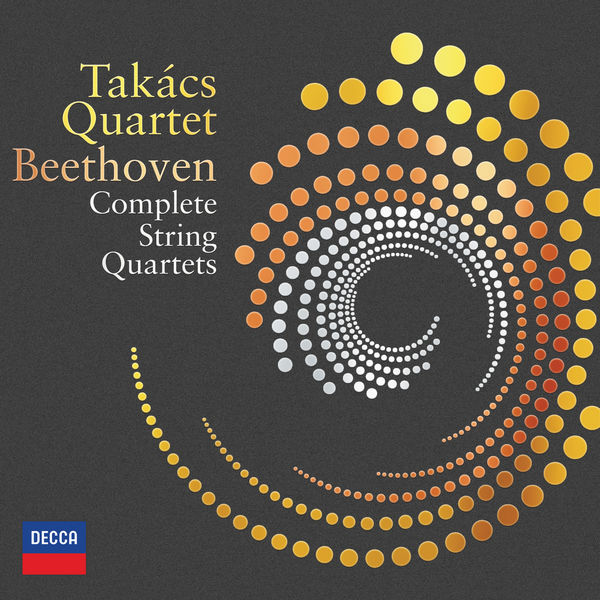
One more album, which isn’t properly speaking a 2017 album, but “just a remaster” released this year, gets a special mention: The outstanding complete Beethoven string quartets by the Takács Quartet.

See my original review here.

Takacs Quartet Beethoven Complete String Quartets Decca 24 48 2017 remaster


Getting Seasonal Again with Three Beautiful Versions of Bach´s Magnificat

Magnificat BWV243

Actually, the Magnificat isn’t per see a Christmas-related work. It was however apparently very early on performed on Christmas Day, so it stuck around as a seasonal work. From a content perspective, this is actually about Mary, not Jesus.

This beautiful choral work has been recorded over and over again.

So instead of just picking up one version, let me write about 3 different versions that all have their merits, by outstanding musicians.

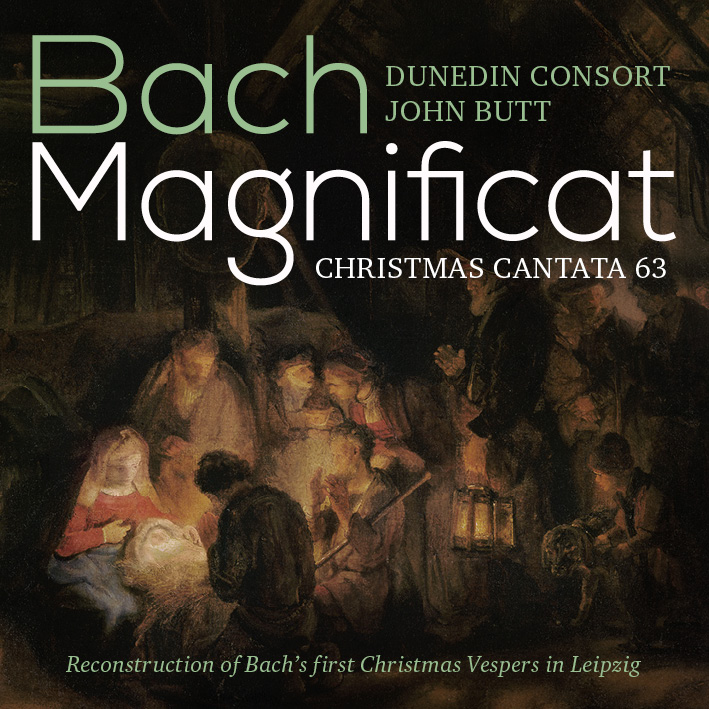
John Butt, Dunedin Consort (Linn 2016)

Bach Magnificat Dunedin Consort John Butt Linn 24 192 2016

John Butt takes the Christmas connection seriously, and tries to fully reconstruct Bach´s own Christmas performance in Leipzig. Appropriately, you get some organ music and the Christmas Cantata BWV 63. He even intersects a Vom Himmel Hoch Da Komm Ich Her, a traditional German Christmas Carol, in the middle of the work.

I’ve previously mentioned this album in my comments about the Gramophone Awards nominees in 2016, giving this album 5 stars. My high opinion hasn’t changed, it still is one of the most beautiful version around, and combined with Linn´s excellent recording skills, this is very much worth having. Particularly memorable about this performance is the choir in all its glory.

But let’s look at two recent alternatives:

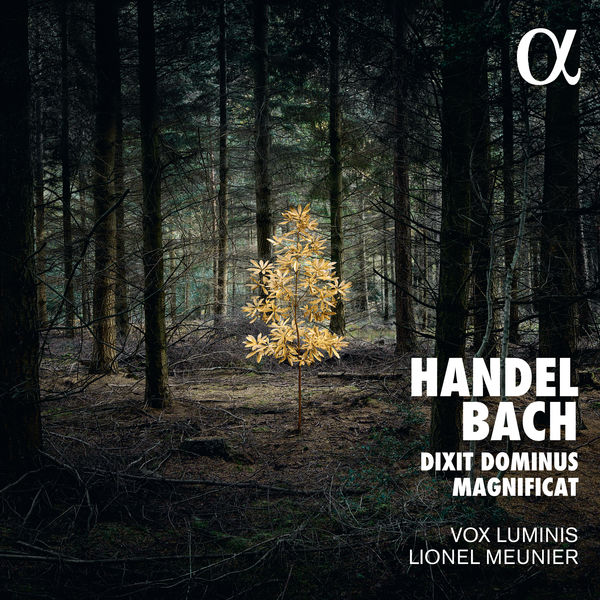
Bach: Magnificat / Vivaldi: Dixit Dominus – Vox Luminis – Lionel Meunier (Alpha 2017)

Bach: Magnificat Handel: Dixit Dominus Vox Luminis Lionel Meunier Alpha 2017 24 96

This is the most recent release among the three I´ll be writing about. The French Alpha label (OutThereMusic) is one of the most reliable labels I know, usually you can buy them nearly blindly. Nicely enough these days you don’t have to as they are available on most streaming services, which is also what I did first.

Vox Luminis I must admit was new to me, but a bit of research tells me it is an outstanding early music choir from Belgium (a hotspot of early and historically informed performance if there ever was one). And increasingly, they are not only a choir but also built up their own early music orchestra with it.

So how different is this version? Well, if Dunedin is all about sparkle, this is more about nuance and detail. Both really are outstanding recordings of the Magnifcat, you’ll just get a different perspective. So, talking colors, Dundedin is sparkling, polished gold, whereas Vox Luminis is more dark bronze. Both are beautiful in its own right.

What’s different here is the coupling, you get Vivaldis Dixit Dominus here. I’ve previously stated that I’m not a particular fan of the Red Priest, but this is one of the works that is certainly nice having in your catalogue.

Overall: Highly Recommended.

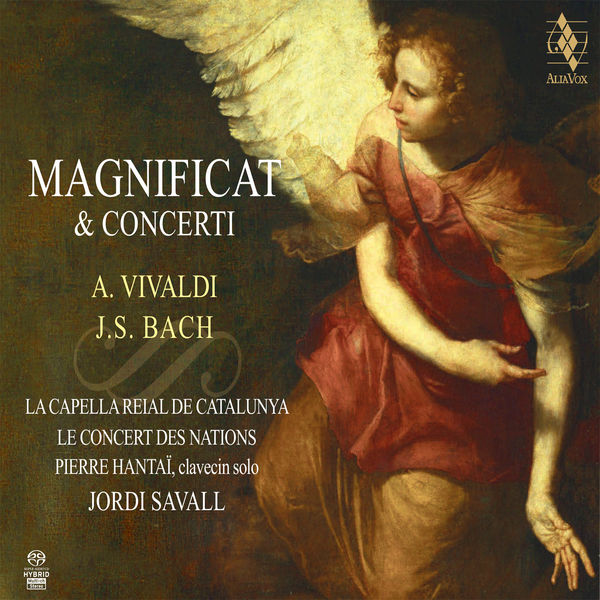
Bach / Vivaldi: Magnificat & Concerti – Jordi Savall – Le Concert des Nations 

Bach Vivaldi Magnificat Concerti Jordi Savall PIerre Hantai Le Concert des Nations La Capella Reial de Catalunya AliaVox 2014 24 / 88

This is the “oldest” of the three recordings, but still pretty recent, as released in 2014.

I absolutely had to include it here, as I just noticed my entire blog in spite of its 2,5 years of existence hasn’t mentioned one of the grand masters of early music yet, the brilliant Jordi Savall.

Jordi Savall, with his trusted ensembles of La Capella Reial and Le Concert Des Nations, is a legend in early music performance. If you don’t know him yet go and discover some of his many outstanding releases.

Interestingly enough, baroque music is already relatively “late” for Savall who focused quite a bit on the pre-baroque era.

But here he shines, particularly in the Magnificat. Comparing to the two version above, this is the most “balanced” approach, mixing the brilliance of the Dunedin´s with the more intimate performance of Vox Luminis.

Very interesting here are the fillers. Again, no fan of Vivaldi, but both the concerto for two violins and Vivaldi´s own Magnificat are quite pleasing. Nothing I´d go out to buy personally.

But the moment we move from Italy to Germany, this album really becomes outstanding. As mentioned, Bach´s Magnificat is close to perfect, And then you get a very surprising filler again, with Bach, with his keyboard concerto BWV 1052.

And who is the soloist, if no other then my beloved Pierre Hantai (see also here and here). I must admit I’m still looking for my perfect version of the Bach keyboard concertos. This one won’t be my reference as Hantai has the occasional quirk (he certainly is a character) that I don’t necessarily always appreciate, but one thing is for sure, you won’t regret having this version in your library. I keep coming back to it all the time.

Summary

There really is not a winner here. Check all of them out, look at which filling material you prefer, no matter what you choose, you’ll make a good choice. The Dunedin may have a slight advantage from an audiophile perspective, but all three recordings are of very high audio quality and are available as high-res recordings, so you really have the beauty of choice here.

My rating for all three albums: 5 stars


Update Dec 20, 2017: For once, I don’t really agreed with the latest recommendation by both Classica and Gramophone, who strongly recommend the very recent release of John Eliot Gardiner on SDG. Already the opening movement of the Magnificat sounds so rushed that it reminds me in a way of a 33 tours LP played at 45 RPM. May just be me, but I don’t get it. On the other hand, Classica was only so-so about the recording of Vox Luminis. All these reviews can be found in their December 17 issues. Doesn’t change my opinion above obviously.


Olga Scheps Plays Eric Satie – Delicate and Exquisite (A Review)

Eric Satie

You’d think after more than 200 posts I should have covered every major classical composer. And for the major ones this is probably true.

But there are still composers out there that I haven’t written about, including Eric Satie.

While his name may not be exactly a household item, he has written piano music that is often much better known than the composer himself, as they’ve been used in movies and on television all over the place.

His most famous pieces include the Gymnopédies and Gnossiennes. Most recently, you may have heard him in the soundtracks of TV series Mr. Robot or Dr. Who, but the list  at IMDB counts 185 entries. Satie has even been covered in Jazz, see for example on Paolo Fresu´s Mare Nostrum II or on Enrico Pieranunzi´s recent album Menage à trois. 

How did it I get to this blog post? Well, it was triggered by a discussion with my mother-in-law, who is at least as passionate about music as I am. She said “Have you written about Satie yet?” I answered that I hadn’t yet, but mainly because I still hadn’t found my “perfect” version.

Satie is not that often recorded. For years, you’d find a handful of classical recordings, typically by French pianists, like Aldo Ciccolini (ok he’s originally from Italy), or Pascal Rogé.

I hadn’t checked out new Satie recordings in quite a while. Turns out that was a mistake, he’s been recorded quite a bit in recent years. Steffen Schleiermacher released several volumes of his music on Dabringhaus und Grimm in 2012, Alexandre Thauraud published an album in 2014, and most recently, Russian/German pianist Olga Scheps has released an album on RCA Red Seal.

Olga Scheps – Satie (RCA Red Seal 2016)

Olga Scheps Satie RCA Red Seal 2016 24/88

In said discussion with my mother in law, we checked out several of these recent recordings. Initially I was relatively quick to dismiss Scheps´recording, based on simply on how she played Gnossienne No. 1.

Said Gnossienne has “lent” in the title, and I didn’t feel like Scheps was taking this work particularly slow. Indeed, her 3:07 are among the fastest out there, compared to Alexandre Tharaud at 3:34 or even more extreme Jean-Yves Thibaudet at 4:33. But actually, as sometimes I tend to be, my judgment was a bit too fast.

First of all, the legendary Ciccolini is even faster with 3:03, and actually, speed isn’t everything here. Turns out that Scheps really puts a lot of nuances into her Satie. A lot of details are highlighted, but in a fully natural way without ever sounding too “educational”.

Scheps, who being born in Russia, grew up in Germany, and now lives in Cologne, is probably better known for her very nice recording of Tchaikovsky´s 1st piano concerto than for these relatively “simple” pieces.

But you really need to check out this album, it reveals all the beauty there is in these little miniatures. This is not the “elevator music” as the composer sometimes called his own work (“musique d’ameublement”), this album requires you to sit down and take the time to absorb.

My rating: 4 stars


You can find it here (Qobuz) and here (HDtracks)

Brahms 2nd with Paavo Järvi and the Kammerphilharmonie Bremen – Outstanding!

Brahms

Did I mention I like Brahms? Well to be fair, the subtitle of my blog kind of gives it away.

These are good times for lovers of Brahms symphonies. Only recently Andris Nelsons has released his fantastic cycle of the 4 symphonies with the Boston Symphony Orchestra (see my 5 star review here), now finally Paavo Järvi starts his Brahms cycle with the Kammerphilharmonie Bremen as well.

Paavo Järvi

I really liked his Beethoven cycle with the same orchestra, actually it is among my current references. His Schumann is also great. So obviously I had high hopes for his Brahms.

And I’m not disappointed.

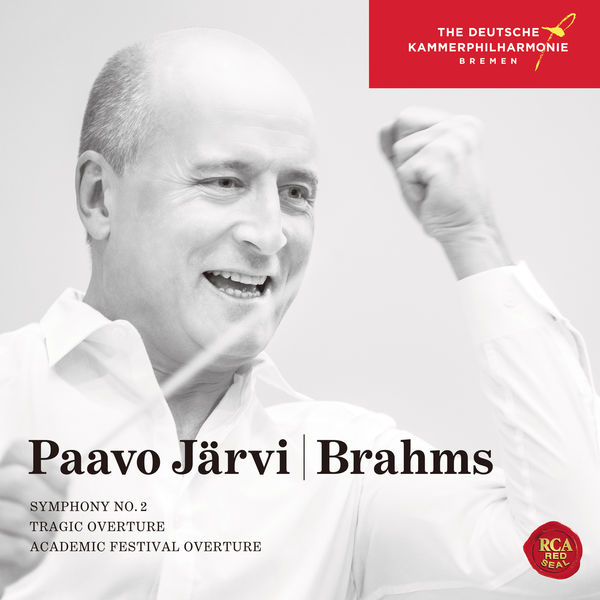
Brahms Symphony No. 2 – Paavo Järvi – Kammerphilharmonie Bremen (RCA 2017)

Brahms Symphony No. 2 Tragic Overture Academic Festival Overture Deutsche Kammerphilharmonie Bremen RCA 2017 SACD

The 2nd symphony is not my favorite of the four. 1 and 4 are outstanding, 3 is great, and 2 is just nice in my personal classification. Many have described the 2nd as Brahms “Pastorale“. Obviously, there is more to it, but a certain influence in the peaceful moments cannot be completely discarded. That said, , as the booklet also nicely explains, Brahms himself called the work “melancholic” and “sad” and even had the score printed with a black border.

How does Järvi deal with the symphony? The Kammerphilharmonie Bremen, as the name indicates, is a chamber orchestra, so you’d expect a slimmer sound than e.g. with the Berlin Philharmonic.

But don’t expect this to sound like a HIP baroque orchestra, you still get the full color of  a symphony orchestra, maybe just not as cinemascope as e.g. the latest Rattle cycle or Nelsons with the BSO. There have been some interesting adaptations, e.g the drums are having goat skin giving them a very particular sound.

Overall, it is very balanced, and nuanced. You get plenty of romanticism though, after all this is Brahms we are talking about. I particularly like the end of the 2nd movement, where

As a “filler”, you get the Tragic Overture and Academic Festival Overture. Both are nice to have, but nothing I´d listen to on a regular basis. There is too much outstanding music elsewhere.

Overall this is one of the best Brahms 2 currently on the market.

My rating: 5 stars

You can find it here (Qobuz) or on many other streaming sites.

If you prefer the original SACD, it is unfortunately very pricey (only found it for $40-60, what’s going on here?)


A new Trout Quartet recording with Daniil Trifonov and Anne Sophie Mutter – Very Enjoyable

Two superstars and prodigies

Anne-Sophie Mutter, for those of us who are old enough to remember, was a classical music  prodigy. Herbert von Karajan put her on the map when he performed a Mozart violin concerto with her in 1977, when she was 13. Anne-Sophie Mutter was a major star for the Deutsche Grammphon label in the 1980s and 90s.

I must admit I never very much liked her early recordings, to my ears they suffered from the same problem as Karajan´s late work on DG, just too much of everything. However, in recent years, Mutter style has evolved significantly, and her recent recordings, e.g. her 2013 recording of the Dvorak concerto with the Berlin Philharmonic, or her 2008 recording of the Bach violin concertos with the Trondheim Soloists show a very different Anne-Sophie Mutter.

Daniil Trifonov (born in 1991) started a tiny bit later, winning third price in the Chopin competition in 2010, and winning some major competitions one year later. Since then, he has released some fantastic albums, e.g. his great Rachmaninov album in 2015, or his recent Liszt Transcedental Etudes, all justify that he was named “Artist of the year” by Gramophone in 2016. Deutsche Grammophon (or whatever is left of it within the big Universal Music Group conglomerate) clearly still has a good taste in selecting musicians.

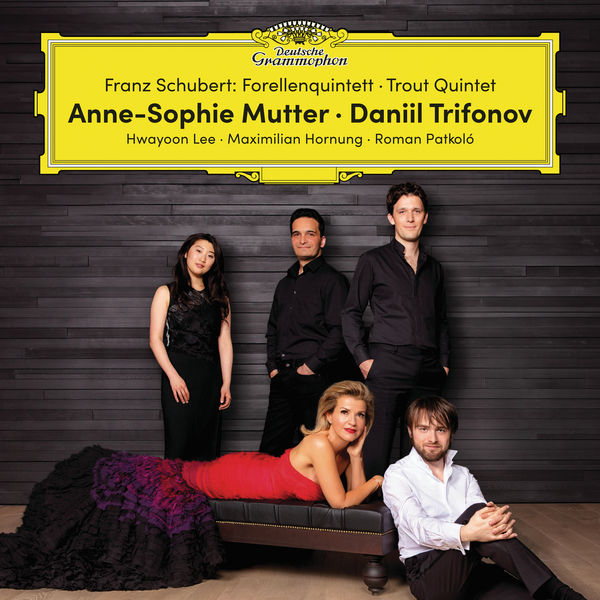
Schubert: Forellenquintett – Anne-Sophie Mutter – Daniel Trifonov (Deutsche Grammophon 2017)

Schubert: Trout Quintet / Forellenquartett Anne-Sophie Mutter Daniil Trifoniv 24/96 Deutsche Grammophon 2017

I’ve written quite a bit how much I love Schubert´s Chamber music (see here and here for my favorite versions of the string quintet, or an article here about the Rosamunde quartet), but so far I’ve never mentioned the Forellen or Trout piano quintet.

I really don’t know why, but somehow this work never ranked as highly in my personal scale as the pure string chamber works. Silly, I know, it is truly beautiful.

Before we go into the album itself, who else do we have here beyond our two super stars? I must admit I had never heard the names of Hwayoon Lee (viola), Maximilian Hornung (cello), and Roman Patkoló (double bass) before. And even the booklet of the album doesn’t bother to give any more information about them. After some googling it turns out all of them are young musicians that Hornung and Lee both are being developed by Anne-Sophie Mutters Young Talent foundation. Patkoló himself is currently a professor in Basle and has played with Mutter beforehand.

So what do we get here?

This album is the result of a live recording in Baden-Baden in June 2017. And you really feel the energy of a live event. There is passion, drive, and pleasure in every single movement of the Trout. Sometimes, when you have musicians that are not playing in a regular ensemble do chamber music, there is a risk of the music not being fully coherent.

This is not the case here, while Mutter and Trifonov are clearly the stars, all of the instruments merge smoothly in this adventure.

On top of the Trout, you get the Notturno for piano, violin, and cello D897, one of my absolute favorite Schubert works, and some song adaptations for violin and piano, including the famous Schwanengesang.

The only thing I´d have to criticize is that sometimes Mutter (and to some extent also Trifonov) seem to fall back into what I didn’t like about the early recordings, i.e. a bit too much of everything, a bit too much drama and vibrato, where I´d personally prefer even more intimacy (e.g. in the Notturno).

But overall, this is a very enjoyable album.

My rating: 4 stars

You can find it here (Qobuz) and here (HDtracks)


UPDATE Feb 28, 2018: It took Classica a while to review this, and the result isn’t pretty: 1 star, doesn’t get worse than this. They criticize the focus on Mutter and Trifonov and a lack of coherence.

Classical Life

A classical music blog by music critic Tim Mangan

This Week's Music

Making Classical Accessible

From my Macbook to the Net

Evaporation of my thoughts and observations

Elestra

Author: Artienne

My Life in Music

Playing, Singing and Listening

ArsX3

A brand new journal reviewing books, cinema, music

LawrenceEz's Blog

Creative and Performing Arts: Writing, Classical Music, Photography

Laetitia Strauch-Bonart

Contemporary Politics & Culture

sibling revelry

reveling in all things classical

It's A Raggy Waltz

I collect jazz on vinyl, I dig the Dave Brubeck Quartet, & I write about it

La Musica

By two cousins

thejazzbreakfast

Dishing it out from the heart of England

only jazz

random thoughts about music that matters to me

The Culture Project

Exploring the world of literature, wine, art, music and more.

René Spencer Saller

The music causes me to dream of fabulous empires, filled with fabulous sins.

Breaking Baroque

Blog of Tafelmusik Baroque Orchestra and Chamber Choir

Tasting Nirvana

Eating your Dosha

Shadow of Iris

Poetry, fiction, short stories, more ...

The Immortal Jukebox

A Blog about Music and Popular Culture

April Greene

Writer + Editor

a pianist's musings

A history of your favorite classical music.

Classical music for all

Boris Giltburg's blog

I HEAR VOICES

An orchestra seat in the web space