Moments in Time – One of the best Stan Getz live albums

Stan Getz

I haven’t written that much about Stan Getz on my blog, as I don’t listen to his albums very often.

He’s probably best known for his latin jazz collaborations with Joao Gilberto, published under the simple titles of Getz/Gilberto (yes, the Girl from Ipanema, and she still goes walking) and Jazz Samba, both among the best selling jazz albums of all times.

There’s another album with Stan Getz I really enjoy, the 1958 Stan Getz & The Oscar Peterson Trio. I bought this very early in my Jazz discovery journey as Oscar Peterson’s trio was one of my gateway drugs into Jazz, and I bought a lot of his classic Verve albums. This one is definitely worth checking out.

Other than that, it seems to me that Getz has somewhat had an image issue with the hardcore jazz community, as his West Coast style jazz was not really seen as exciting as the developments going on in New York City. And I must admit, I mostly myself stick to the great Hard Bop period.

But then there’s Getz late period. I’ve already listed a set of fantastic performances in Europe, People Time, the collaboration with Kenny Barron, in my 25 Essential Jazz albums. I really get a very special introspective intensity from these late performances.

And then I recently discovery yet another live album that I didn’t have on my radar screen, recorded more than a decade earlier, that I really enjoy. It was only released in 2018.

Stan Getz – Moments in Time (Resonance Records 1976/2018)

This concert was discovered in the archives of the Keystone Corner, a San Francisco Jazz club.

I must admit I didn’t know any of the rhythm section previously, which includes Joanne Brackeen on piano, Clint Houston on bass, and Billy Hart on drums. Apparently, these were taken from the first part of the concert which featured just this quartet, which were then followed by a second set with Joao Gilberto.

So, what are we getting here?

Well, on the surface, mostly easy going jazz with the typical Stan Getz sound. But I still like this album much more than the average Getz album from this era.

Why? I presume it’s the live setup which gives just a special intensity to the performances. Live has the advantage of just giving more time to each individual musician to express themselves, with time to breathe and solo. The longest individual performance, Gillespie’s Con Alma, which is one of my favourite tracks on this album, has a playing time of 12:34. But the track I truly like best is a ballad, Wayne Shorter’s Infant Eyes, which really just has a beautiful intensity and intimacy to it.

So, overall, really an album really worth exploring.

My rating: 4 stars (with Con Alma and Infant Eyes being truly 5 stars)

You can find it here (Qobuz)

Alternatively, if you believe a bit in some audiophile voodoo, you can also get this remaster from 2xHD (it’s the one I bought and how I discovered the album in the first place).
András Schiff Plays Brahms Piano Concertos on Historical instruments – Worth Checking Out

Brahms’ Piano Concertos

There is clearly no lack of excellent performances of the two Brahms piano concertos. There are many masterful recordings from the 1960s with the great piano legends, Curzon, Arrau, Fleischer, Richter, or Gilels, often with the fantastic George Szell, that have stood the test of time, as the romantic repertoire has seen less of a sea change of recording style as have earlier composers (I can’t really enjoy non-HIP Bach concertos any more for example).

There also have been a lot of more recent recordings that are outstanding. One of my favorite sets is the Nelson Freire / Riccardo Chailly / Gewandhaus one from 2006, or more recently, the excellent (No. 1) / very good( No. 2) recordings by Lars Vogt with the Northern Sinfonia (that I just noticed I totally forgot to review here).

And as a nice coincidence, the very first recording I ever owned of No. 1 was with András Schiff as well, with George Solti on a 1989 Decca album.

So why would even a Brahms aficionado like me bother to buy one more recording of these?

The answer is called Blüthner. That is the piano that Schiff uses in this new recording.

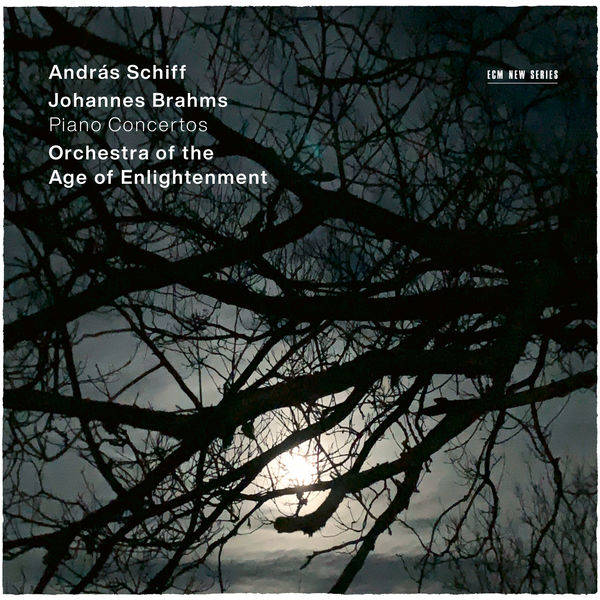
Brahms: The Piano Concertos- András Schiff – Orchestra of the Age of Enlightening (ECM 2021)

Andras Schiff Johannes Brahms Piano Concertos Orchestra of the Age of Enlightenment ECM New Series 2021 24 96

The Blüthner is a piano from c. 1859, i.e. 1 year after the writing of Brahms first concerto. It has a quite different sound to the typical modern Steinway, less heavy, less brilliant, but more transparent.

To complement that, the Orchestra of the Age of Enlightenment is also clearly historically informed, playing on gut strings.

So, is it worth it?

I’d say yes (and I did purchase the album). I really like the difference in sound and transparency one gets from the historically informed approach and instruments. This is the first recording of Brahms concertos with a HIP approach that hit my radar screen, and it really gives you new insights into these works.

To quote Schiff himself from the booklet: “With the present recording we have tried to recreate and restore the works, to cleanse and ‘detoxify’ the music, to liberate it from the burden of the – often questionable – trademarks of performing traditions“.

Now, does that mean this will be my new reference recording? Clearly not, I won’t be abandoning the beauty of all the recordings I’ve quoted above. I really like the piano playing, although some rubati aren’t always my cup of tea, but particularly in the first concerto, I’d just like to see a bit more drama in the orchestral introduction.

But if you like Brahms, you should really check this recording out!

My rating: 4 stars

You can find it here (Qobuz)

Some thoughts around the new Liszt album from Benjamin Grosvenor

Benjamin Grosvenor

I’m a big fan of this young British pianist (maybe not as extreme a fan as Gramophone who adore every single one of his albums). I’ve previously reviewed and praised his Chopin concertos (part of my top 5 albums of 2020), his Homages album, his Chopin/Liszt/Ravel album, which also appeared in my Top 10 Chopin albums, and I’ve even listed him among my Top 10 Classical pianists (a list that led to a lot of debate by the way).

So I had really high hopes when Grosvenor recently released his latest recording, of nothing less than Liszt’s magnificent b-minor sonata, plus some other works.

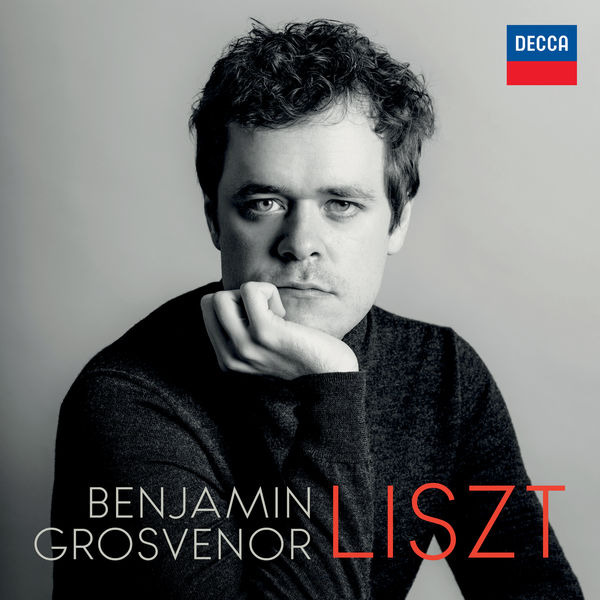
Benjamin Grosvenor – Liszt (Decca 2021)

Benjamin Grosvenor - Liszt - Decca 2021 - 24 96

Now, before I go to the meaty bit, the b-minor sonata, let me start by saying that I really love how Grosvenor plays the other pieces on this album, particularly the extract from the Années de Pélérinage.

Also particularly interesting is Liszt’s 15 min piano adaptation of Bellini’s classic, Réminiscenes de Norma, a less often played work.

And I can’t get enough of the beautiful piano adaptation of Schubert’s Ave Maria.

The b-minor sonata

I really love the b-minor sonata, it is to me at least the ultimate Liszt piece. And here’s where we get to my “but” that you probably saw coming from my intro above.

Let me start by the positives: I really like how he takes the Andante sostenuto slower than most, giving it a special sense of intimacy and out-of-this-world spirit.

Now, what am I missing here, in what is actually a very good version?

Well I really believe one needs to go to the biggest extremes in this work (an opinion probably not universally shared). That’s why my favorite versions will remain those of the legendary Martha Argerich, and the somewhat controversial version by Katia Buniatishvili. In some parts, I just wish Grosvenor would push things just a bit further, he certainly has the power and technical abilities to do it.

Nevertheless, this is a beautiful album absolutely worth having.

My rating: 4 stars

You can find it here (Qobuz)

Delightfulee – Very Much So Indeed

Hard Bop

In the earlier days of my blog, I had an entire series on the Hard Bop period of Jazz. I haven’t written a lot about it recently.

I’m not sure why. Probably because I just haven’t listened to it as much recently. Without noticing, I saw my listening preferences subtly move towards even more classical music, with less emphasis on Jazz.

However, whenever I return to one of my hard bop classics, I can’t help but just truly enjoy the experience. It is a much more visceral enjoyment, compared to the sometimes more intellectual appreciation of some of my classical albums (not that classical music cannot be truly emotional).

Nicely enough, many of the old classics are now being remastered and re-released, which typically gets me to buy the same album again. As is the case in this one.

Lee Morgan: Delightfulee (Blue Note 1966)

Lee Morgan Delightfulee Blue note 1966 24/96
Note

Lee Morgan is mostly known for his legendary album The Sidewinder (see my review here), which I included in my 25 Essential Jazz albums list, but not only he’s been a fantastic sideman on a lot of great albums, including the other legendary classic, Moanin(yes, Morgan is yet another Jazz Messengers alumnus).

This album was recorded in 1966, probably the last year before Jazz descended on what to me are the dark ages of free and fusion (I’ve discussed this extensively on this blog that I barely listen to any Jazz albums between 1966 and 1980 approximately, with some exceptions to confirm the rule).

The very first track is already something I truly love, Ca-Lee-So, in the latin inspired Calypso style. This song, in my humble opinion, beats even the most famous Jazz Calypso of all, Sonny Rollins St. Thomas from the album Saxophone Colossus that was recorded 10 years earlier, and I believe contributed to make this style popular.

Yesterday starts a bit on the cheesy side admittedly. Once you get through the intro, it really gets better, giving time to the individual soloist to dissect the harmony of this classic.

Sunrise, Sunset, is just very solid swing, one that if you’re not tapping your foot to it, you are really missing the point.

Another highlight to me is Nite Flite, with its beautiful modal approach. It is also the longest track on the album, which confirms my theory that the longest tracks are often among the best (they just give more time for the soloists to develop their ideas, in this case particularly to the brilliant Joe Henderson, but McCoyTyner also gets plenty of air time).

Overall, a very aptly named album.

My rating: 4 stars

You can find it here (Qobuz)

Francesco Corti Plays Bach Harpsichord Concerti – A True Delight

Bach Harpsichord Concertos

In more than 5 years of this blog, I’ve only formally reviewed one version of the Bach piano/harpsichord concertos, the very surprisingly disappointing (to my ears) recording with Andreas Staier.

In that article I mentioned that I’m still looking for my favorite version of these beautiful works. So far I typically went with Cafe Zimmermann’s recordings that I haven’t reviewed yet individually.

So, what was wrong (again, IMHO) with the Staier recording? Well, Gramophone at the time summarised it nicely: “If you’re looking for fun, abandon, lyricism, radiant lift off […] and luminosity, then maybe this one is not for you“.

And yes, that’s exactly what I was looking for. And it seems like I finally found it.

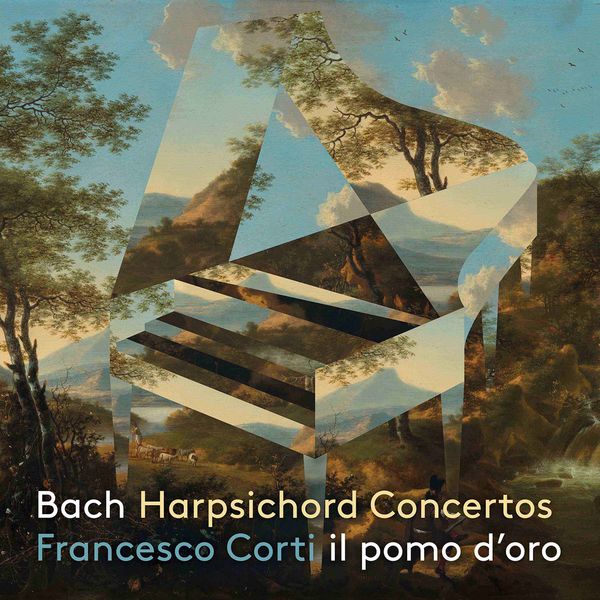
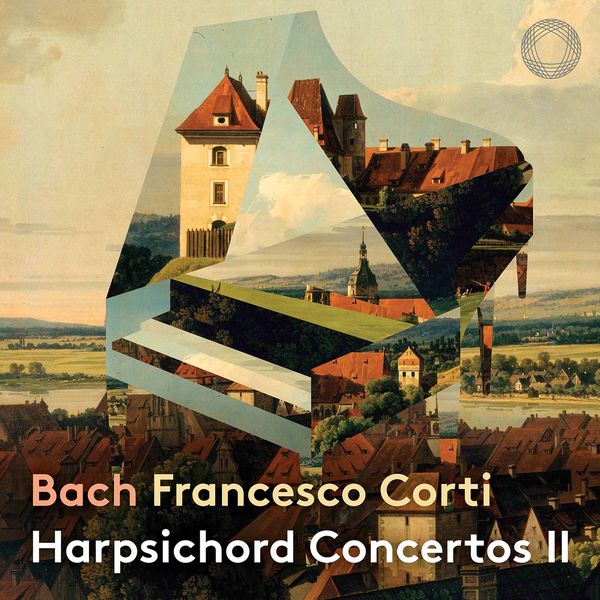
Bach: Harpsichord Concertos vol. 1 & 2 – Francesco Corti – Il Pomo d’Oro (Pentatone 2020/2021)

For some reason, I missed the release of vol. 1 of these two separate albums back last year, and really only fully discovered this when vol. 2 was released some days ago.

Bach: Harpsichord concertos Francesco Corti Il Pomo d'oro Pentatone 2020 24 96
Bach: Francesco Corti Harpsichord Concertos II Il Pomo d'oro Pentatone 2021 24 192

Francesco Corti is a well known Italian organ and harpsichord player, and Il Pomo d’Oro is a recently (2012) founded ensemble specialized in baroque music.

Both bring together two recordings that are playful, enjoyable, bouncy, lively, and engaging. Very much the opposite of the somewhat dull Andreas Staier recording.

Is it perfect? Well, no. Corti and the ensemble occasionally have some quirks, particularly with regards to tempo selection in some parts.

But, to quote Duke Ellington, It don’t mean a thing if it ain’t got that swing. And swing there is, plenty. It is just a sheer pleasure to listen to. And that, to me at least, is worth more than technical perfection.

Therefore, this may well become my new go-to version for these works I bought both volumes immediately, which I encourage you to do as well.

My rating: 5 stars

You can find it here (vol. 1) and here (vol. 2)

Mozart’s Piano Concertos vol. 4 with Jean-Efflam Bavouzet – A Somewhat Confused Review

Mozart’s Piano Concertos

I haven’t written about the Mozart piano concertos that much yet on this blog. Not sure why. I really like them. Maybe it is because they were just always there, I’ve been listening to them for my entire life. But then, there are many (and many of which if you want to be nasty sound somewhat similar). And while truly enjoyable, one could argue the true masterpieces from Mozart are to be found elsewhere (take the DaPonte operas for example).

That said, I always had a particular fondness for numbers 20 and 21. The andante of no. 21 is even featured on my very own wedding video (I added a personal soundtrack to some of the pieces in the edit).

A quick reminder of my mentions of the Mozart piano concertos on this blog: You’ll find a beautiful recording with the amazing combo of Martha Argerich and Claudio Abbado recommended as part of My Must Have Mozart Albums, which features no. 20, but not no. 21. In the same blog post I also mention the historically informed recordings of Bezuidenout (which I like) and Brautigam (which I’m starting to have some doubts on), as well as the classic Perahia box.

And that’s basically it.

So, when in 2020 a new Mozart album was released that got a Gramophone Editors Choice, a nomination for the Gramophone awards album of the year, as well as a Choc by the French magazine Classica, that I usually really trust, I just had to buy it.

Mozart: Piano Concertos vol. 4 – Jean-Efflam Bavouzet – Gabor Takacs-Nagy – Manchester Camerata (Chandos 2019)

Mozart Piano Concertos No. 21 & 20 - Jean-Efflam Bavouzet - Manchester Camerata - Gabor Takacs-Nagy Chandos 24/96

A quick word about the soloist, orchestra and conductor: While I like and appreciate Jean-Efflam Bavouzet (have a look at my post on his great complete Debussy box), I must admit this is my very first encounter with both the Manchester Camerata and Gabor Takacs-Nagy.

So, what is it like? Well this is going to be a somewhat weird review.

In many ways, it is perfect. It is extremely well played from both orchestra and soloist, and Bavouzet puts a lot of creativity into the solo part, from variations, improvisations and ornaments in many places to the occasional liberty on tempi, and overall, I really wouldn’t know what to criticize.

So what’s wrong? Well, maybe it is the modern instruments and I’ve recently enjoyed the historically informed practice so much, or maybe it is just a bit TOO perfect, and I need the occasional imperfection. Honestly, I don’t know.

You should probably just ignore my opinion here and check it out yourself (please let me know what you think in the comments); as mentioned, both Gramophone and Classica were extremely impressed.

My rating: 4 stars (I may come back on this rating later once I’ve figured out if I’m just making a mistake here).

You’ll find it here (Qobuz)

My (Current) Favorite Version of Brahms’ 4th Symphony

Brahms’ 4th Symphony

I started this blog writing extensively about Brahms’ 1st symphony, and why it means so much to me, and why to this day I’m still looking for my “perfect” version.

I’ve also reviewed Andris Nelsons’ excellent Brahms cycle with the Boston Symphony some time ago (5 stars). I’ve also found a favorite version of Brahms 2nd symphony

But I’ve never written explicitly about Brahms 4th symphony.

To me, there’s a clear (personal) hierarchy among the Brahms symphonies. The first will always come, well, first, the 2nd is still nice but I listen to it much more occasionally, the 3rd is beautiful, but has the super famous 3rd movement that has been a bit overused in popular culture. And then there’s the 4th symphony.

After all, this could actually be the greatest masterpiece of all of them. Why? Well, I’m just totally in awe of the fourth movement, which is basically just a set of variations on a very simple motif, a Passacaglia. I’ve written before how much I really appreciate variations these days, they are a true art form (even though it is something that one appreciates only after some learning), be it the Goldberg variations, the Diabelli Variations, or Brahms several other variations, like the Haydn or Händel variations.

Each one of these little variations in the 4th movement is such a gem, with an emotional depth (some say down to very deep despair) in a bit more than 9 minutes. And unlike most other symphonies, this symphony doesn’t end in happiness. It starts in the e-minor key, and ends in e-minor. Compare this to Brahms own first symphony where you start with the nearly menacing timpani but you end in a chorale that tells you that all will end well. Nothing ends well here.

Don’t get me wrong, it is not only the last movement that is fantastic. In this symphony there’s more than enough to discover in each of the movements. In comparison, Brahms’ 1st has a fantastic first and last movement, but the two in between feel more like an interlude.

Brahms: The Symphonies – Riccardo Chailly – Gewandhausorchester Leipzig (Decca 2013)

Brahms: The Symphonies Gewandhausorchester Leipzig Riccardo Chailly Decca 2013 24 96

So, now to my current favorite version of the 4th. I put the “current” in the title, as I always keep discovering and looking, and my taste clearly changes and evolves over time.

Before I get into Chailly’s excellent recording, a quick note on some other versions you should check out. Many critics will give you Carlos Kleiber’s legendary recording with the Vienna Philharmonic, and they have a point. It really among the best. I’ve long been in love with Fritz Reiner’s beautiful reading with the Royal Philharmonic. Another all time classic is George Szell with the Cleveland Orchestra. (Side note: Szell takes the 4th movement much more slowly at 10:42 compared to Chailly’s 9:23, only to be exceeded by Karajan’s reading with 10:49, as well as Kurt Masur in 10:52).

If we look at the more contemporary versions, beyond the already mentioned Andris Nelsons, you should also check out John Eliot Gardiner’s historically informed reading with his own Orchestre Révolutionnaire et Romantique (I’m not totally convinced of his approach, but it is nevertheless quite insightful).

But now enough of the alternatives, here’s my current champion: Riccardo Chailly with the Gewandhausorchester. By the way, this is not the first recording I love from Chailly in Leipzig, my favorite version ever of the Bruch violin concerto with Janine Jansen was recorded with this great team, and the same recording also features my favorite Mendelssohn violin concerto (mentioned in my 25 Essential Classical albums). Chailly’s recording of the Brahms piano concertos with Nelson Freire is also one of my all-time favourites, and the complete Brahms’ serenades recording is also outstanding.

So why do I prefer Chailly over all the other versions mentioned? I’d say it is not one little thing, but a sum of all the small things. This recording just feels “right”, balanced, nuanced, going deep when it needs to, but still tightly controlled.

And this doesn’t only apply to the 4th symphony. As you can only get this as a box set (if you decide to buy and not to stream, which I strongly encourage you to do), you’d also need to know that all the other three symphonies are top notch. They are IMHO, together with Nelsons, the best contemporary set you can buy.

To compare the two: Nelsons & the BSO really go big, this really is Brahms in Cinemascope in the great tradition of Karajan. Chailly’s approach in pretty much all cases is a bit more nuanced and delicate. Both versions really have very strong merit, and you won’t be disappointed with any of them.

And on top of that, going back to Chailly, in this very reasonably priced set, you also get most of the other orchestral works that Brahms has written, e.g. the above mentioned Haydn-Variations, the Tragic Overture, the rarely played Liebeslieder Walzer, and even to wrap it up some of the famous Hungarian Dances.

My rating: 5 stars

You can find it here (Qobuz)

Classical Life

A classical music blog by music critic Tim Mangan

This Week's Music

Making Classical Accessible

From my Macbook to the Net

Evaporation of my thoughts and observations

Elestra

Author: Artienne

My Life in Music

Playing, Singing and Listening

ArsX3

A brand new journal reviewing books, cinema, music

LawrenceEz's Blog

Creative and Performing Arts: Writing, Classical Music, Photography

Laetitia Strauch-Bonart

Contemporary Politics & Culture

sibling revelry

reveling in all things classical

It's A Raggy Waltz

I collect jazz on vinyl, I dig the Dave Brubeck Quartet, & I write about it

La Musica

By two cousins

thejazzbreakfast

Dishing it out from the heart of England

only jazz

random thoughts about music that matters to me

The Culture Project

Exploring the world of literature, wine, art, music and more.

René Spencer Saller

The music causes me to dream of fabulous empires, filled with fabulous sins.

Breaking Baroque

Blog of Tafelmusik Baroque Orchestra and Chamber Choir

Tasting Nirvana

Eating your Dosha

The Immortal Jukebox

A Blog about Music and Popular Culture

April Greene

Writer + Editor

a pianist's musings

A history of your favorite classical music.

Classical music for all

Boris Giltburg's blog

I HEAR VOICES

An orchestra seat in the web space