Writing About and Reviewing Classical Music and Jazz
Category: *****
The rare bird – exceptional albums that are a must have IMHO. I try to be rather selective about giving 5 stars, less than 10% of my personal album collection fall in this category.
This young singer has already received so much praise, including a Grammy and a DownBeats critics poll, that I’m hardly presenting you a scoop here, but a new album by such a great artist really needs a blog post!
Dreams and Daggers (MackAvenue 2017)
A couple of initial comments: this is a live album, recorded in 2016 at the legendary Village Vanguard in New York that has given us outstanding live albums already back in the days of Bill Evans. And the recording quality is excellent, you really only notice the live character of this album from the audience´s enthusiastic clapping and her occasional comments to the public.
Second comment: you get a double album here. Some could argue, is this a bit long? Actually not at all, you actually really don’t want this album to end.
Third comment: this album is formally slightly less innovative than the first two ones, you get more Irving and Gershwin standards, and the playing by Aaron Diehl and his great musicians is relatively mainstream. Some of you will take that as a criticism. Actually, not at all!
Because McLorin Salvant manages to put her very personal spin on even old try familiar standards like Devil May Care or You’re My Thrill.
My favorite track is Somehow I never could believe, which starts out as a sensitive ballad where Aaron Diehl already gets to shine in the long intro, but the real hero is Paul Sikivie on bass. And then you get Cecile´s voice, which on this track sometimes is even close to whispering. Amazingly intense.
A note on the title: You have Dreams, representing pretty much what you’d think it means. But what about the Daggers? Well, according to McLorin Salvant, this is about the songs about more complex topics, like feminism, racial identity, self-doubt, that really force you to listen to the lyrics.
This album is a must have for any jazz lover. The year is not yet over, but I´d be surprised if this album doesn’t end up in my personal top Jazz albums for 2017.
As you can see from the subtitle of my blog, I’m a huge Brahms fan.
Unfortunately, I haven’t been that happy with most of the Brahms symphony cycles recorded in the last 30 years. To be fair, even more than for other composers, the legacy left by the glorious recordings of Furtwängler, Klemperer, Walter, and even Toscanini, made it not easy to do something better (except for the recording quality).
We’ve had some very modern light “HIP” approaches from Gardiner and Dausgaard, both of which I appreciate as they give a very fresh point of view, and benefit especially the lighter middle symphonies (I consider 1 & 4 the heavyweights).
But unfortunately, most of the recent complete symphony recordings didn’t impress me much (see also this post where I was desperately, and in vain, searching for a modern reference of the 1st symphony). The only box I like (and still, not for every symphony) is Riccardo Chailly’s cycle with the Gewandhaus, which takes a nice middle way between the heavy romantic recordings of the past and the HIP inspired gut-string recordings of today.
Well, my wishes have been heard. The BSO has recently released their first full Brahms cycle. And I must admit I initially didn’t plan on buying it. The album is not available for streaming on my favorite streaming provider (except for the 4th), and the 1st is so critical to me that I didn’t want to buy blindly.
Well, then the September 2017 issue of Gramophone comes out, and gives it an “Editor’s choice”. I haven’t always been in agreement with Gramophone recently (see my comments about the 2017 Gramophone awards), but an Editor’s choice still means something. Then I started googling and also found this excellent review by John Marks, formerly with Stereophile.
So there you had me. I bought the box blindly.
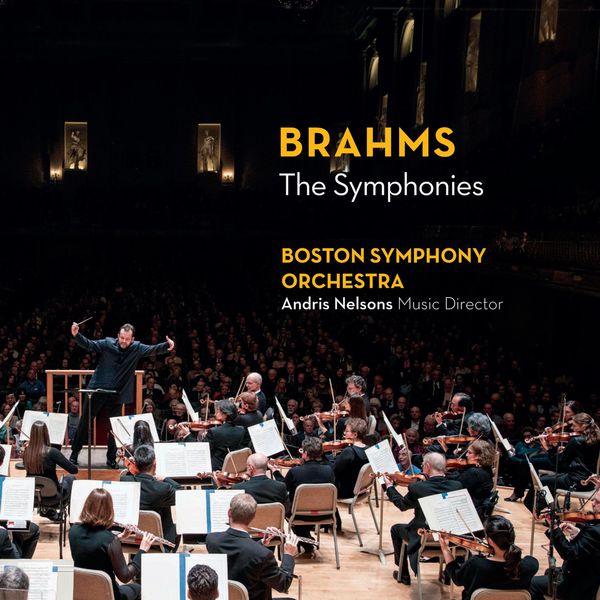
Brahms: The Symphonies – Andris Nelsons – Boston Symphony Orchestra (BSO Classics 2017)
So, what do you get?
Well, let me start by saying, if you like Brahms, you need to have this box. Nelsons takes the learnings from the great classics, mixes in the beautiful BSO sound, and brings a very beautiful Brahms style to life.
I’d call it Cinemascope, as you really see all the colors, on a very big screen. His approach is never rushed. You get to see all the fine details that Brahms managed so well.
Let’s talk about the individual symphonies, and let’s take them backwards.
Symphony No. 4
I’ve mentioned above that No. 4 is one of the two heavyweights for me. I particularly love the variations of the fourth. I’ve mentioned Nelsons taking it relatively slow. He takes 10:08 for this movement. This is not yet the 11:29 of a Bruno Walter, but also not the 9:35 of a John Eliot Gardiner, or even the 9:23 of a Chailly (interestingly, Furtwängler uses 9:47, starting slowly but accelerating over time, which works for me).
But, this music can take the tempo. There is so much going on in these fantastic variations, and Nelson lays it all out in front of you. And he keeps the power during the entire movement, which isn’t easy.
Symphony No. 3
Going one back to no. 3: here the heavier approach works, but not as well as for no. 4. It gives the famous Poco Allegretto (known from movies and commercials) an even more sentimental character. In some way this speed, with the tremolo of the violins, makes the quiet anti-climax of the ending sound like we’ve just moved directly into a Wagner opera.
Brahms wasn’t a particular fan of Wagner, but actually this shows that while they may have disagreed on structure, there are more similarities between the two than you’d think.
Symphony No. 2
Symphony no. 2 is sometimes considered Brahms’ Pastorale. And here is where I have my biggest problem with the slower tempo, it tends to take away some of the lightness of this music. Here I’d much rather have a Chailly or Gardiner. That said, it is still a beautiful recording.
Symphony No. 1
And now let’s move to symphony no. 1, my absolute favorite of the four (here’s why). And you’ve probably guessed it by now: Nelson’s style is just perfect for this romantic work.
My appreciation of any interpretation of this symphony is often already formed in the first seconds: the chromatic increased with the dramatic tympani needs to grab me immediately (as do Furtwängler and Klemperer), otherwise, I’m already lost. Nelsons takes a very special approach here, the tension is there but he doesn’t release it yet. Beautifully done. Movements 2 and 3 are nice, but basically just fillers between movements 1 and 4. The finale really summarizes what I love about Brahms. A lot of variation and developments (you never know what comes next), and then so outstandinly beautiful moments as the famous horn solo (at 2:56 for Nelsons), followed by the even more amazing melody of the cellos (at 5:12).
It is still a bit too early days, but this has the potential to become my new modern reference version of Brahms 1.
My rating: 5 stars.
I was hesitating a bit, as you’ve seen above that not all of the four performances are 5 stars to me (1 and 4 certainly are, 3 up to a point, 2 would “only” be 4 star), but this is overall a very convincing new reading of the Brahms classics. Check it out!
You can find it here (BSO website) and here (Qobuz)
I haven’t written that much yet about Beethoven’s string quartets. It is a hard to cover vast subject of 16 masterpieces, from the early ones that are still very reminiscent of Haydn, to the middle ones (mainly the Rasumovksy ones), that clearly match the power of the major Beethoven symphonies, to the entirely different universe that are the late quartets, that enter completely unheard harmonic complexities, that go even beyond his symphonic works.
How can one quartet really do them all justice? Typically, reviewers recommend getting different boxes for the different periods, and they are right.
However, some outstanding artists are able to just set a standard for all three periods. And the Takács Quartet is just one of them.
When Decca re-released the complete Beethoven box that was originally recorded in the early 2000s, I had to go back to it. I’m very glad I did, I was again blown away.
The Takacs Quartet has been around since 1975! They are probably one of the most outstanding string quartets ever. I’ve praised the Takacs´ several times already (See for example here my review of their fantastic Schubert), and remain a great fan of them.
In this box, in the early quartets of op. 18, you get all the Viennese lightness. These are just a pleasure to listen to. These works need to “swing”, and the Takacs just pull it off.
Moving to the more serious op. 59, the Takacs´switch gear appropriately. Take quartet no. 9, op. 59 no. 3, that starts with a very “serious” Andante con moto. This part occasionally reminds me of a Mahler symphony. And here, you get the full weight and emotional power this work requires, before moving on to the Allegro part, that gives you the Beethoven you are most likely to think of when you hear the name.
The late quartets again are a completely different animal. Let’s take for example op. 127. I have a pretty direct comparison, having only recently heard this played live by the equally fantastic Quatuor Ébène (see my concert review here). Comparing the two approaches here, let´s say we could characterise the Ébène’s live approach with “Passion”, and the Takacs’s with “Precision”. These are obviously simplifications, but you get the idea. Both are absolutely fantastic versions, and show you how much there is to discover in these masterworks, that are unfortunately not very approachable for the beginner. Give them some time, and they will grow on you.
If you only ever wanted to own one version of the Beethoven string quartets, this really would be the one to have. I´d strongly advise against having only one version, there are so many others to discover, and Beethoven’s quartets really are among the most outstanding masterpieces the Western world ever produced.
I haven’t heard any of the other albums, with some Telemann and Vivaldi, but will check in and maybe report back later.
Baroque Vocal
Hyperion doesn’t stream, so I cannot comment about Cohens/Arcangelos cantata album.
Bach: Matthew Passion – Gardiner
As reviewed here, I fully agree that this is a five star album very much worth having.
I haven’t heard any of the other recommended albums, from Blow (never heard that name before), Couperin, Monteverdi and Scarlatti, but will check them out, as they are by Les Arts Florissants and Christophe Rousset among other, that I really admire.
Chamber
I haven’t heard any of the first three recommended albums, as they are all 20th century stuff which really isn’t my cup of tea, from Ades, via Bacewicz, Berg, Schönberg, and Webern. I’ll leave this to others.
I´d be interested in trying the Bruch String Quartets as I have very little chamber music from this composer, but Hyperion doesn´t stream so I have no way of risk free trying.
Then there are two Schubert albums. Quatuors 12 and 15 by the Doric Quartet. I have only heard it once on the radio (again, also Chandos doesn´t stream), and liked it, but wasn´t blown away. Not interesting enough for me to spend money blindly on it.
Finally, there is the Death and the Maiden and a quartet by Sibelius by the Ehnes Quartet. Unfortunately, Onyx is another label that doesn´t stream.
So basically, there´s unfortunately not a lot I can contribute to this category, which I usually love.
Choral
Several albums in here that are just not my cup of tea, eg. Berkeley or Elgar. Even Haydn´s Season, here with Paul McCreesh, is not a piece of music I´m particularly passionate about. Better to shut up then.
I´m more curious about the Cherubini album by Hervé Niquet, I´ll check that one out later today.
There have been a number of recent recordings of Rachmaninov´s All-Night Vigil, and I´m also very interested by this latest recording of John Scott. I will report back on this one as well.
Let me maybe start by the one recording I can really recommend in here:
Mozart: Violin Concertos – Isabelle Faust
I gave it a four star rating, as I don´t consider Mozart´s violin concertos to be essential, but the playing is truly five star.
I´m not a very huge fan of Lisa Batiashvili´s Sibelius and Tchaikovsky album, but this is more due to Barenboim, not Batiashvili´s fault. Augustin Hadelich Tchaikovsky is straightforward, but also not that much my cup of tea.
I will certainly check out Alexandre Tharaud´s Rachmaninov album and report back.
I can´t comment on the albums by Adams and Beach.
I´ll skip the contemporary and early categories, as I don´t feel qualified enough here.
Instrumental
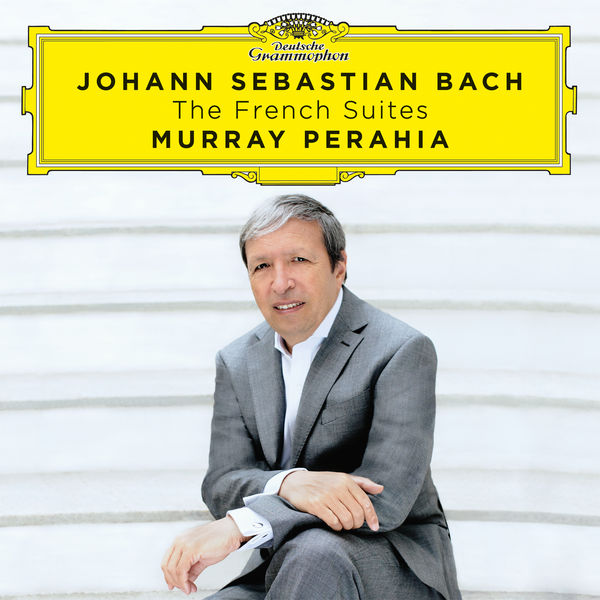
Bach: French Suites – Murray Perahia
Yes, absolutely, great album. A must have. See also here
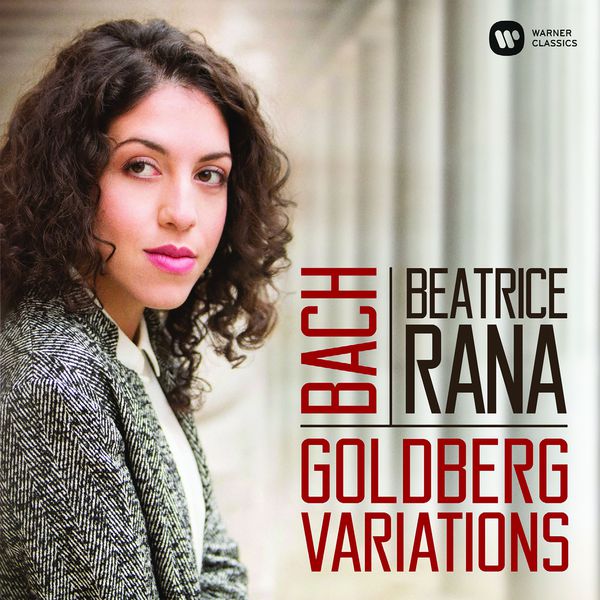
Bach: Goldberg Variations: Beatrice Rana
I´ve now played this album many times, and still haven´t fully made up my mind. I kind of like it, but it´s really not my personal reference.
I´d like to comment about Cedric Tiberghien´s Bartok album and Pavel Koselnikov´s Chopin Mazurkas, but due to Hyperion´s no streaming policy I can´t. Side note: I really understand why labels don´t want to support streaming, as the business model is not very attractive, but on the other hand it really limits discovery. Maybe labels should invent a streaming model where you can listen to an album only 2-3 times and then need to purchase it. I find that album´s I can´t test I often don´t buy.
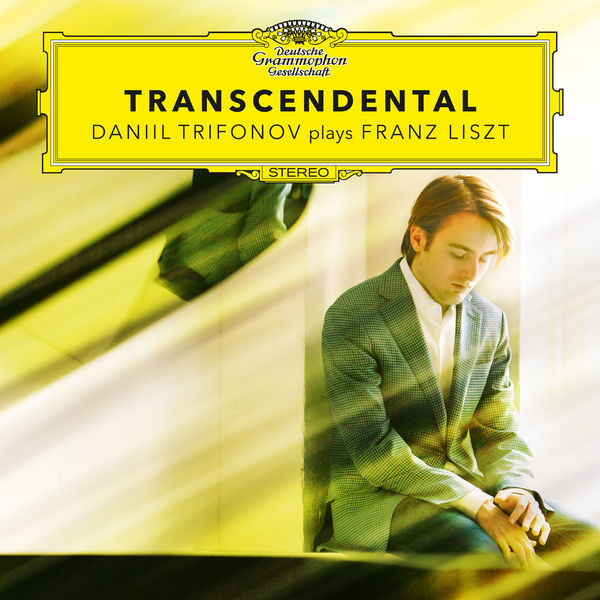
I haven´t reviewed this album yet, but have listened to it many times. And yes, it is very good, justifying the Artist of the Year he received last year.
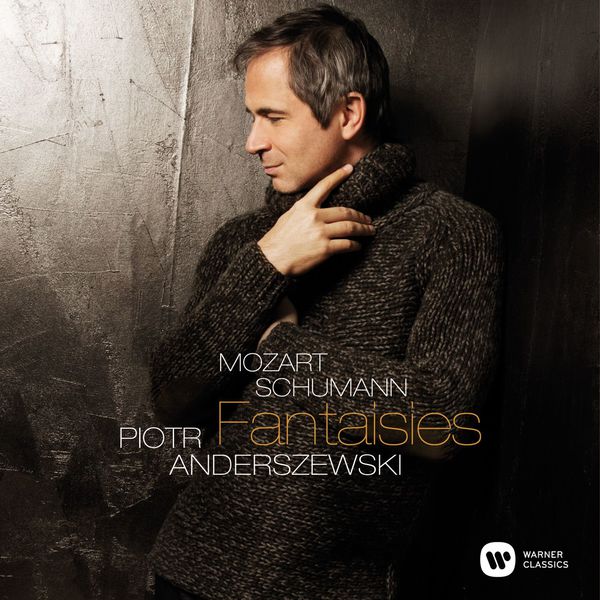
Mozart/Schumann: Fantaisies – Piotr Anderszewski (Warner)
As many of you know, this really isn’t my day job. I work in a completely unrelated industry. Recently I’ve traveled on average 2-3 times per week, so my blogging has taken a back seat.
I’ll still try to get a blog post done every two weeks. The best you can do, instead of having to check back on my somewhat unreliable posting schedule, is just to sign up with your email on the right, so new updates will come to your inbox, or follow me on WordPress. Like this you don’t miss any update.
Live Jazz Recordings
Furthermore, given my workload, I’ll shamelessly steal from my own forum post here at Computer Audiophile, where I post quite regularly on music, and less so on audio gear.
I have previously written about my 25 Essential Jazz albums, but had never done a specific post on live jazz albums. Triggered by “Route66″‘s question, I went through my album library and had a look at which live albums I can particularly recommend. The OP was particularly interested in small Jazz club-type venues, so this further limited the selection to the following 9 albums. Some of them I’ve written about previously, some of them are new to this blog.
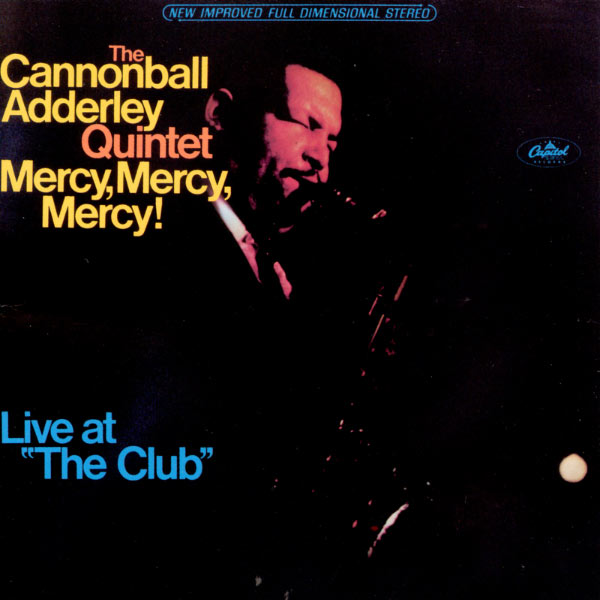
Cannonball Adderley: Mercy Mercy Mercy – Live At “The Club” (Capitol 1966)
I’ll mention Bill Evans twice on this blog post. Bill Evans during his career had three major trios (see also this blog post on his middle trio). He started, after the work with Miles Davis, with Scott LaFaro and Paul Motian. Unfortunately, LaFaro passed away in an accident shortly after the album below was recorded. Many still consider this early trio his best. I don’t necessarily agree, as I really love his later trios very much as well.
Waltz for Debby is part of several recordings taken by the trio live at the Village Vanguard. The Village Vanguard is one of the legendary NYC jazz clubs that is still open today. If you want more of it, you can also get The Complete Village Vanguard Recordings 1961 box, which includes the titles above. You’ll see it popping up a number of times below in this post.
The advantage of getting the individual Waltz For Debby album is that you can try to find one of the many audiophile remasters. I’ll leave it to others to debate which of the several available remasters is the best, and will recommend the HDtracks version which is already pretty good. Musically in any case, this album, is an absolute must have and really helped define the category of the Jazz Piano Trio.
My Rating: 5 stars
Bill Evans Trio: Consecration
Consecration is already mentioned as part of my 25 Essential Jazz albums. This is Evans’s latest trio, and actually his very final recording before his early passing.
Do I prefer Consecration over Waltz For Debby, or vice versa? Why decide? Get both!
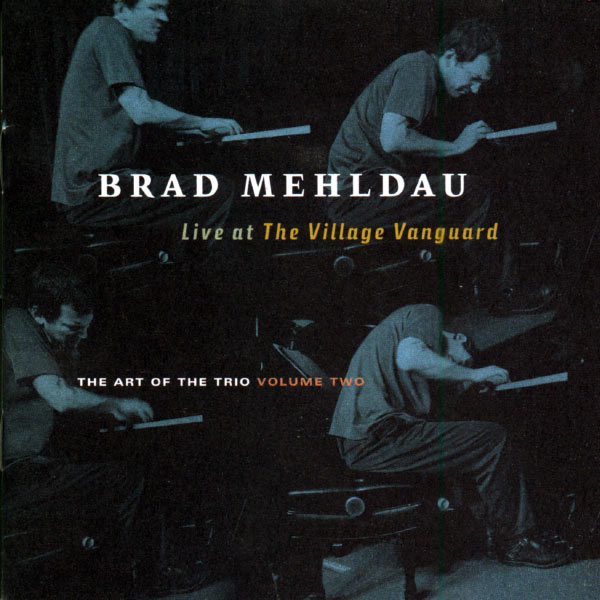
Brad Mehldau: The Art of the Trio Vol. 2 – Live At the Village Vanguard (1991)
This one is a new addition to the blog.
I’ve written about my love/hate relationship with Brad Mehldau several times (see here for example), but Vol. 3 of his early series The Art Of The Trio is listed in my 25 Essential Jazz albums. This live album is not as good as the studio vol. 3, but still very much worth having. Especially for Moon River, a particular favorite of mine. Recordede at the same Village Vanguard as the Bill Evans 30 years earlier.
My rating: 4 stars
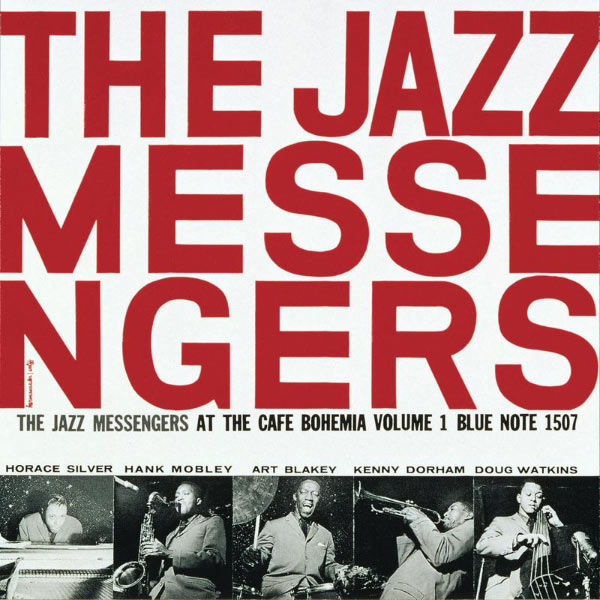
The Jazz Messengers At The Cafe Bohemia Vol. 1 (1955)
I haven’t written about Hard Bop for a long time. Actually, I haven’t even listened to Hard Bop a lot recently, which is a pity, as this is one of my favorite genres.
The above 1955 album is one of those who started it all. Look at the line-up. Horace Silver, Hank Mobley, Kenny Dorham. All of these had successful solo careers after which (check out my blog for recommended albums in the above mini series).
Unfortunately, there hasn’t been any new audiophile remastering of this album, so you can probably just as well go with the regular CD remastering by Rudy Van Gelder (although I’m not a particular fan of his remasters in general).
My rating: 4 stars
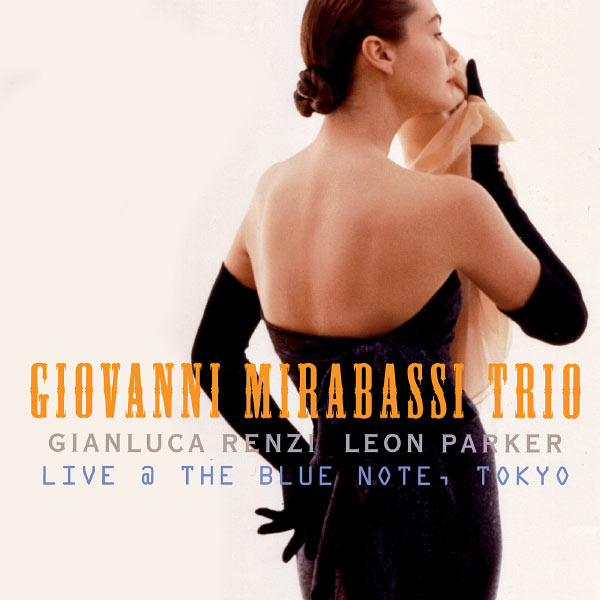
Giovanni Mirabassi: Live At the Blue Note Tokyo (2010)
Giovanni Mirabassi was also mentioned several times on this blog, including as part of my 25 Essential Jazz albums.
This album, recorded live in Toyko, is not my absolute favorite, but still a very good performance. What is nice about it that the trio takes time for each track, often 8-10 minutes, allowing melodic development and soloing.
My rating: 4 stars
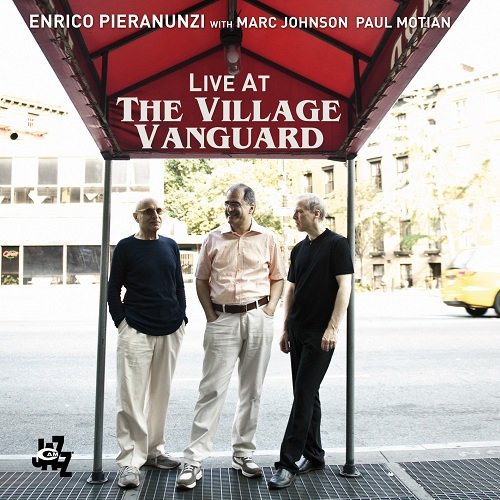
Christian McBride Trio: Live At The Village Vanguard (2015)
No, I haven’t selected albums simply on the fact that they were recorded at the Vanguard. It is just simply a very popular recording spot.
And look at the lineup here: Paul Motian was already the drummer on Waltz For Debby above, and Marc Johnson was the bass player in Evans’ middle quartet (but has later played a lot with Pieranunzi).
This is a very good live album, but doesn’t get to the intensity swing-wise of his master. It’s very much worth having still. Pieranunzi really develops the lyrical side of Bill Evans even further.
Check out this video, how Paul Motian called up Pieranunzi for this one week live gig. The text is in Italian, but you get enough excerpts of the music to get a good idea.
My rating: 4 stars
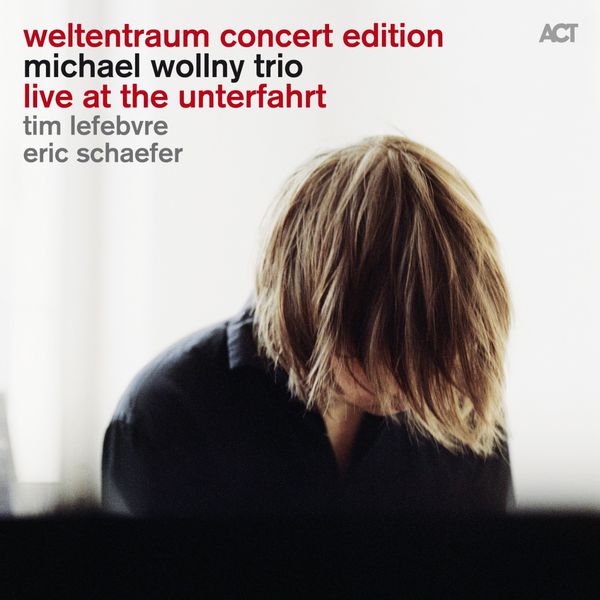
Michael Wollny Trio: Weltentraum Concert Edition – Live At The Unterfahrt
Michael Wollny is one of the most creative pianists we have today. This is the live album of Weltentraum, recorded at the Unterfahrt jazz club in Munich in 2014. This album is really as good as the studio one, in many respects even better. Very much worth having.
My rating: 5 stars
You can find the newly listed albums here, for links to the other albums please go to the original blog post.
I’ve mentioned this several times before, reviewing classical music is a very subjective business. See examples here and here of cases where professional reviewers disagree a lot about the quality of a recording.
Therefore, it is even more impressive if you find reviews where nearly everybody agrees. Those are the recordings you should truly check out, as these are actually rather rare.
One of these outstanding recordings is the recent Arkadi Volodos recording of Brahms. This album got a “Choc” (i.e. 5 stars) from Classica AND an Album of the Month by Gramophone.
What is even more impressive is that not only these two agree, but 5 other classical reviewers (not counting me) do as well. Classica publishes every month an overview of what the leading critics in the French media (France 3, Le Figaro, Radio Classique, France Musique, and Le Monde) think of a number of recent albums on a scale from “X” (didn’t like at all) to “three hearts” (liked passionately). I check this overview every month, and it is really extremely rare to find that all reviewers give three hearts.
Well, for the Volodos recording, three hearts from all of them. The only outlier I’m aware off is Andrew Clements from the Guardian.
In a nutshell, we have a strong contender here for the piano album of the year (a bit early after only 5 months, but mark my words, I’ll get back to this later).
Why am I writing all this in a review of a completely different album?
Well, a because I just read the overview in the latest Classica, but also because the album I’ll be writing about now is to me the only serious contender for best piano album of the year (again, so far).
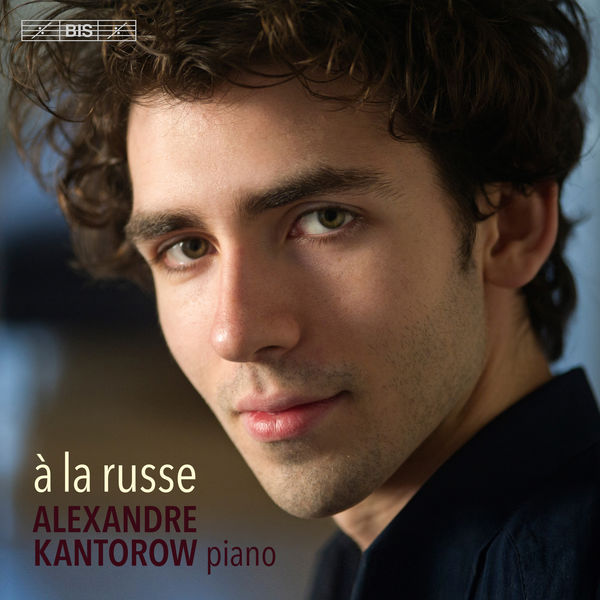
Alexandre Kantorow – A La Russe (BIS 2017)
I first heard about Kantorow, son of the conductor Jean-Jacques Kantorow, from a recent email by Robert von Bahr, the owner of the Swedish independent classical label BIS.
I’m on his mailing list, and on a monthly basis, you’ll get a note about BIS’s most recent releases. Obviously, this being the owner, you have to take his promotional talk with a grain of salt, but actually he has a rather refreshing open style, and more often than not, he can even be sometimes being quite critical of his own releases.
So when I received an email with the following text “I have absolutely no qualms in saying, nay, screaming, that we in ALEXANDRE KANTOROW have a super talent, indeed someone destined for a world career that is now starting (….) Alexandre Kantorow is a genius, and we are going to record as much with him as he can give us“, I at least got curious.
Well, Robert wasn’t overpromising. This album is truly spectacular, and really is so far the only real challenger for Arkadi Volodos this year.
What do you get? Well, as the title indicates, Russian composers. A sonata by Rachmaninov, some lesser known pieces by Tchaikovsky, and Balakirev’s Islamey.
But to me the absolute highlight of this album is the piano transcriptions of parts of L’Oiseau du Feu (Firebird) by Igor Stravinsky. I’m not a big fan of Stravinsky in general, his music doesn’t speak to me that much.
But here, I cannot be but mesmerized by the mixture of extreme virtuosity and outstanding musicality.
This is a must have album.
My review: 5 stars
You can find it here (eclassical) and here (Qobuz)
This must have been the longest time between blog posts ever, and I don’t feel good about this.
My only excuse is work (my day job), I’m traveling more than ever including some intercontinential trips (actually, I’m writing this from an airport lounge) and free time was pretty much down to zero.
It doesn’t look like it’s going to get better any time soon, but I still hope I’ll be able to write my weekly blog post (there is more than enough material and notes in my Evernote account).
So when his latest trio album came out, I was naturally very interested, as a matter of fact, I bought it in less than a day after it came out (I still buy albums, digitally, in spite of also subscribing to streaming, to ensure that artists make at least some money from their art).
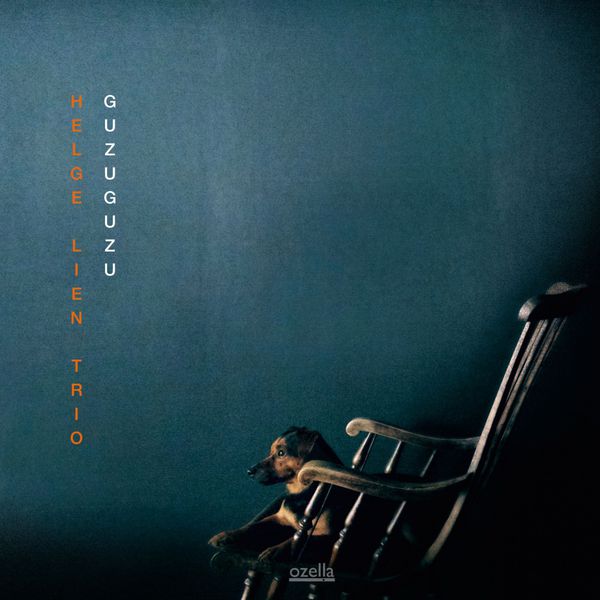
Guzuguzu (Ozella Music 2017)
I really didn’t have to hesitate a long time because the album is truly outstanding.
It is probably my favorite since Hello Troll. You get Scandinavian lyricism combined with often extremely complex rhythms. And even peaceful ballads like Shitoshito(Raining Quietly) get their share of chordal shifts and interesting rhythmic breaks.
Lien plays with his usual companions, Frode Berg on bass, and Per Oddvar Johansen on drums, and you can really hear the intimate connections between the musicians all the time, they truly melt into one common instrument.
Add to this that the recording quality of this album is outstanding, as produced again with recording Engineer Jan Erik Kongshaug at the brilliant Oslo Rainbow studio, this album really cannot be recommended higher if you like Scandinavian trio jazz, or actually trio jazz in general.
My rating: 5 stars
You can find it here (Qobuz) and here (Highresaudio)






 musicophilesblog - From Keith Jarrett to Johannes Brahms