Christoph von Dohnányi – A Totally Underrated Conductor

Christoph von Dohnányi

Why are conductors get so much more well known that others? The classical music industry has it’s own mechanisms of getting attention. I’m not sure I’ve fully understood them yet.

In any case, let me take a recent release by German conductor Christoph von Dohnányi as trigger to write about this conductor I really like a lot, but probably isn’t as famous as he could (or should?) be?

Von Dohnányi, born in Berlin in 1929, started his training as… a lawyer. Yes, he went to law school in Munich before deciding that music was more his thing. Well to be fair, he had some family history, his father Ernst (Ernö) von Dohnányi  was a pianist and composer.

You could assume that  Dohnányi’s talent was rather quickly recognized, given that in his early years he worked with giants like Leonard Bernstein and Georg Solti.

Later on, he became conductor of major orchestras like the Cleveland Orchestra, that Georges Szell had really turned into a world class ensemble, and the Philharmonia orchestra, of Karajan and Klemperer fame.

He also worked with many other leading orchestras, be it in Boston, New York, Paris, or Vienna.

His recording of the Mendelssohn symphonies with the Vienna Philharmonic are still among my absolute favorite versions, especially for no. 3 and 4.

Nevertheless, I as said initially, I don’t see his name pop up as often as you think as one of the great conductors of our time.

Schubert’s Symphonies

I’ve said it before, I’m not a big fan of Schubert’s symphonies in general. OK, there is the beautiful Unfinished, but anything before that to me is only of passing interest. On the other hand, Schubert obviously was an absolute genius for chamber music (e.g. here, and here), piano music (see this review), or the Lied. Unfortunately, he passed away way too early. You can only wonder what Schubert’s music would have been had he reached the age of Beethoven or Brahms.

I also have somehow a difficult connection to his so called Great Symphony, or no. 9 in C-major.

Side note: Actually C-major is a really boring key. It’s the one you play on a piano if you just leave out all the black keys. By musicologists and composers it is often described as noble and majestic. I personally like minor key quite a bit more. But let’s close the parenthesis here.

What really annoys me (well that’s a strong word) about Schubert’s symphony no. 9 is what Robert Schumann called the Himmlische Längen (heavenly length) of this work, there are just some repetitions too many for me.

But that minor annoyance set apart, it is still a beautiful piece of music.

Especially when it get’s played by a conductor I really like…..

Schubert: Symphony No. 9 – Live in Concert – Christoph von Dohnányi – Philharmonia Orchestra (Signum Classics 2016)


Schubert: Symphony No. 9 Live In Concert Christoph von Dohnanyi Philharmonia Orchestra Signum Classics

Another parenthesis here: what do you plan to do when you’re about to turn 87 years old? Still working? Probably not.

Well, not so for our hero of the story here, who recorded this beautiful album at the age of 86, in a live performance.

What do I like about this recording?

Well, in a nutshell it has just the right balance of gravitas and lightness that this work needs. You have the big sound of a major orchestra, but there is never anything static about it, always positive tension, and most of all, a lot of fun and joyfulness.

I suggest you read this insightful interview with the conductor about this particular recording here on Prestoclassical.

My rating: 4 stars

You can find it here (Qobuz), and here (Signum Records)


Argerich vs. Angelich – Liszt’s B-Minor Sonata

Gramophone

The new July issue of Gramophone appeared rather early on my iPad (I’m not into paper subscriptions any more).

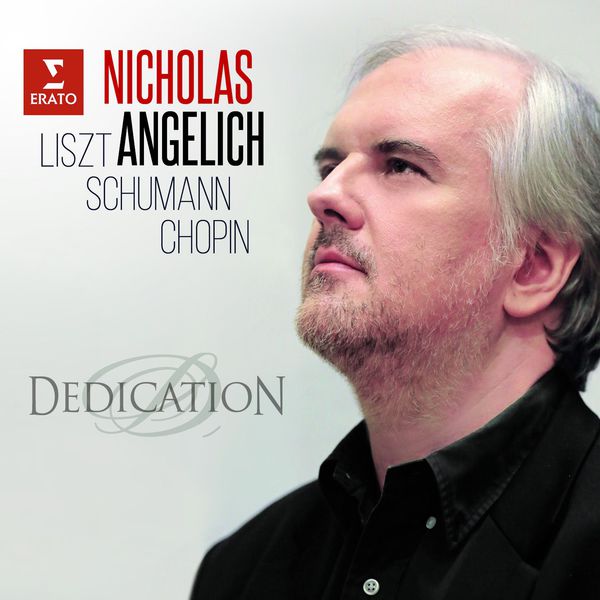
As usual, impatient that I am, I jump immediately to the Editor’s Choices, starting with the Recording of the Month. This time, Nicolas Angelich recent Dedication Liszt/Schumann/Chopin album. Cool, I think to myself, another great recording to check out of Liszt’s b-minor sonata.

Liszt’s b-minor sonata

I’m not a huge fan of Liszt in general (too much, especially his orchestral works). But there are certain works I really like, including most of all his great b-minor sonata.

My favorite version by the way is Michael Pletnev’s recording on DG by the way (maybe to be reviewed at some point in the future).

In any case, I must admit, I didn’t really even get to listen to the entire Angelich album, I stopped about 5 minutes into the b-minor sonata. I was really stunned. Liszt was supposed to be the greatest virtuoso of his time, and this version, well, let’s just say, it didn’t touch me at all.

To be fair, my taste may not be universal, as I really liked Katia Buniatishvili’s recording on Sony, which was anything if not controversial, to say the least (some just hated it, stating is was too much…).

But again, this post won’t be about Angelich (which I have yet to properly listen to beyond my 5 minute trial) nor about Pletnev or Buniatishvili, but about one of the greatest pianists  of all times:

Martha Argerich

Yes, the fiery Argentine pianist. She has a very particular sound and style (in a blind test on Swiss radio, two experts blindly identified her vs another artist on 5 out of 5 different pieces, and even I got 3 out of 5), and once you’ve heard her, you’ll never forget her.

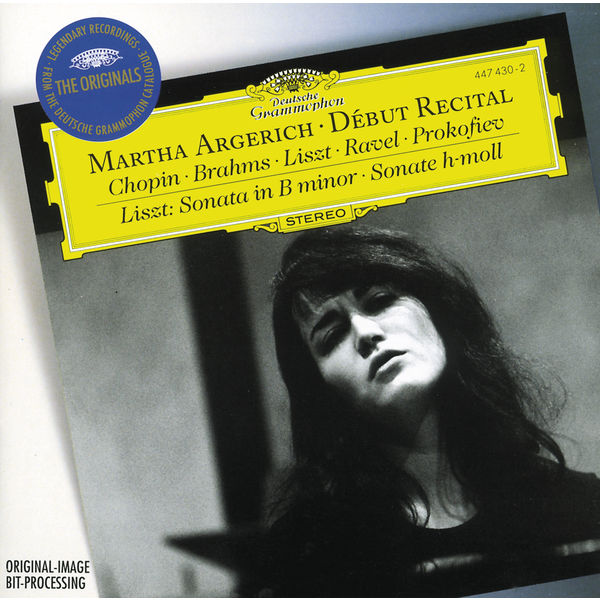
So I recently found myself buying her legendary debut album, remastered and released as a 24/96 download (I had bought in on CD ages ago, but hadn’t listened to it regularly enough).

Martha Argerich: Debut Recital (DG)

Martha Argerich Debut Recital Deutsche Gramophon 24 96

Wow.

Somehow, the Chopin competition really means something. Look at the winners, Pollini, Blechacz (see here), Yundi, and Argerich! (well, this year seems to be a bit of an outlier, see my comment here). Basically she was a pure genius from day one.

Her Chopin barcarolle, so beautiful. And the Scherzo no. 3, my favorite! Her Brahms is ok, not outstanding, but when we get to Liszt, all hell breaks loose! Already the Hungarian Rhapsody is full of fire and energy, her trademark, but go to b-minor, and check out every savory moment, from the quiet introvert moments to the amazing prestissimo (track 17).

If this leaves you bored, you’re probably deaf.

And now go back to your streaming provider of choice and check out the Angelich against it, and I guess you’ll understand what I mean.

My rating: 5 stars plus!

You can find it here (Qobuz) and here (Prostudiomasters)

Note that getting the 24/96 remaster is not necessarily a must, unfortunately the original recording was already rather poor, and even the remaster still sounds rather like a shoe box.


UPDATE June 11: Another word about the Angelich recording that I browsed over a little bit superficially above.

The Angelich album not only got high praises from Gramophone as mentioned above, but also a Choc from Classica magazine, and this recording of the b-minor sonata was just selected in their June 2017 issue as best version in a blind test comparing 10 recordings out of the ones released in the last 20 years.

Nicholas Angelich Liszt Schumann Chopin Dedication Erato 2017

Triggered by this I listened again to Angelich. Well, to be fair, it is a good recording. However, I still prefer much more the more extreme versions like Argerich, Bunatishvili, etc. For me, this extreme work requires extreme playing. I find the Angelich a bit too “middle of the road”. But given that several reviewers I really respect disagree with me, you have to check it out.

#GERUKR differently: Brahms Piano Concerto no. 2 with Gilels (UKR) and Jochum (GER)

No, this is blog is not suddenly turning into a sports blog.

To explain the title hashtag to my non-EU readers: we currently have the Football Euro Cup 2016  going on in France (the real football, not the one where guys in funny plastic armor carry an egg around and jump at each other), and Germany just won against the Ukraine 2:0.

Emil Gilels

Let me instead write about my favorite Ukrainian of all times (and no, it’s not Vladimir Klitschko, and this is still not a sports blog): Emil Gilels. Born in Odessa, which seems to be a hotbed for great musicians, he is probably one of the best Brahms players I’ve ever heard.

Brahms Piano Concertos

More than one year into the life of this blog dedicated to Brahms in the subtitle, and I still haven’t written about the piano concertos yet. There are several reasons. a) there are among my absolute favorite pieces of music ever. b) there are just so many outstanding versions out there, I’m still not sure which one really is my favorite.

Especially for his 2nd piano concerto, which could also be called symphony with piano (as unlike the typical romantic piano concerto of the time, piano and orchestra are very interwoven), the Golden Age for the recordings were the 1950s and 60s. You can pretty much buy all versions the great Georges Szell has ever recorded (Fleischer, Curzon, Serkin), take the absolutely brilliant recoding by Serkin with Erich Leinsdorf on RCA, etc. etc. etc.

And then there is Gilels. So far, my favorite Gilels version always was the great version with Fritz Reiner and the Chicago Symphony, again on RCA. His later recording on Deutsche Grammophon I bought later on CD, but listened to it much less.

Today, I ended up buying the new remaster of this recording, which features both concertos and the Fantasias op. 116.

Brahms Piano Concertos – Emil Gilels – Eugen Bochum – Berliner Philharmonic (DG 1972/2015)

Brahms: The Piano Concertos Emil Gilels Eugen Bochum Berliner Philharmoniker 24/96 DG 1972 2015

Gilels plays here with Eugen Jochum, a German conductor I mainly associated with his great Brucker cycles (both his EMI and DG cycles are excellent). And in a way this is fitting.

Especially in the slower parts, Brahms sounds a bit like Bruckner (which Brahms would probably have taken as an insult, he didn’t have a very high opinion of Bruckner). There are quite a low of slow moments. But slow with so much tension.

The 2nd concerto is in any case the much more mature (written in his 40s) piano concerto compared to the energy of the first concerto written in Brahms’ early 20s. So the slowness actually adds something. And Gilels manages to align perfectly with Jochum and the excellent BPO. There are so many more nuances in this recording that I’ve never heard in any other version.

Will this become my preferred version ever of no. 2? Honestly, I don’t know. In any case it is one of the absolute best out there, and it will always stay close to my heart.

I won’t comment today on concerto no. 1, which is equally contained on this release. Suffice it to say it is very good, but I’ll write more about it in a later post.

My rating: 5 stars

You can find it here (Qobuz), discounted at the time of writing this, and here (Prostudiomasters)

Schumann’s Cello Concerto by Jean-Guihen Queyras – A Review

A Trilogy

This is now the third and presumably album of an exciting series by three outstanding musicians.

The German violinist Isabelle Faust (yes, I’m a big fan, see here or here), the Russian pianist Alexander Melnikov, and the French cellist Jean-Guihen Queyras are all great musicians individually, but get even better when they play together.

An excellent example is their recording of some Beethoven Trios on Harmonia Mundi some years ago, and Faust’s and Melnikov’s collaboration on Beethoven’s and Brahms’ violin sonatas are among my absolute favorites (the latter made it as part of my top 5 classical albums in 2015).

In this particular project, the three have decided to attack Schumann, and to couple one of his 3 piano trios with one of his orchestral solo works, playing with the Freiburger Barockorchester under Pablo Heras-Casado, on Harmonia Mundi.

Faust started, coupling his piano trio with his relatively unknown violin concerto back in early 2015. I really like this album.

Some month later Melnikov got his chance to play the famous piano concerto (see my 4 star review here) with piano trio no. 2.

So here we are at release no. 3, focusing obviously on the Cello concerto, and the remaining trio no. 1.

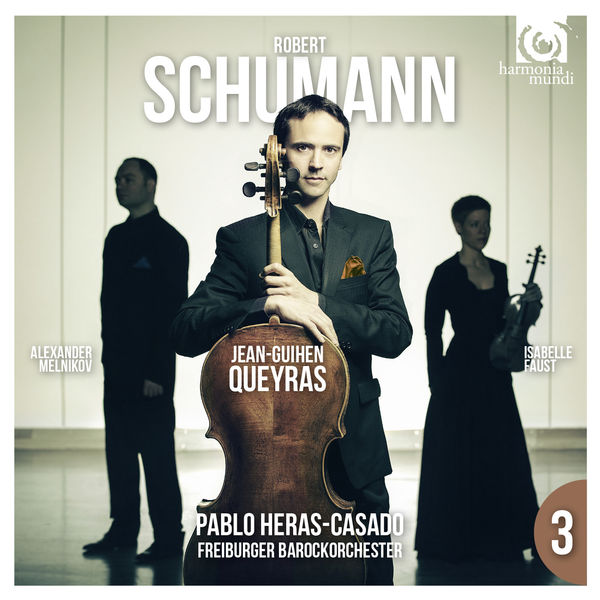
Schumann: Cello Concerto and Piano Trio No. 1 – Jean Guihen Queyras – Pablo Heras-Casado – Freiburger Barockorchester (Harmonia Mundi 2016)

Schumann: Cello Concerto / Piano Trio No. 1 Jean-Guihen Queyras Alexander Melnikov Isabelle Faust Pablo Heras-Casado Freiburger Barockorchester 2016 Harmonia Mundi

I expected quite a lot from this album, given that I really liked the two predecessors. However, on the Cello concerto I’m not exactly getting what I expected.

Schumann to me is one of the highest points of romanticism. I really like the energy, passion, and drama in his orchestral works. However, both Queyras and Heras-Casado chose a more subdued approach here, and I unfortunately constantly feel I’m missing something.

To explain what I mean, let me refer to my two personal reference versions for this concerto, by the legendary Jacqueline du Pré (playing with Daniel Barenboim), and even more, Janos Starker with Antal Dorati and the London Symphony. Do you hear the passion,  the power?

Here is a Youtube example of du Pré:

Maybe I just need to listen to the Queyras version more to get used to it, but so far it just doesn’t pull me in enough.

Obviously, we are talking about an excellent soloist (I really like his Bach Cello Suites for example) with a great orchestra, so fundamentally this remains a good recording, it is just not my cup of tea.

However, going back to the chamber music, all is well. These three trios, spread over 3 albums, will remain my reference version of these works for a foreseeable future.

My rating: 4 stars, averaging 3 stars for the Cello Concerto and 5 stars for the trio.

You can find it here (Qobuz) or here (Prostudiomasters)

Pachelbel: Beyond the Canon with Amandine Beyer

Johann Pachelbel

Do you know Pachelbel? Sure you do. Like probably most of the population of the Western world, from his famous Canon and Gigue in D, as the Canon is one of the most popular pieces played at weddings (and by street musicians).

Now do you know anything else from Pachelbel? Well, I must admit, I really didn’t. In my entire classical music library, I have the sad number of 15 tracks from this composer, pretty much entirely on some Baroque compilations.

So I was curious when Amandine Beyer with her ensemble Gli Incognito recently released an entire Pachelbel album.

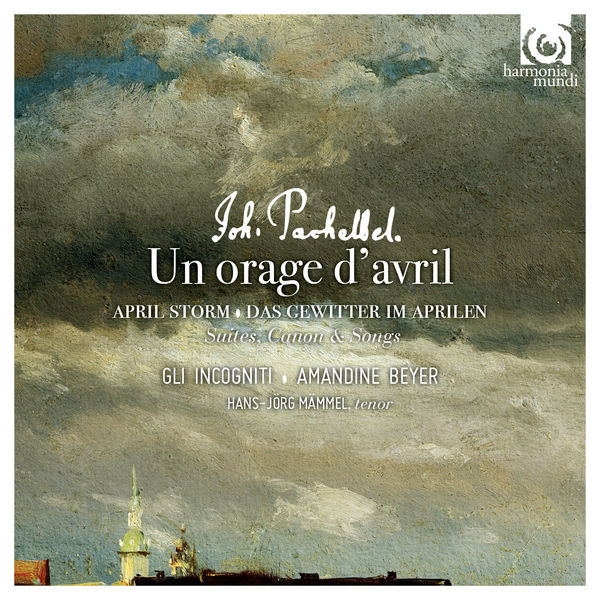
Pachelbel: Un Orage d’Avril (Harmonia Mundi 2016)

Pachelbel: Un orage d'avril - Amandine Beyer - Gli Incogniti - Hans-Jörg Bammel Harmonia Mundi 2016

Well, I was positively surprised. This is mainly instrumental baroque musique, with the occasional song (beautifully performed by tenor Hans-Jörg Mammel) thrown in.

Let’s admit it, baroque music  can be boring. Sometimes it is just a bit too repetitive, to formalized, too much of the same (e.g. quite a bit of Vivaldi’s massive oeuvre IMHO). So it usually takes a genius like Bach to break out of the conventions of baroque music to really make it interesting (and even he doesn’t always succeed).

And obviously, Pachelbel is no Bach, probably not even a Vivaldi. That said, I still think there is enough to discover on this album that I highly recommend you to check it out.

A brief comment on Amandine Beyer: I sometimes find the sound of her violin a bit too “rough” for my taste (e.g. on her celebrated recording of the Four Seasons) This is nicely enough not the case here, the album is quite well recorded.

Give it a try!

My rating: 4 stars

You can find it here (Qobuz) and here (Prestoclassical)

Sol Gabetta, Leonard Slatkin, and the LA Philharmonic play Martinu and Berlioz – May 15, 2016

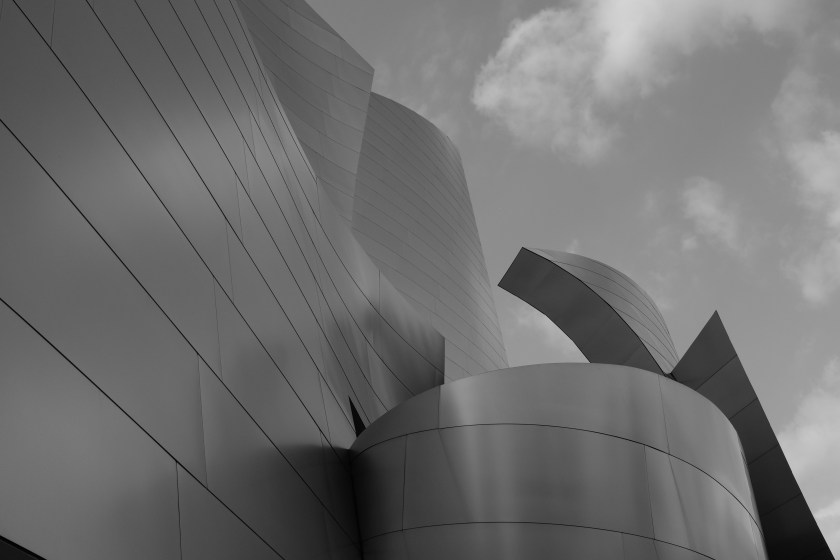
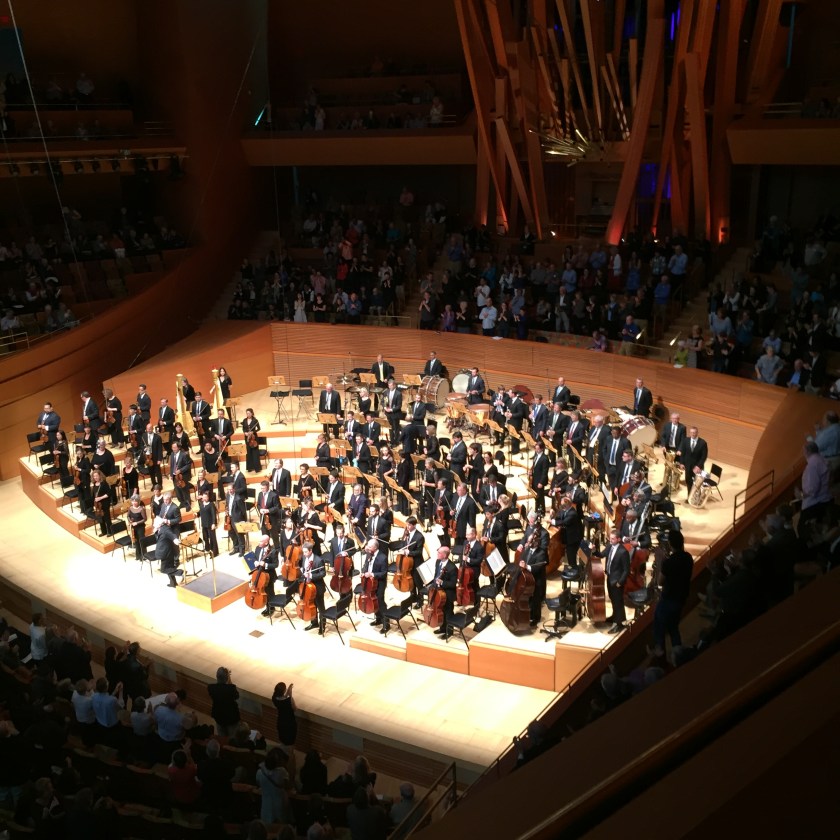
Disney Concert Hall

I’m a big Frank Gehry fan. Some critics say all of his buildings look a bit the same, and they may have a point. But honestly, given how great they look, I don’t mind a bit.

After having been to the Guggenheim Bilbao, and having stayed at the Gehry-designed Hotel Marques de Riscal in Rioja, a concert at the Walt Disney Concert Hall was long overdue.

IMG_1568

Although I’m in LA on a regular basis, I never had the time to actually go see a concert there. So I was very happy when things turned out different this time.

IMG_1565

Sol Gabetta

I just happened to be here during the annual Piatigorsky Cello festival, and saw the chance of seeing Sol Gabetta live. I had already seen her live in the past and was impressed by her passion. She is born in Argentina, but lives in Switzerland now.

The first time I heard about her was with her album Progetto Vivaldi back in 20o7, where she plays among others parts of Vivaldi’s Four Seasons. Note that these concertos are originally violin concertos, and she just effortlessly plays the violin part on a cello! Impressive.

With Leonard Slatkin and the LA Philharmonic

IMG_1563

I wasn’t too disappointed that Gustavo Dudamel wasn’t at the baton, as I’m really not a big fan of him. I had a more neutral opinion of Leonard Slatkin, and he really seems to be a nice guy, based on a long interview I recently heard with him, and the pre-concert talk he did at the Disney Hall (including a “conducting for beginners” improvisation).

The concert started off with Rossini’s William Tell overture. I must admit I’m not crazy about Rossini in general, but the overture really does the trick, and the part of the music that hasn’t been massacred for The Lone Ranger et al. is actually quite pleasant.

Bohuslav Martinu’s Cello Concerto

I’ve said it previously, I’m not too much into 20th century music. I occasionally like the impressionists like Debussy and Ravel, but beyond that I rarely enjoy stuff.

Three exceptions to the rule all come from Eastern Europe, Bartok, Janacek, and Martinu. I really like some of ;Martinu’s chamber music. But I must admit I hadn’t heard his cello concerto yet prior to this concert.

It is actually a nice experience discovering a new work for the first time in concert and not on record. It is a much more vivid experience. And in this case a very rewarding one. The concerto is just beautiful. Especially the second movement is really memorable. You wonder why this concerto isn’t played more often.

And Gabetta played great as expected, with passion and visibly having fun. We even got an encore from her, a solo piece by Peterisk Vasks. Trick question: how many voices can you get playing a solo cello? Regularly usually up to two if you play the strings in parallel. But here we got a third melody: her voice! A magical moment.

Berlioz’ Symphonie Fantastique

This is really about the only major work I know and love from Berlioz. The story is just fascinating. I’m still looking for my perfect interpretation on record, but “grew up” with the early 1990s recording of Roger Norrington with the London Classical Players, so early-HIP.

The LA Phil under Slatkin sounded anything but HIP, actually in many moments I was reminded of Wagner, but it was a great concert nevertheless. Slatkin went through a lot of efforts in storytelling, including putting one of the two “sheperds” from the pastoral scene on the balcony, or hiding the drums and “church bells” behind the orchestra.

Overall, a really great experience, in a beautiful hall, with great acoustics. The only downside of the great acoustics is that you hear every little noise the audience makes, and they were making a lot of it. I’ve rarely heard so many coughs, and this in spite of this concert being recorded for release.

In any case, I’m looking forward to buying this album eventually!

You can find the Progetto Vivaldi album here (Qobuz)

IMG_1564


Brahms Complete Piano Sonatas by François-Frédéric Guy – A Review

Brahms’ Piano Sonatas

I’m a fan of Johannes Brahms (see my blog’s subtitle). I’m a fan of his piano works, especially op. 116-119 (which are among his latest works).

However, until recently, his three piano sonatas never really touched me. I just didn’t get them. We’re talking about his op. 1, 2, and 5, so pretty much his first “official” compositions.

No. 3, op. 5, is the most well-known of the works. It is this piece that Robert Schumann heard when the shy 20-year old young man Brahms was at the time was introduced to the famous composer, which lead Schumann to write his famous article about Brahms being” one of those who comes as if straight from God”, and “He has a great future before him, for he will first find the true field for his genius when he begins to write for the orchestra”. 

Well, with hindsight, Schumann was obviously more than right, but it’s amazing he was able to cast such a judgment based on these works. So I always knew there must have been something in these works that I was missing.

My first version ever of op. 5 was by Radu Lupu (not a bad choice actually), and I very quickly also got the famous complete Brahms piano works box from Julius Katchen.

So I didn’t have a bad starting point, but as said before, I never really was drawn into his early sonatas.

But obviously, I try to check out as many new Brahms piano releases as I can. Recently, Geoffroy Couteau released a box of complete Brahms piano works, which got great reviews by the French press. I’m still making my way through that box, but so far I don’t share the enthusiasm of Classica and Diapason. Anyway, more about this later.

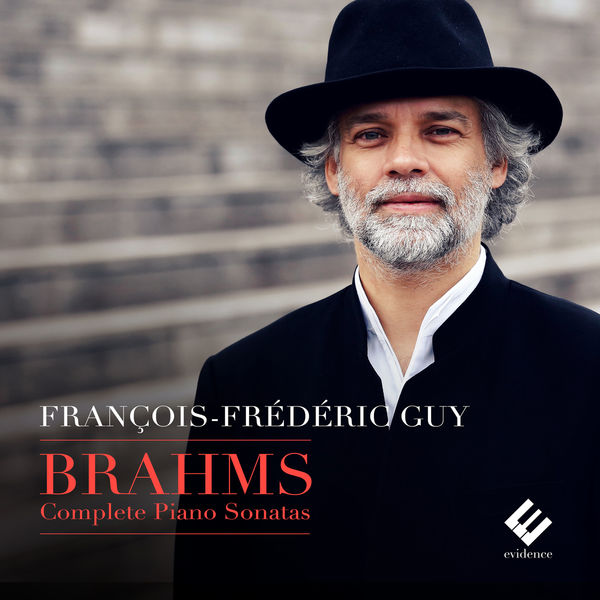
Brahms: Complete Piano Sonatas – François Frédéric Guy (Evidence Classics 2016)

Brahms Complete Piano Sonatas François-Frédéric Guy Evidence 2016 24 48

In any case,  I didn’t expect much when I checked out another French pianist, François-Frédéric Guy’s recent recording of the complete piano sonatas.

And I was very positively surprised! Guy actually specialized in German composers, especially Beethoven and Brahms.

So what makes this recording special? Basically, one thing, passion. I can really hear the 20 year old genius playing at the Schumann’s home in Düsseldorf in this album.

This album doesn’t necessarily sound like “typical” Brahms to me (if there were such a thing). Some softer elements remind me of Chopin, some more energetic moments even sound a bit like Rachmaninov (who obviously wasn’t even born yet when these pieces were composed).


There is a really nice example on Youtube:


This album is absolutely worth checking out.

My rating: 4 stars

You can find it here (Qobuz) or here (Highresaudio)

Classical Life

A classical music blog by music critic Tim Mangan

This Week's Music

Making Classical Accessible

From my Macbook to the Net

Evaporation of my thoughts and observations

Elestra

Author: Artienne

My Life in Music

Playing, Singing and Listening

ArsX3

A brand new journal reviewing books, cinema, music

LawrenceEz's Blog

Creative and Performing Arts: Writing, Classical Music, Photography

Laetitia Strauch-Bonart

Contemporary Politics & Culture

sibling revelry

reveling in all things classical

It's A Raggy Waltz

I collect jazz on vinyl, I dig the Dave Brubeck Quartet, & I write about it

La Musica

By two cousins

thejazzbreakfast

Dishing it out from the heart of England

only jazz

random thoughts about music that matters to me

The Culture Project

Exploring the world of literature, wine, art, music and more.

René Spencer Saller

The music causes me to dream of fabulous empires, filled with fabulous sins.

Breaking Baroque

Blog of Tafelmusik Baroque Orchestra and Chamber Choir

Tasting Nirvana

Eating your Dosha

Shadow of Iris

Poetry, fiction, short stories, more ...

The Immortal Jukebox

A Blog about Music and Popular Culture

April Greene

Writer + Editor

a pianist's musings

A history of your favorite classical music.

Classical music for all

Boris Giltburg's blog

I HEAR VOICES

An orchestra seat in the web space