Ivan Fischer’s Mahler 9 or What To Make of Album Reviews

Reviewing music

Before we get to Mahler, let me start more general. You’ll see that I often recommend albums that have also been recommended by major classical magazines such as Gramophone and Classica. Sometimes it gets a bit extreme, when Gramophone recently came up with a list of the Top 10 Schubert recordings, in my handful of reviews so far I’ve already mentioned 2 out of the top 10 (Schiff and the Pavel Haas Quartet)

That is obviously no coincidence. I read several magazines to keep me posted on new releases and to get a hint on which ones are worth a closer look. So you could kind of ask, why bother reading my blog and not go directly to the original source. Well, obviously I strongly encourage you to read the original source. Our ailing classical press is probably even worse off than the rest of the music industry and needs every paying subscriber they can get.

That said, I simply don’t always agree with the critics, and you’ll always find my own personal  opinion here. I’ve described here how I come up with my ratings, which are obviously absolutely subjective.

The thing is, I’m not the only one being subjective, everybody else, including the professional reviewers, are. There simply aren’t any objective standards to say why one recording is good, another one is bad, beyond simple technical faults (and even here, many prefer an Artur Schnabel playing Beethoven in spite of his many objective playing mistakes).

Ivan Fischer’s Mahler 9

0723385361152_600

This recording is a case in point. Gramophone names it among the Editor’s Choices of the month, and calls it “a potential Gramophone award winner”, Classica in this month’s issue calls the very same album “disappointing”, and gives it one star, the worst ranking out of 5. They even just bring it up in the “Egalement réçus” (also received) page, which I usually don’t even bother reading (it’s very text heavy and not easy to read). Doesn’t get more extreme than this. (Footnote: Overall, I like this approach, these day too often every single review is positive, and positive review ONLY make sense if there’s also stuff you don’t like at all).

So who is right? The problem is, I don’t know. I’m not a big Mahler fan overall. I like the 1st and 4th, and the 5th up to a point, and struggle with the rest. The 9th I’ve only started partially appreciating recently, 1-2 years ago (with Abbado), and so I simply don’t know the work well enough to make a proper judgment. I really liked Fischer’s approach to Mahler 1 and 4, which I feel comfortable judging, but on the ninth all I can say I haven’t found any obvious flaws yet.

What I can say is that the recording, like pretty much every single album by the Dutch Channel Classics label, is extremely well recorded, and is a pleasure listening to just for that. With a good hifi system you’ll be in for a treat. I recommend download a high resolution version directly from their website or buy an SACD if you have a compatible player.

If you’re a Mahler aficionado, and you’re reading this, I’d very much appreciate your opinion in the comments section on this rather controversial approach to Gustav Mahler.
David Fray’s elegant and intimate Schubert

Franz Schubert and the piano

I’ve been writing quite a bit about Schubert recently (see here and here). I’ve said before that one area where this amazing composer really excelled was chamber music. This is to be expected given that he grew up learning the violin. However, soon after that instrument (started at the age of five), he also got his first lessons on the organ, and he became a decent player of the piano as well (although never to the professional standard of other composers, and he rarely performed in public).

Many of his piano works (let’s keep “late in perspective, the guy died at the age of 31…) are nearly as outstanding as his chamber compositions. Namely, the late piano sonatas, the Impromptus, the Moments Musicaux and the Wanderer-Fantasie. I’ll be writing about all of these later.

And finally, his third category of musical excellence was the Lied or song obviously. I’ve only recently started to fully discover the riches of this repertoire, and will also come back to this.

Side note: If you want a great overview of his piano works, played at the highest level and very well recorded, there is, besides the obvious Alfred Brendel, mainly Mitsuko Uchidas’ great box on Decca, which can sometimes be found very cheaply (e.g here and here)

David Fray playing Schubert

So, with all these great recordings already existing (and you could easily add Paul Lewis, Radu Lupu, Paul Badura-Skoda etc. etc.) recordings, why bother buying another version in 2015?

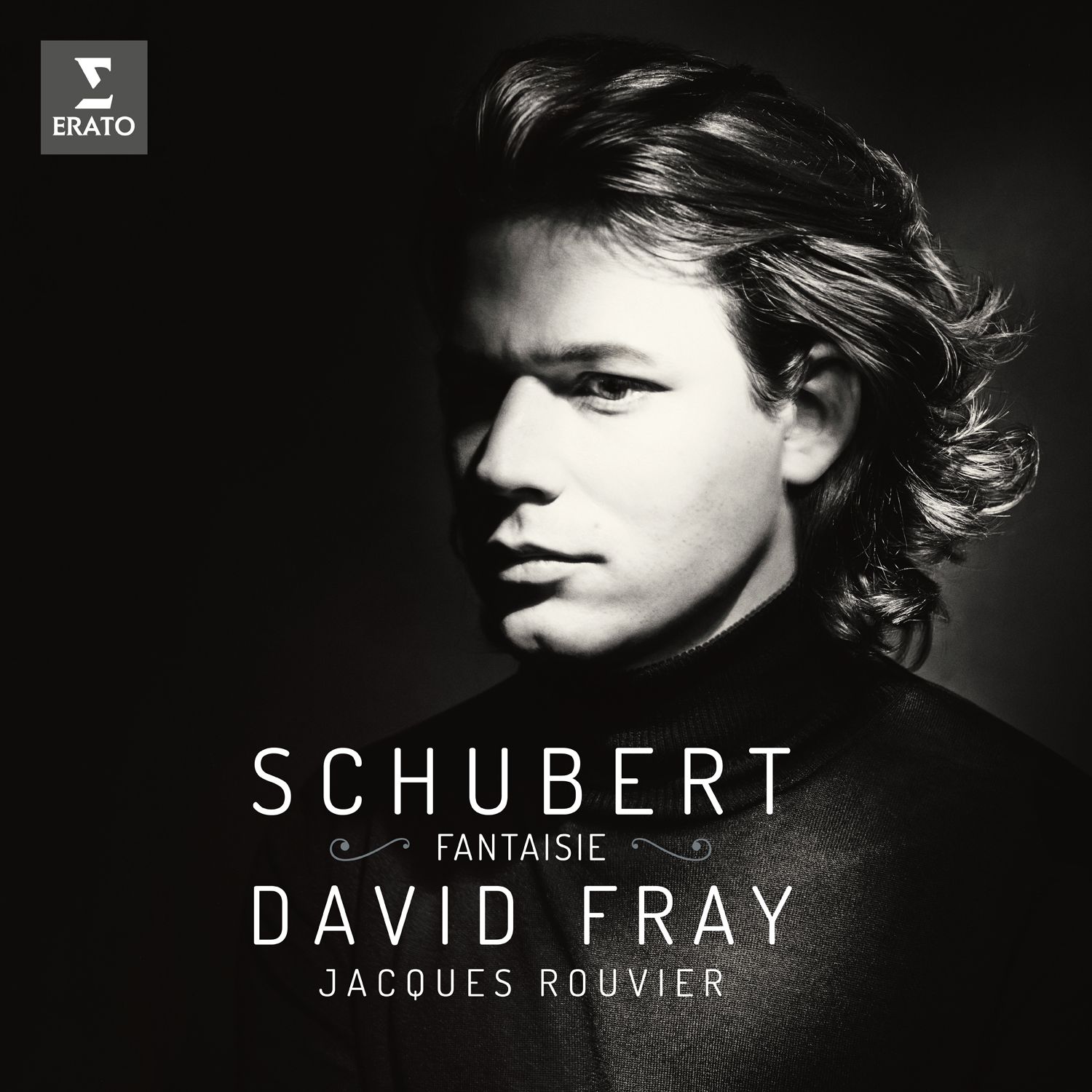
David_Fray_Jacques_Rouvier-Franz_Schubert_Fantaisi

David Fray is a young French pianist. He got his lucky break when he was asked to jump in for Hélène Grimaud (they shared the same piano teacher) at some concerts. He has some other musical background: his father in law is the famous conductor Riccardo Muti. He already recorded several Schubert albums earlier, but this is the first time I noticed him.

He plays the lesser known Sonata D894 (nicknamed “Fantasie“), and some smaller works, including two for four hands with Jacques Rouvier. What is so special about his Schubert? Two words come to mind: elegance and fragility. In some parts this Schubert sounds more like Bach than a composer who was at the beginning of the romantic period. With this comes an outstanding transparency, but also a really intense intimacy. Very very touching.

Critics for once seem to like this album as well, Gramophone named it Editors choice, Classica gave it the “Choc”, 5 stars from Diapason, the only review I saw that didn’t like it was the BBC, calling it “Beautiful, certainly, in its way; but static.”. Sorry, dear old BBC; but I don’t hear anything static in here.

Erato is a label that usually cares about sound quality, this one is quite well recorded as well, much better than the sometimes a bit harsh sound of some of Brendel’s old recordings, so one more argument to get this new recording (if you need one more).

My rating: 4 stars (the playing only would be 5 stars, but this sonata is not as essential to have for me, albeit very nice to have)

Get it here as download (the 24/96 version is worth it), or here for a physical album

Two new recordings of the Grieg Piano Concerto 

Edvard Grieg

Edvard Grieg is one of the two (three if you count Nielsen) well known Scandinavian composers, the other one being Sibelius.

In most minds, when you ask about Grieg you’ll hear about the famous a-minor piano concerto, and obviously the Peer Gynt suite (Morning Mood has been abused in many commercials, and In the Hall of the Mountain King is well known from many occasions from a cover by The Who to being used in Disney cartoons).

The Grieg  concerto is in a way an archetype of the romantic piano concerto. It is often coupled on disc with the somehow similar a-minor concerto by Schumann, not surprisingly given that the latter inspired the former (apparently young Grieg heard Clara Schumann perform the work and was impressed).

Leif Ove Andsnes

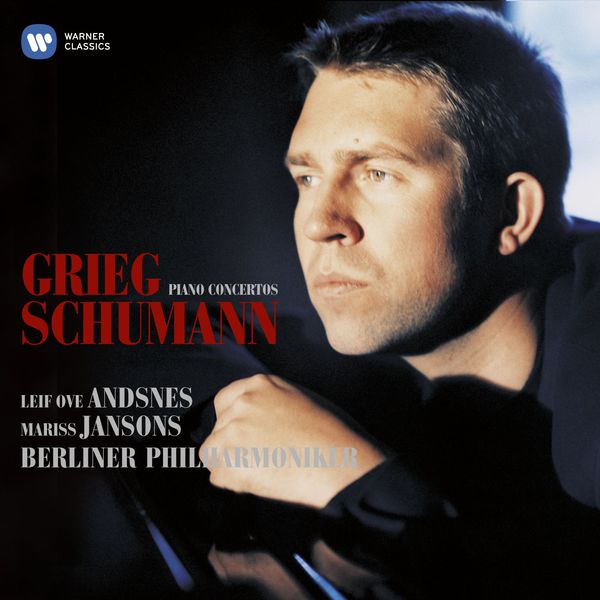
0724355756251_600

I’ve liked this concert for a very long time (and what is not to like about it). At some point I did some extensive research to find my preferred version, and ended up with Leif-Ove Andsnes’ version with Maris Janssons conducting the Berlin Philharmonic. I’m not sure if it is a coincidence that Andsnes is Norvegian as well, in any case, this version has all the passion and energy I’m looking for in this work.

I recently subscribed to Qobuz’ streaming service. I still like purchasing music (downloads in my case), as it seems to be the only way where the artist has a decent chance of making some money. That said, streaming is a great tool to discover new music. Whatever comes out, the moment it is published you can listen to it immediately in CD quality. So nice!

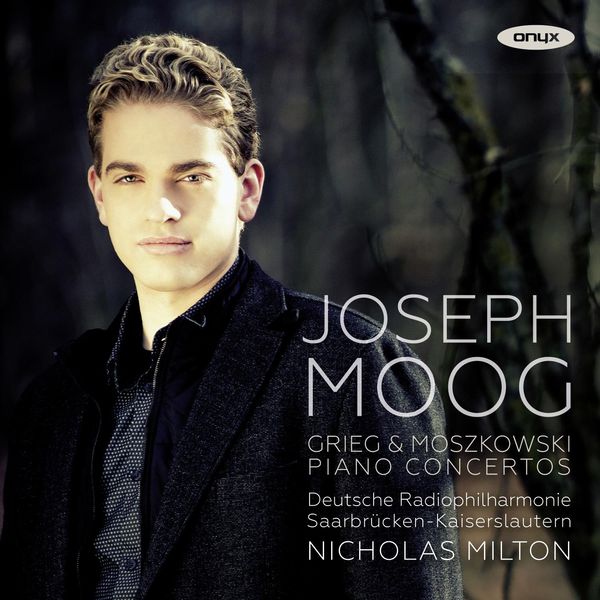
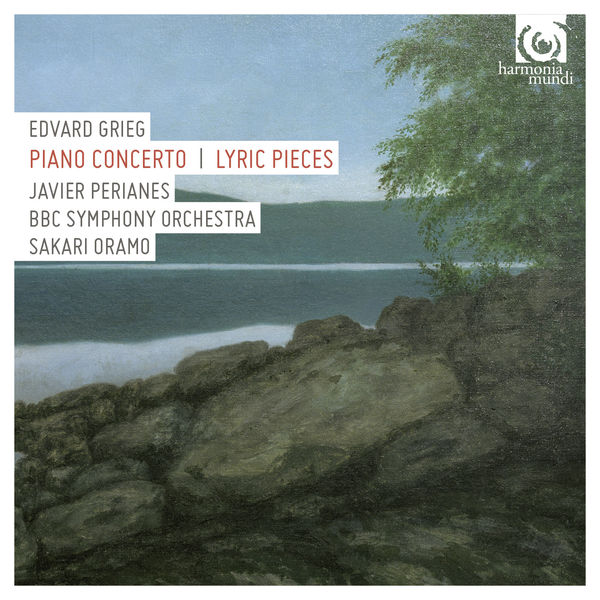
Back to topic: basically, Qobuz alerts you to all new releases, so out of interest I listened to two new versions that came out very recently: Javier Perianes with the BBC Symphony under Sakari Oramo, and Joseph Moog with the Deutsche Radiophilharmonie Saarbrücken conducted by Nicholas Milton.

Joseph Moog

0880040414421_600

Let me start by the latter: well, not much to write home about.  Not really my cup of tea, 3 stars. Lacking exactly the energy and passion I so much love with Andsnes.

Javier Perianes

3149020220528_600

So I didn’t expect much from the Perianes either, also given the fact that I hadn’t heard about this Spanish pianist beforehand (although I found out later he has won a number of competitions). I was very positively surprised. While not kicking Andsnes of his throne, this version is very good indeed. In the meantime, my opinion was confirmed by both Gramophone and Classica (the latter even giving it a “Choc”, their way of saying 5 stars).

I wouldn’t go just as far, but this is a very solid four star to me and well worth recommending. Perianes had made it onto my personal watch list.

UPDATE August 2015: Gramophone doesn’t agree with me on the Moog, and gives it an Editor’s Choice. My opinion stands, I purchased the Perianes and like it very much, and I continue not to be moved very much by the Moog. YMMV.

Update September 2015: A follow-up post on this topic can be found here, with more detail on the Andsnes and some other recordings.

With regards to Perianes, also check out my review of his excellent Mendelssohn’s Lieder ohne Worte here.

Schubert’s amazing chamber music (2) – Rosamunde played by the Takacs Quartet

My second post on the Schubert’s chamber music.  Rosamunde this time, his String Quartet no. 13.

You could ask why I’m not really talking about the famous Death and the Maiden? Is there anything wrong with it? The simple answer is: absolutely not. I just don’t know how to decide on the best version here. The Pavel Haas Quartet’s recording of the String Quintet I discussed last week already has a near perfect version on there, and coupled with the Rosamunde I’ll recommend today you’ll get another really good recording of “Der Tod und das Mädchen“.

Rosamunde

This quartet was written pretty much at the same time as the more famous Death and the Maiden, and it is equally beautiful. It is named Rosamunde after the incidental music Schubert wrote for this play on a princess from Cyprus, which is by now pretty much forgotten. YOu’ll find elements from this music in the 2nd movement.

Schubert’s quartets 13-15 are really a league on its own compared to his earlier works. I keep repeating myself, but this is chamber music at its absolute peak. I discovered these works in earlier versions, played by the Quartetto Italiano and the Alban Berg quartet. While these versions are still good, the more recent Pavel Haas and Takacs quartet recordings are even better to my ears.

Takacs Quartet

The Takacs quartet has been around for 40 years, so obviously the personnel has changed over time. The quality hasn’t. Their early 2000 Beethoven cycle on Decca is very good, and an even earlier cycle on Bartòk is also highly recommended. By the way, don’t be fooled by the name, while the Quartet was founded in Hungary, it has moved to Boulder, Colorado ages ago.

Given the age of the quartet, they’ve recorded the coupling of Schubert’s 13 and 14 twice. The first one in 1993 on Decca was already good, the newer one (2006) I’m referring to here on Hyperion is even better.

034571175850

I wanted to be original in my review, but it is hard to find better words than Gramophone in this particular case, so let me quote from their review here: “‘The Takács have the ability to make you believe that there’s no other possible way the music should go”. Let me just sign this statement here and now for no. 13, Rosamunde.

Der Tod und das Mädchen

To be fair, at least for the Death and the Maiden, if you take the version by the Pavel Haas quartet I mentioned earlier, you realize that there is a possible other way the music could go. Now which one is better? I’m really struggling to make up my mind. You’re probably best of having two versions. It’s like chosing between a Meursaut Premier Cru and a Riesling Grosses Gewächs. Both are different, but both are excellent.

My rating: 5 stars (yes I know, my ratings seem to feel a bit inflationary now, I’ve been giving quite a number of 5 stars recently. This is however not a coincidence as I just like to share those particularly great albums first).

Best way to buy it is to simply download it directly from Hyperion here.

The Legacy of the Jazz Messengers (4): Lee Morgan – The Sidewinder

Part 4 now of my mini-series on the Jazz Messengers’ spin-offs.

Lee Morgan

Lee Morgan was famous even before the Jazz Messengers, as he’d already played with Dizzie Gillespie. But his stardom even rose further after playing on the famous Moanin‘ album from the Messengers, which I still need to write about.

The Sidewinder

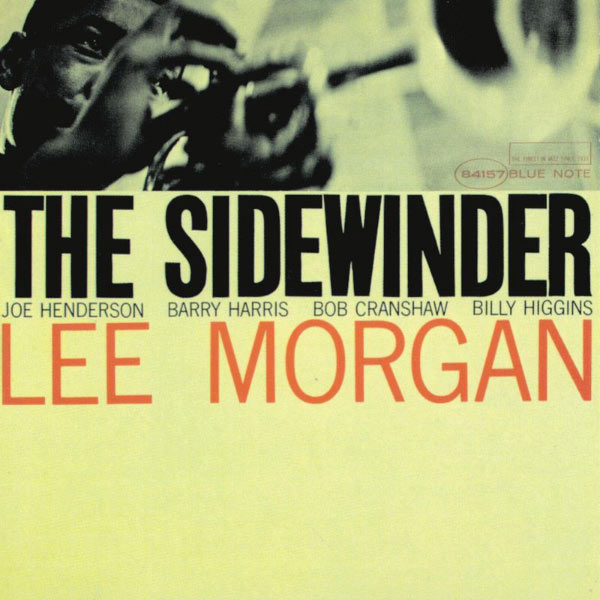
I was a bit hesitant at first whether I should really write about this particular 1963 album, which obviously is by far his largest commercial success as a leader. Doesn’t he have many other great albums, like The GigoloDelightfulee, Vol. 3, Tom Cat, The Cooker, or Cornbread, all of which I’d highly recommend.

0724349533257_600

Well even though I wanted to be creative, and not recommend an album that made it into the Billboard pop charts (heresy!) I gave up in the end. There is something just magical about the bluesy groove of The Sidewinder’s 10:28 title track, that I just had to recommend this first. It may not be the most creative album, nor the most artistically developed, but hey, it is just addictive.

A great rhythm section

Obviously, a great deal of this addictiveness stems from the rhythm section (especially Harris, but also Crenshaw, Higgins), but we also get another taste of Joe Henderson (although his solo on the title track is not very memorable, he get’s better on Totem Pole).

And then there is Lee himself, his playing is fantastic, and he actually wrote all the songs himself. A little bit of trivia on Morgan: he died a rather unusual death for a Jazz musician of the time (i.e. not of drugs or alcohol), but was shot by his long-term girlfriend of the time in 1971 for unclear reasons.

Luckily, this is not a “one-hit-wonder” album, all the other tracks of the album are very good, I particularly like Gary’s Notebook.

Overall rating: Groovy, Baby! (formerly known as 5 stars)

Addendum: Reader Bob Ryan kindly commented here that I omitted to mention “Search For The New Land” as one of the must have albums for Lee Morgan. I absolutely concur with his opinion.

Vilde Frang’s Outstanding Version of Sibelius’ Violin Concerto

Let me start a bit off-topic: Why do I write about Sibelius right now?

If you’ve watched this blog for a bit, or if you’ve bothered to scroll down my main page, you’ll see that my blog topic selection look rather arbitrary and randomly selected and doesn’t follow a clear pattern. And to be fair, this is pretty much exactly how I chose my topics, by inspiration. It is very similar to how i decide to which album to listen next, whatever inspires me. The only connecting factor is that I only write about music or related topics that I really care about.

Diskothek im 2 / Disques en lice

So back to the question: Why Sibelius right now? The simple answer is: I just listened to a great podcast about it. Or actually 2. Let me clarify: My adopted country, Switzerland, has rather average public television, but two great classical music radio stations, one German (SRF2) one French (Espace 2) speaking. Both get to produce their own proprietary content, including a show that is based on the principle of inviting a couple of experts, and listening to a select number of recordings of a certain classical work, and have the expert discuss them blindly, and chose a “winner”. This show is called “Diskothek im 2” for the German, and “Disques en lice” for the French version.

Both recently decided to review Sibelius violin concerto, with a slightly different selection of versions. There was one overlap however, the winner, which is the album I’ll be talking about in a minute. And while I don’t always agree with the experts (in the end, it is all also a question of taste), listening blindly is really a good way of seeing if you REALLY like a version or you’re just preferring it because of the great name of the artist.

Sibelius’ violin concerto

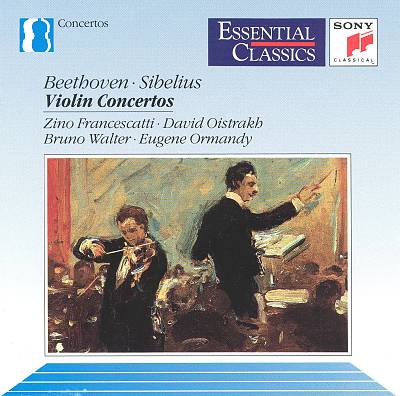
Again, I don’t want to be Wikipedia, if you want to find more about the violin concerto, go here or here. Let me just say that the violin concerto is the only piece from Sibelius i really love. I still need to “get used” to the symphonies and symphonic poems he wrote. I fell in love with the violin concerto early on as it was coupled with the Beethoven violin concert on this low-price Sony release from the 1990s. I was lucky, because it included the Sibelius in a version by the great David Oistrakh which is recommended in the second link above, so by chance I ended up having a very good version.

MI0000958869

So feel free to check this version out, it is still very much recommended.

However, today I want to talk about the recording that won both Disques en Lice and Diskothek im 2: the 2009 recording with Vilde Frang

Vilde Frang

5099968441357_600

This was Frang‘s first major commercial record at the age of 22. And what a performance it is. It has both the cold/ghostly nordic impressions of what I imagine Finland must look like (I’ve never been) but also at the right moments has all the fire and energy this late romantic concerto needs. She’s from Norway by the way, so geographically not very far from Finland. No idea if this helps or if this is just a cliché. The conductor, that I wasn’t otherwise familiar with, Thomas Søndergård, is as you can see from the Ø’s and å’s in the name also from Scandinavia, Denmark in this case. Only the orchestra being from the nice town of Cologne, doesn’t qualify as Scandinavian at all.

A side note on German radio orchestras (recognizable by the WDR/NDR/HR or whatever abbreviation, the R meaning radio) are usually quite good, albeit not at the level of a Berlin Philharmonic. However, some of them can be really great, like this one. The Orchestra and Søndergård are doing a great job here as well, and soloist and orchestra are really well-integrated.

This being an “album”, a concept which was forced on us by the LP, and later CD, but doesn’t make a lot of sense for classical music, we not only get the Sibelius, which would have been perfectly fine by me, but you also get a violin concerto by Prokofiev, and some minor “Humoresques” by Sibelius. While I like some of Prokofievs piano music and his “classical” symphony, I cannot find a lot of interest in his violin concerto (no judgment on quality here, just personal preference), and the Humoresques are nice fillers.

Overall rating: 5 stars (applies to the Sibelius concerto, the rest of the album I cannot be bothered with)

A nice alternative recording which I also really like, with another young rising star on the violin, is the version with Lisa Batiashvili (We are living in great times with so many fantastic violin players around). On this recording, you even get a Finnish orchestra with it.

0886971293623_600

Schubert’s amazing chamber music (1) – The String Quintet played by the Pavel Haas Quartet

Franz Schubert

I’ve previously written about Schubert’s piano music, which I love. As a side note, I’m not a big fan of his symphonies, even his “great” 8th (or 9th depending on the counting system) doesn’t particularly motivate me to listen to it. I occasionally play the Unfinished, but being unfinished it’s over rather quickly. Anything else in his symphony repertoire is really just a bit too juvenile for me (if only he’d lived as long as Beethoven or Brahms…).

In my personal opinion, his late string quartets and especially the string quintet are the greatest pieces of chamber music ever written. Full stop. I know others will prefer Beethoven, but the emotional density and beautiful “singing” (let’s not forget Schubert was also a major composer of “Lieder”) in the music you’ll only find with Schubert.

The String Quintet

This absolute masterpiece beats by far every symphony Schubert has ever written. With over 50 minutes of playing time, it is also longer than pretty much everything he’s written. If length translates into too many repetitions, like with the C-major symphony, it can be boring. None of this you’ll find here. Actually, you’d (or at least I’d) love this work to go on forever, it is that beautiful.

Pavel Haas Quartet

Gramophone has a certain tendency of “hyping” some artist, they can’t do anything wrong, and every album of them gets an Editors-Choice or more. Sometimes, I quite disagree with this assessment. In the case of the Pavel Haas quartet, I fully agree, I’ve yet to hear a bad album from this young Czech quartet named after a Czech composer killed in Auschwitz.

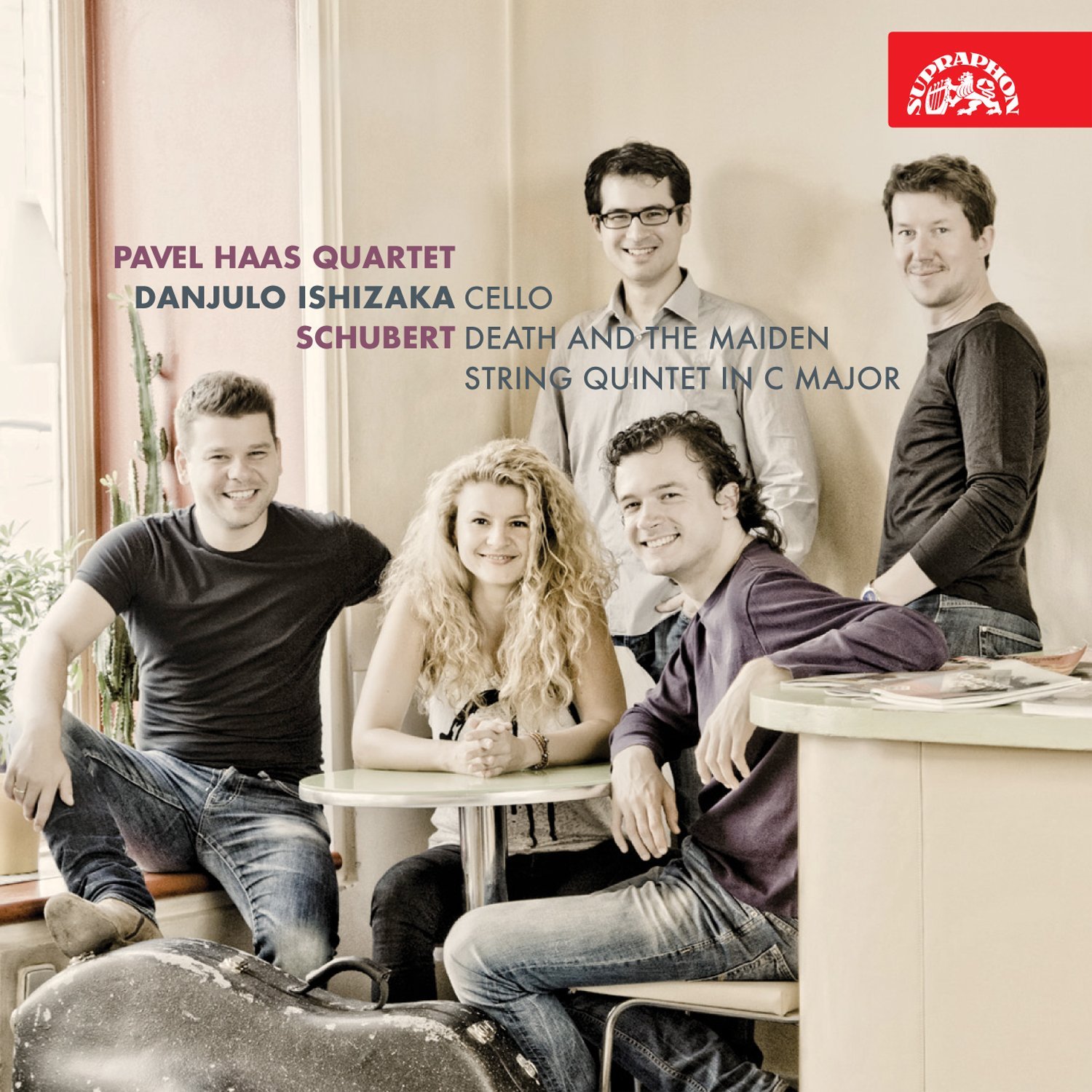
Pavel Haas Quartet String Quintet Schubert Death and the Maiden

This particular recording, which also includes an outstanding recording of the Death and the Maiden quartet no. 14, has been Gramophone Awards winner in the chamber music category in 2014, and very rightfully so. They are joined for the Quintet by the 2nd cello, played by the German-Japanese Danjulo Ishizaka.

What set’s this recording apart is the pure energy level that goes into the playing. This is not music to be enjoyed leaning back sipping a glass of bourbon on the rocks in your favorite rocking chair, this is music made for listening to with constant attention, barely keeping you on your couch any more.

There are many other good to outstanding versions out there, including the Takacs Quartet, the Tokyo Quartet, the Hagen Quartet with Heinrich Schiff, but this one really beats them all. The Czech label Supraphone has done quite a decent job on the recording quality.

My rating: 5 stars (with no hesitations)

You can get it here if you prefer downloads, and here if you prefer a physical disc (or 2 of them to be precise)

UPDATE April 27, 2016: see also my review of the String Quintet by the Quatuor Ebène and Gautier Capuçon here

Classical Life

A classical music blog by music critic Tim Mangan

This Week's Music

Making Classical Accessible

From my Macbook to the Net

Evaporation of my thoughts and observations

Elestra

Author: Artienne

My Life in Music

Playing, Singing and Listening

ArsX3

A brand new journal reviewing books, cinema, music

LawrenceEz's Blog

Creative and Performing Arts: Writing, Classical Music, Photography

Laetitia Strauch-Bonart

Contemporary Politics & Culture

sibling revelry

reveling in all things classical

It's A Raggy Waltz

I collect jazz on vinyl, I dig the Dave Brubeck Quartet, & I write about it

La Musica

By two cousins

thejazzbreakfast

Dishing it out from the heart of England

only jazz

random thoughts about music that matters to me

The Culture Project

Exploring the world of literature, wine, art, music and more.

René Spencer Saller

The music causes me to dream of fabulous empires, filled with fabulous sins.

Breaking Baroque

Blog of Tafelmusik Baroque Orchestra and Chamber Choir

Tasting Nirvana

Eating your Dosha

The Immortal Jukebox

A Blog about Music and Popular Culture

April Greene

Writer + Editor

a pianist's musings

A history of your favorite classical music.

Classical music for all

Boris Giltburg's blog

I HEAR VOICES

An orchestra seat in the web space