Fazil Say´s Chopin Nocturnes – Charming

Fazil Say

Fazil Say, a classical pianist from Turkey usually doesn’t leave people cold. Its often a love it or hate it affair.

The first time I heard Fazil was in a duo with a similarly polarising artist, Patricia Kopachinskaya, playing the Beethoven sonatas. It was clearly a memorable concert. And while fro Kopachinskaya I really don´t like everything she does, I really admire her artistic courage and ambition. She´s always in there with all her heart.

Fazil Say seems also quite emotional, but at least from his performances, his emotions typically translate into very sensitive playing, whether he plays Western classical music, or his own compositions.

I omitted to write about his great recent complete Mozart sonatas cycle recording, which I can really recommend you check out. There is not one boring moment in there.

So I was really intrigued when Say released his very recent Chopin Nocturnes album.

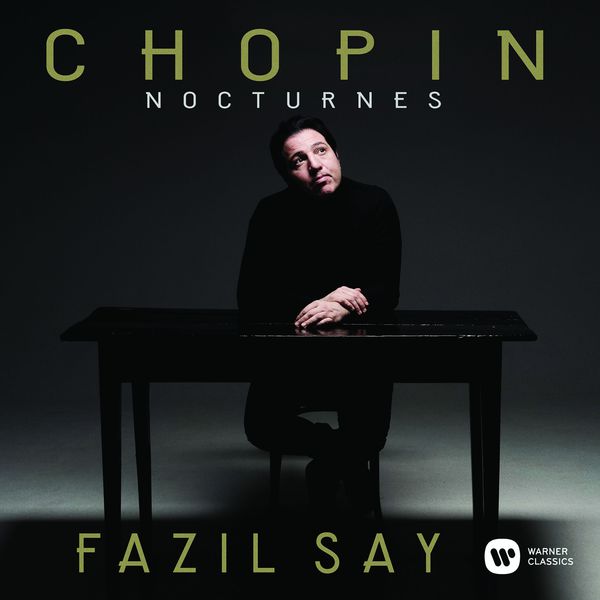
Chopin: Nocturnes – Fazil Say (Warner 2017)

Chopin: Nocturnes - Fazil Say 24/96 Warner Classics 2017

As expected, it is a beautiful recording. You get Say´s characteristic playfulness, sensitivity, interesting play with beautiful rubato.

The feeling you get is of a warm Mediterranean summer night. Chopin being one of the first tourists on Mallorca comes to mind, and Franz Liszt claimed the Nocturnes were inspired by Italian Bel Canto. Both very much apply here.

These are nuanced, intelligent interpretations. The only reproach I have is sometimes the tempi feel a bit fast.

Overall, Moravec´s legendary version not under threat of being kicked of the throne, but Say´s version is very much worth exploring. Recommended!

My rating: 4 stars

You can find it here (Qobuz) and here (HDTracks).

UPDATE Oct 1, 2017: Classic agrees, and gives this album 4 stars as well.

Krystian Zimerman plays Schubert sonatas

Krystian Zimerman

Krystian Zimerman is a living legend.

He is without doubt one of our most important pianists of the 20th and 21st centuries, and has produced a huge number of reference recordings.

I only saw him live once, couple of years ago in Lucerne, and was utterly impressed with his Chopin.

He obviously features in my Top 10 Favorite Classical Pianists, and when I heard that he’s about to release his first solo album since 1994 (!) I really couldn’t wait for it.

Franz Schubert’s late sonatas

And then he plays Schubert! D959 and D960!

The late piano sonatas are among my absolutely preferred works of him  (together with the late chamber works), and I’ve even written a blog post comparing 11 versions of D959. At the time, I selected Perahia, Brendel, and Uchida as my reference versions.

Franz Schubert: Piano Sonatas D959 and 960 – Krystian Zimerman (DG2017)

Franz Schubert Krystian Zimerman Piano Sonatas D959 & D960 Deutsche Grammophon 24 96

So, maybe it is a mistake to get too excited upfront. I really expected miracles here. I mean, take his Chopin Ballades, his Debussy, his Lutoslawski, his Brahms 1, his Liszt b-minor sonata. All miracles.

So you will have guess by now, that I was underwhelmed here.

Don’t get me wrong, this is a very fine recording. Obviously. It’s Zimerman after all. And he really makes these recordings very much his own.

But I’ve now played them over and over again, and I’m still waiting for the “wow”. I simply doesn’t come. I still don’t know what it is. Is it his rubato, his tempi? Is it maybe “too romantic”? I really don’t know.

There are so many subleties in his recording that I all appreciate individually. But the total doesn’t work for me. Well, hold on, “doesn’t work” is a silly way of saying I’m not blown away. It really all boils down to expectations.

Check it out, you have to, this is Zimerman after all. And I won’t be surprised if many of you disagree with my very personal opinion here. But for the moment, I’ll stick with the “cleaner” versions of Brendel and Uchida.

What do you think? I really appreciate your feedback here!

My rating: 4 stars

You can find it here (Qobuz) and here (Prostudiomasters)

UPDATE Oct 1st, 2017: the French magazine Classica is less hesitant and gives this album a “CHOC”, i.e. 5 stars.

UPDATE Oct 7, 2017: Gramophone also is fully convinced, giving this album a “recording of the month” for October. The only more critical review I’ve seen so far is by Elvire James on the French site Classiquenews.com, saying this album has nothing new to offer. Well I really wouln’t go as far as that.

UPDATE Oct 9, 2017: ClassicsToday Jed Distler is in the same range as my rating, with an 8 out of 10 points, quoting some micromanaging.

Your turn to judge! Let me know what you think.

2017 Gramophone Awards: And The Winners Are… (and yes, I really agree)

Gramophone Awards 2017

This year I had a bit more trouble than usual with Gramophone´s selection for the albums of the year, see my posts here (Part I) and here (Part II).

However, at the end our judgments were together again.

Here was my overall recommendation looking at the nominees, as published in Part II of my post:

I´d say, the only must-haves in this selection are the Shostakovich with Nelsons, Perahia´s French Suites, and Suzuki´s c-minor mass (with Gardiner´s Matthew Passion just behind).

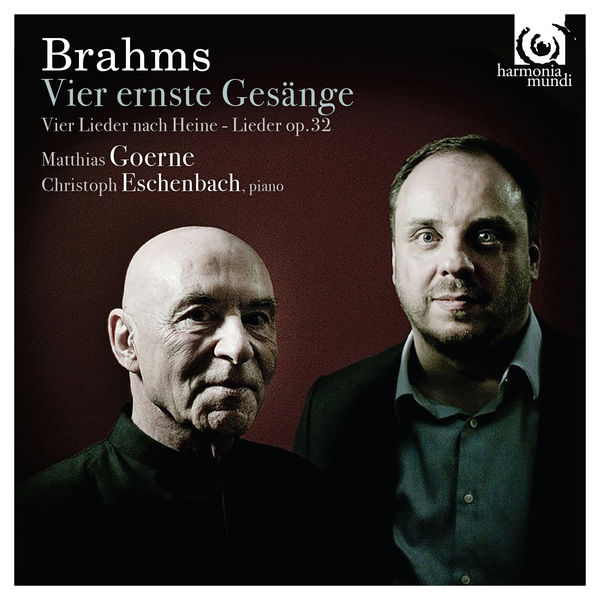
Faust´s violin concertos, Antonini´s Haydn, and Niquet´s Cherubini are a very good recording of only nice to have (to my ears) music. And in the Solo Vocal category, Goerne´s Brahms album is a no brainer.

So, let´s take a look at this years winners:

Choral

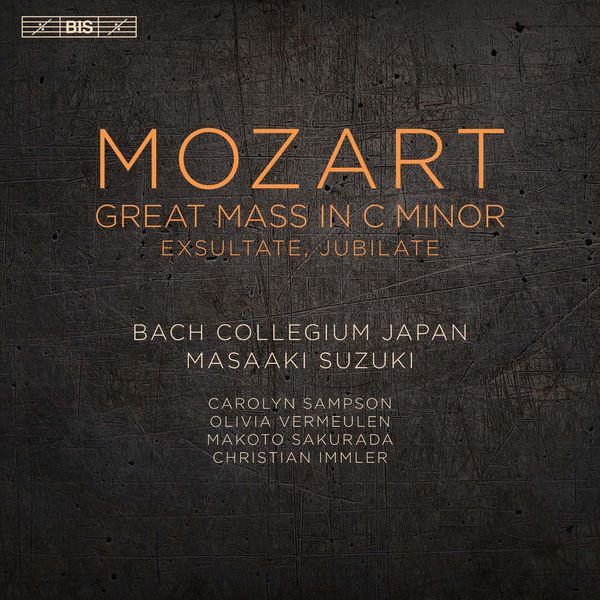
Mozart: Great Mass in C Minor Exsultate Jubliate Bach Collegium Japan Masaaki Suzuki Carolyn Sampson Olivia Vermeulen Makoto Sakurada Christian Immler

Bingo. And fully agree.

Concerto

Mozart: Violin Concertos Isabelle Faust Il Giardino Armonico Giovanni Antonini Harmonia Mundi 2016 24/96

Bingo again. Extremely well played.

Instrumental

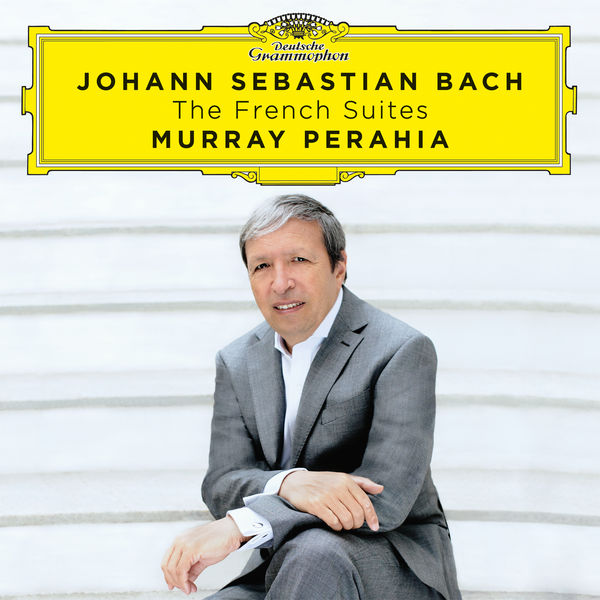
Johann Sebastian Bach: The French Suites - Murray Perahia (24/96) Deutsche Grammophon 2016

Absolutely, a 5 star album all the way.

Orchestral

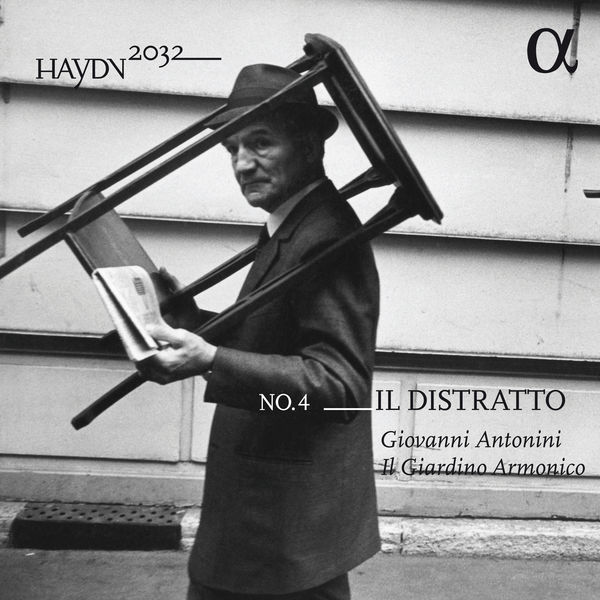
Haydn 2032 no. 4 Il Distratto Giovani Antonini Il Giardino Armonico

Agree, it doesn’t get better when it gets to interpreting Haydn´s symphonies.

Solo Vocal

Brahms: Vier ernste Gesänge - Matthias Goerne - Christoph Eschenbach - Harmonia Mundi 2017

And yes again.

So 5 times alignment, not too bad.

If you take the other categories, I really need to check out the winner of Baroque Instrumental, called The Italian Job with Adrian Chandler and La Serenissima. From Caldara to Torelli, probably worth discovering.

Baroque Vocal has a recent Hyperion recording of some Bach cantatas with Jonathan Cohen´s Archangelo, I´ve heard good things about this ensemble, and will certainly have a closer look at the Hyperion website (unfortunately they don´t allow streaming of their content).

In the Early Music category, a John Dowland album won that simply isn´t my cup of tea musically, I´m too ignorant on contemporary to even comment on that category.

In the Opera category, a recording of Berg´s Wozzeck by Fabio Luisi won, I simply don´t have a BluRay player to check that one out.

But I´ll make sure to have a look at the album in the category Recitalwhere an album by the great Joyce di Donato In War And Peace won, that really sounds interesting.

So, what do you think? Who would you have chosen?

Isabelle Faust and Pablo Heras-Casado play Mendelssohn – Too HIP?

Isabelle Faust

If you are a regular reader of this blog, you know I’m a huge Isabelle Faust fanboy.

Actually, I was mentally expecting another 5 star album when I saw what was just released, not suprisingly given my previous reviews (see here for the violin concertos of Mozart and Brahms, Brahms violin sonatas, her Beethoven sonata cycle is another reference for me,  or her recording of Schumann’s violin concerto and piano trios).


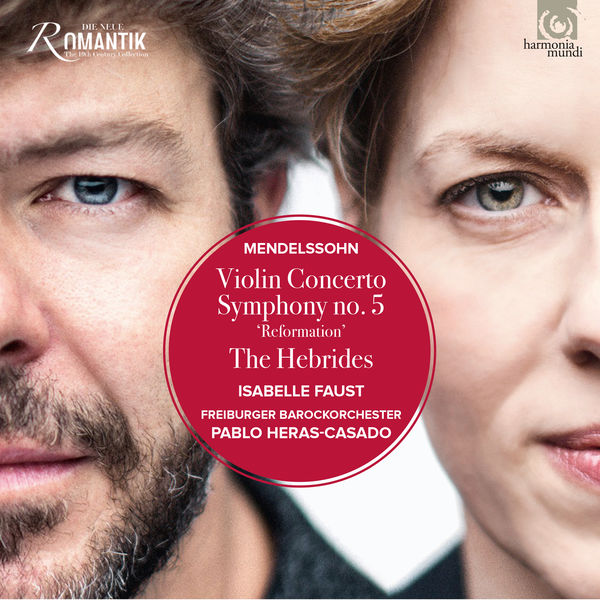
Mendelssohn: Violin Concerto / Symphony No.5 / The Hebrides – Isabelle Faust – Pablo Heras-Casado – Freiburger Barockorchester (Harmonia Mundi 2017)


Isabelle Faust Pablo Heras Casado Mendelssohn Violin Concerto Symphony No. 5, The Hebrides Freiburger Barockorchester 24 96 Harmonia Mundi

So, why don’t we get another 5 star review here?

Several reasons.

I’ve mentioned before in my review of the Mendelssohn’s symphonies by Yannick Nézet-Séguin that I just cannot relate very much to symphony no. 5. So I’ll leave the judgment of that work to others. I was hoping to like Heras-Casado’s previous recent recording of Mendelssohn’s 3rd and 4th (review not published), but found it a bit too rough on the edges to be really of my liking.

So, what about the centerpiece here, the violin concerto? Well, I cannot be to hard on Faust overall, her playing is flawless and impressive as usual. So what’s not to like?

Well, here we go into personal taste. I’ve always really liked the “historically informed” practice (HIP) using little vibrato, and often gut strings. I really feel it adds something to the music compared to the classical performance style of the 1960s-1980s.

And that’s exactly what Faust does here. Very, very, very little vibrato. Her Stradivarius, “Sleeping Beauty”, always had a slightly slimmer, shinier tone than others, which usually worked wonders for me.

But I’m sorry, it really doesn’t work for me at all with Mendelssohn. I just miss the fat romantic sound.

I’ve now played this album four times in the last days to see if it grows on me. And I just can’t get over it. So I’ll always refer you back to other recordings, like Janine Jansen’s beautiful album with Riccardo Chailly (mentioned in my 25 Essential Classical albums). Vibrato all the time (even though Chailly has done a good job putting a little bit of HIP into the Gewandhaus’ playing). And I just love it.

But that is not to say you shouldn’t check this album out. This really is purely based on personal preference, both Heras-Casado and Faust do an excellent performance.

The highlight of this album to me is the Hebrides overture, where the above mentioned roughness of the Heras-Casado and the Freiburger’s really works to paint the rough Northern landscape.

My review: 3 stars (and really only based on personal taste, you need to check it out to form your own opinion)


You can find it here (Qobuz) and here (Prostudiomasters)


UPDATE Sep 23, 2017: The Guardian very much disagrees with me and gives this album a five star review. They like the roughness. Well, as mentioned above, you hav to listen to it to be the judge.

UPDATE Oct 5, 2017: Dave Hurvitz on Classicstoday has his full review behind his paywall, but I guess the title of the review gives his opinion away: “CD From Hell: Faust and Heras-Casado Starve Mendelssohn”. looks like this album generates rather strong reactions one way or another.

Brahms in Cinemascope: Andris Nelsons and the BSO’s New Symphony Cycle

Brahms’ Symphonies

As you can see from the subtitle of my blog, I’m a huge Brahms fan.

Unfortunately, I haven’t been that happy with most of the Brahms symphony cycles recorded in the last 30 years. To be fair, even more than for other composers, the legacy left by the glorious recordings of Furtwängler, Klemperer, Walter, and even Toscanini, made it not easy to do something better (except for the recording quality).

We’ve had some very modern light “HIP” approaches from Gardiner and Dausgaard, both of which I appreciate as they give a very fresh point of view, and benefit especially the lighter middle symphonies (I consider 1 & 4 the heavyweights).

But unfortunately, most of the recent complete symphony recordings didn’t impress me much (see also this post where I was desperately, and in vain, searching for a modern reference of the 1st symphony). The only box I like (and still, not for every symphony) is Riccardo Chailly’s cycle with the Gewandhaus, which takes a nice middle way between the heavy romantic recordings of the past and the HIP inspired gut-string recordings of today.

Andris Nelsons

I’m a big fan of Andris Nelsons since he took over the Boston Symphony Orchestra. I put his Shostakovich into my best albums for 2016. I even specifically mentioned in said blog post about Brahms 1 that I was hoping for a new reference recording to come from Nelsons and the BSO.

Well, my wishes have been heard. The BSO has recently released their first full Brahms cycle. And I must admit I initially didn’t plan on buying it. The album is not available for streaming on my favorite streaming provider (except for the 4th), and the 1st is so critical to me that I didn’t want to buy blindly.

Well, then the September 2017 issue of Gramophone comes out, and gives it an “Editor’s choice”. I haven’t always been in agreement with Gramophone recently (see my comments about the 2017 Gramophone awards), but an Editor’s choice still means something. Then I started googling and also found this excellent review by John Marks, formerly with Stereophile.

So there you had me. I bought the box blindly.

Brahms: The Symphonies – Andris Nelsons – Boston Symphony Orchestra (BSO Classics 2017)
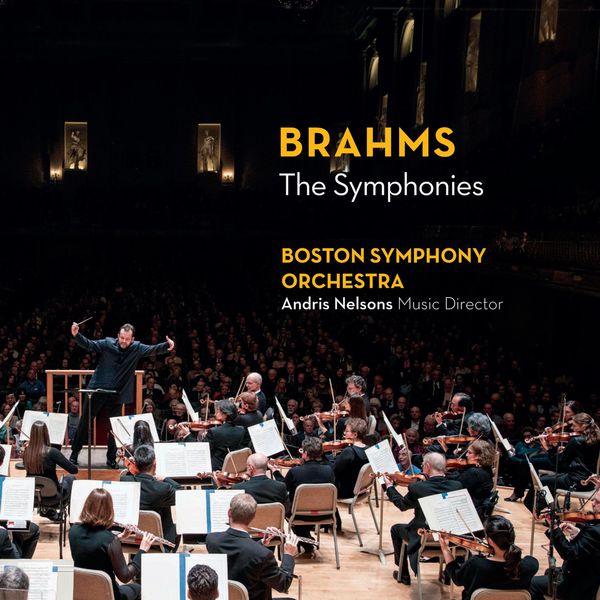
 

Brahms: The Symphonies - Andris Nelsons - Boston Symphony Orchestra 24/192

So, what do you get?

Well, let me start by saying, if you like Brahms, you need to have this box. Nelsons takes the learnings from the great classics, mixes in the beautiful BSO sound, and brings a very beautiful Brahms style to life.

I’d call it Cinemascope, as you really see all the colors, on a very big screen. His approach is never rushed. You get to see all the fine details that Brahms managed so well.

Let’s talk about the individual symphonies, and let’s take them backwards.

Symphony No. 4

I’ve mentioned above that No. 4 is one of the two heavyweights for me. I particularly love the variations of the fourth. I’ve mentioned Nelsons taking it relatively slow. He takes 10:08 for this movement. This is not yet the 11:29 of a Bruno Walter, but also not the 9:35 of a John Eliot Gardiner, or even the 9:23 of a Chailly (interestingly, Furtwängler uses 9:47, starting slowly but accelerating over time, which works for me).

But, this music can take the tempo. There is so much going on in these fantastic variations, and Nelson lays it all out in front of you. And he keeps the power during the entire movement, which isn’t easy.

Symphony No. 3

Going one back to no. 3: here the heavier approach works, but not as well as for no. 4. It gives the famous Poco Allegretto (known from movies and commercials) an even more sentimental character. In some way this speed, with the tremolo of the violins, makes the quiet anti-climax of the ending sound like we’ve just moved directly into a Wagner opera.

Brahms wasn’t a particular fan of Wagner, but actually this shows that while they may have disagreed on structure, there are more similarities between the two than you’d think.

Symphony No. 2

Symphony no. 2 is sometimes considered Brahms’ Pastorale. And here is where I have my biggest problem with the slower tempo, it tends to take away some of the lightness of this music. Here I’d much rather have a Chailly or Gardiner. That said, it is still a beautiful recording.

Symphony No. 1

And now let’s move to symphony no. 1, my absolute favorite of the four (here’s why). And you’ve probably guessed it by now: Nelson’s style is just perfect for this romantic work.

My appreciation of any interpretation of this symphony is often already formed in the first seconds: the chromatic increased with the dramatic tympani needs to grab me immediately (as do Furtwängler and Klemperer), otherwise, I’m already lost. Nelsons takes a very special approach here, the tension is there but he doesn’t release it yet. Beautifully done. Movements 2 and 3 are nice, but basically just fillers between movements 1 and 4. The finale really summarizes what I love about Brahms. A lot of variation and developments (you never know what comes next), and then so outstandinly beautiful moments as the famous horn solo (at 2:56 for Nelsons), followed by the even more amazing melody of the cellos (at 5:12).

It is still a bit too early days, but this has the potential to become my new modern reference version of Brahms 1.

My rating: 5 stars.

I was hesitating a bit, as you’ve seen above that not all of the four performances are 5 stars to me (1 and 4 certainly are, 3 up to a point, 2 would “only” be 4 star), but this is overall a very convincing new reading of the Brahms classics. Check it out!

You can find it here (BSO website) and here (Qobuz)

The Complete Beethoven String Quartets by the Takács Quartet – A Masterpiece

Beethoven’s String Quartets

I haven’t written that much yet about Beethoven’s string quartets. It is a hard to cover vast subject of 16 masterpieces, from the early ones that are still very reminiscent of Haydn, to the middle ones (mainly the Rasumovksy ones), that clearly match the power of the major Beethoven symphonies, to the entirely different universe that are the late quartets, that enter completely unheard harmonic complexities, that go even beyond his symphonic works.

How can one quartet really do them all justice? Typically, reviewers recommend getting different boxes for the different periods, and they are right.

However, some outstanding artists are able to just set a standard for all three periods. And the Takács Quartet is just one of them.

When Decca re-released the complete Beethoven box that was originally recorded in the early 2000s, I had to go back to it. I’m very glad I did, I was again blown away.

Beethoven: Complete String Quartets – Takács Quartet (Decca 2017 Remaster)

Takacs Quartet Beethoven Complete String Quartets Decca 24 48 2017 remaster

The Takacs Quartet has been around since 1975! They are probably one of the most outstanding string quartets ever. I’ve praised the Takacs´ several times already (See for example here my review of their fantastic Schubert), and remain a great fan of them.

In this box, in the early quartets of op. 18, you get all the Viennese lightness. These are just a pleasure to listen to. These works need to “swing”, and the Takacs just pull it off.

Moving to the more serious op. 59, the Takacs´switch gear appropriately. Take quartet no. 9, op. 59 no. 3, that starts with a very “serious” Andante con moto. This part occasionally reminds me of a Mahler symphony. And here, you get the full weight and emotional power this work requires, before moving on to the Allegro part, that gives you the Beethoven you are most likely to think of when you hear the name.

The late quartets again are a completely different animal. Let’s take for example op. 127. I have a pretty direct comparison, having only recently heard this played live by the equally fantastic Quatuor Ébène (see my concert review here). Comparing the two approaches here, let´s say we could characterise the Ébène’s live approach with “Passion”, and the Takacs’s with “Precision”. These are obviously simplifications, but you get the idea. Both are absolutely fantastic versions, and show you how much there is to discover in these masterworks, that are unfortunately not very approachable for the beginner. Give them some time, and they will grow on you.

If you only ever wanted to own one version of the Beethoven string quartets, this really would be the one to have. I´d strongly advise against having only one version, there are so many others to discover, and Beethoven’s quartets really are among the most outstanding masterpieces the Western world ever produced.

My rating: 5 stars

You can find it here (Prostudiomasters)

My Reflections on the 2017 Gramophone Awards – Part II

This is the continuation of Part I of my musings about the 2017 Gramophone Awards.

I had a to-do from this entry, which was to check out Hervé Niquet´s latest Cherubini album.

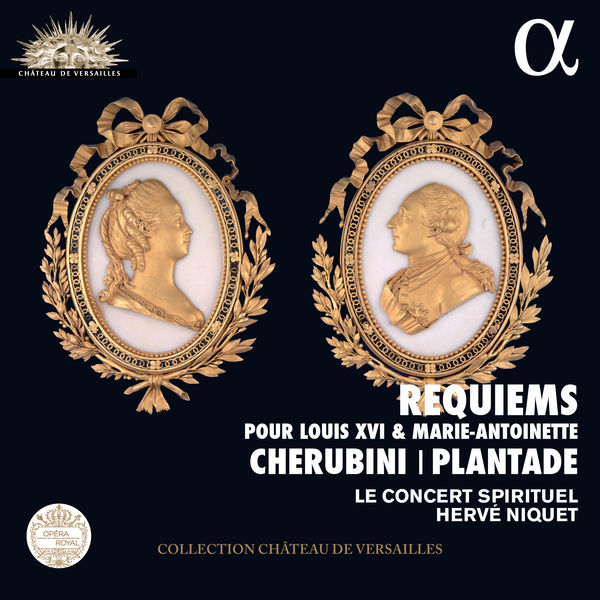
Cherubini / Plantade: Requiems – Hervé Niquet – Le Concert Spirituel (Alpha 2017)

Cherubini / Plantade: Requiems pour Louis XIV and Marie Antoinette Hervé Niquet - Le Concert Spirituel Alpha 2017

Not surprisingly for a Hervé Niquet album, this one is really good. I´m not such a big fan of Cherubini in general, but this one is really with checking out.

My rating: 4 stars

I´ll skip the opera section, as I´m not really an opera expert in the first place, and didn’t find anything too interesting in this section to try out.

Orchestral

Haydn: Il Distratto – Haydn 2032 no. 4 – Giovanni Antonini – Il Giardino Armonico

Haydn 2032 no. 4 Il Distratto Giovani Antonini Il Giardino Armonico

Antonini´s Haydn is as good as ever. This has the potential of being the reference Haydn cycle of the 21st century (but we´ll have to wait another 15 years to find out). See my review of vol. 3. My rating: 4 stars (this is absolute 5 star playing, but I just can´t get myself to give a Haydn symphony 5 stars…)

I’m going to skip Mahler´s 10 by Dausgaard. I´m not enough of a fan of the 10th (which isn’t a complete symphony in the first place) to be able to give a proper judgment here.

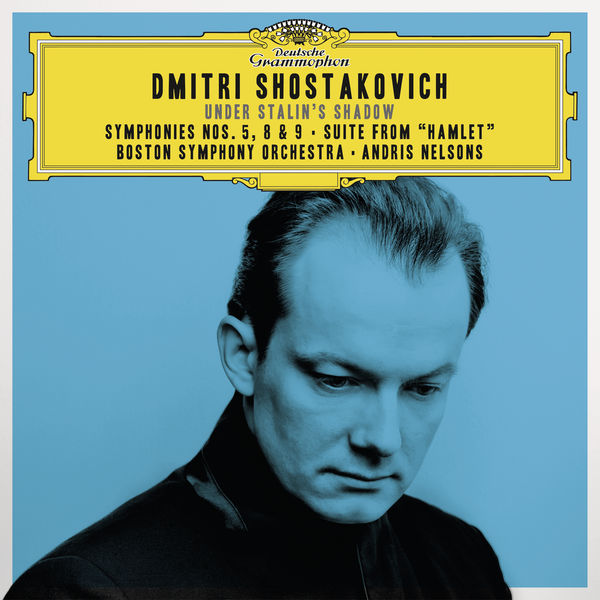
Shostakovich Symphonies No. 5 and 9 – Nelsons – Boston Symphony (DG 2017)


Shostakovich: Symphonies Nos. 5, 8 & 9 - Andris Nelsons - Boston Symphony Orchestra

This was part of my own top 5 albums of 2016, and yes, this is true 5 star territory!

I´m going to skip again over Sibelius 3 & 6 by Vänskä, I´m not familiar enough with Sibelius symphonic work to really be able to judge. But everybody I know that knows something about Sibelius tends to recommend the Vänskä cycle, so I assume there must be something to it.

Vasily Petrenko´s Tchaikovsky get´s a second recommendation here (after the violin concerto which didn’t impress me much). And sorry, the Pathetique again isn´t my cup of tea, so no comment from my side here. Same comment applies to Bychkov´s recording of the same work, you´ll have to look elsewhere for a review of this.

I´m going to skip over Recital and Solo Vocal categories as well. The only album that appealed to me in the former is Anett Fritsch´s Mozart album, which is quite well done, but for me no match to Sabine Devielhe´s solo album last year.

And in the Solo Vocal, Goerne´s Brahms album is a no brainer, as I love his voice, but again I don’t feel comfortable enough properly reviewing Lieder, this is still a territory I need to explore slowly and cautiously. I´m sure I´ll get there eventually

Conclusion

So, there you have it. As you can see from my two posts here, I´m not fully convinced by this year´s selection.

Is there anything you must buy?

I´d say, the only must-haves in this selection are the Shostakovich with Nézet-Séguin, Perahia´s French Suites, and Suzuki´s c-minor mass (with Gardiner´s Matthew Passion just behind).

Faust´s violin concertos, Antonini´s Haydn, and Niquet´s Cherubini are a very good recording of only nice to have (to my ears) music.

I´d probably pass on most of the others.

What do you think? Am I completely off? Anything I´ve missed? Agree? Disagree? Let me know in the comments!

Classical Life

A classical music blog by music critic Tim Mangan

This Week's Music

Making Classical Accessible

From my Macbook to the Net

Evaporation of my thoughts and observations

Elestra

Author: Artienne

My Life in Music

Playing, Singing and Listening

ArsX3

A brand new journal reviewing books, cinema, music

LawrenceEz's Blog

Creative and Performing Arts: Writing, Classical Music, Photography

Laetitia Strauch-Bonart

Contemporary Politics & Culture

sibling revelry

reveling in all things classical

It's A Raggy Waltz

I collect jazz on vinyl, I dig the Dave Brubeck Quartet, & I write about it

La Musica

By two cousins

thejazzbreakfast

Dishing it out from the heart of England

only jazz

random thoughts about music that matters to me

The Culture Project

Exploring the world of literature, wine, art, music and more.

René Spencer Saller

The music causes me to dream of fabulous empires, filled with fabulous sins.

Breaking Baroque

Blog of Tafelmusik Baroque Orchestra and Chamber Choir

Tasting Nirvana

Eating your Dosha

Shadow of Iris

Poetry, fiction, short stories, more ...

The Immortal Jukebox

A Blog about Music and Popular Culture

April Greene

Writer + Editor

a pianist's musings

A history of your favorite classical music.

Classical music for all

Boris Giltburg's blog

I HEAR VOICES

An orchestra seat in the web space