My Reflections on the 2017 Gramophone Awards – Part I

2017 Gramophone Awards

The 2017 Gramophone Awards nominees have been published. As in the two previous years(2015 and 2016, let me add my comments and reflections on the proposed selection.

Overall, this year I was suprised how very few of the recordings I actually knew.

Therefore, this year I’ll only do two overall post on this, unlike the posts per category I did in recent years.

Baroque Instrumental

Bach: Orchestral Suites: Zefiro
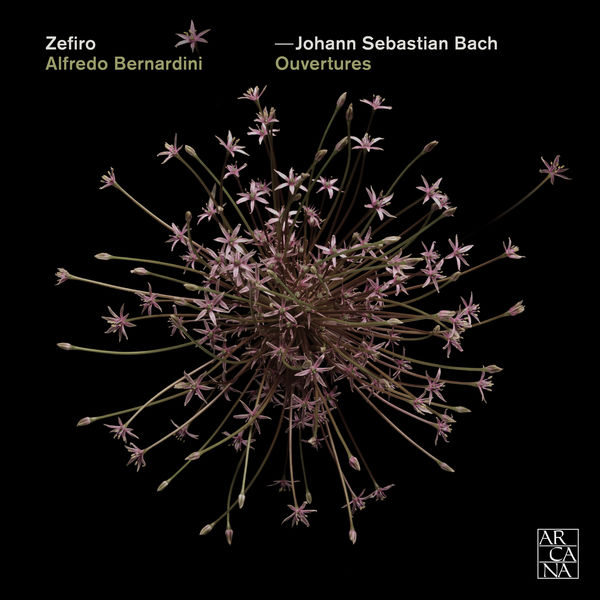
Johann Sebastian Bach: Overtures - Zefiro - Alessandro Bernadini - Arcana - 2017 (24/96)

I very much liked this recording, giving it 4 stars here. Is it good enough for album of the year? Well, maybe.

Bach: Goldberg Variations – Mahan Esfahani

I was never as enthousiastic about this album as was Gramophone, my rating in my review was a lukewarm 3 stars. So definitely not my album of the year.

I haven’t heard any of the other albums, with some Telemann and Vivaldi, but will check in and maybe report back later.


Baroque Vocal

Hyperion doesn’t stream, so I cannot comment about Cohens/Arcangelos cantata album.

Bach: Matthew Passion – Gardiner
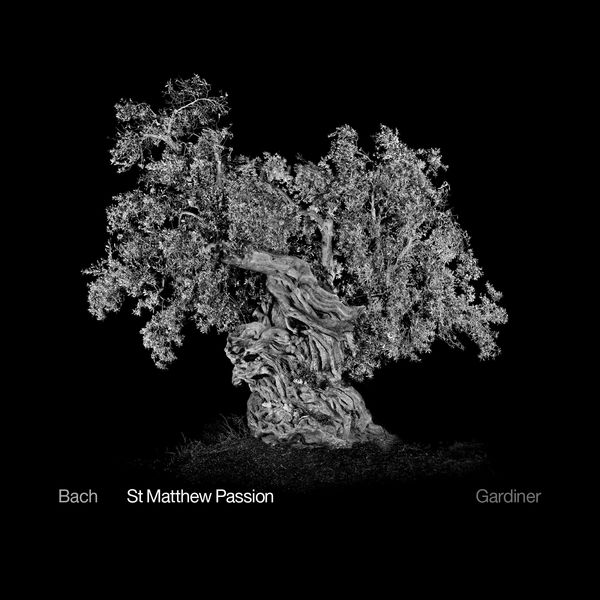
Bach St Matthew Passion John Eliot Gardiner SDG 2017 24/96

As reviewed here, I fully agree that this is a five star album very much worth having.


I haven’t heard any of the other recommended albums, from Blow (never heard that name before), Couperin, Monteverdi and Scarlatti, but will check them out, as they are by Les Arts Florissants and Christophe Rousset among other, that I really admire.

Chamber

I haven’t heard any of the first three recommended albums, as they are all 20th century stuff which really isn’t my cup of tea, from Ades, via Bacewicz, Berg, Schönberg, and Webern. I’ll leave this to others.

I´d be interested in trying the Bruch String Quartets as I have very little chamber music from this composer, but Hyperion doesn´t stream so I have no way of risk free trying.

Then there are two Schubert albums. Quatuors 12 and 15 by the Doric Quartet. I have only heard it once on the radio (again, also Chandos doesn´t stream), and liked it, but wasn´t blown away. Not interesting enough for me to spend money blindly on it.

Finally, there is the Death and the Maiden and a quartet by Sibelius by the Ehnes Quartet. Unfortunately, Onyx is another label that doesn´t stream.

So basically, there´s unfortunately not a lot I can contribute to this category, which I usually love.

Choral

Several albums in here that are just not my cup of tea, eg. Berkeley or Elgar. Even Haydn´s Season, here with Paul McCreesh, is not a piece of music I´m particularly passionate about. Better to shut up then.

I´m more curious about the Cherubini album by Hervé Niquet, I´ll check that one out later today.

There have been a number of recent recordings of Rachmaninov´s All-Night Vigil, and I´m also very interested by this latest recording of John Scott. I will report back on this one as well.

And then there is my highlight of the year:

Mozart: C-minor Mass – Mazaki Suzuki
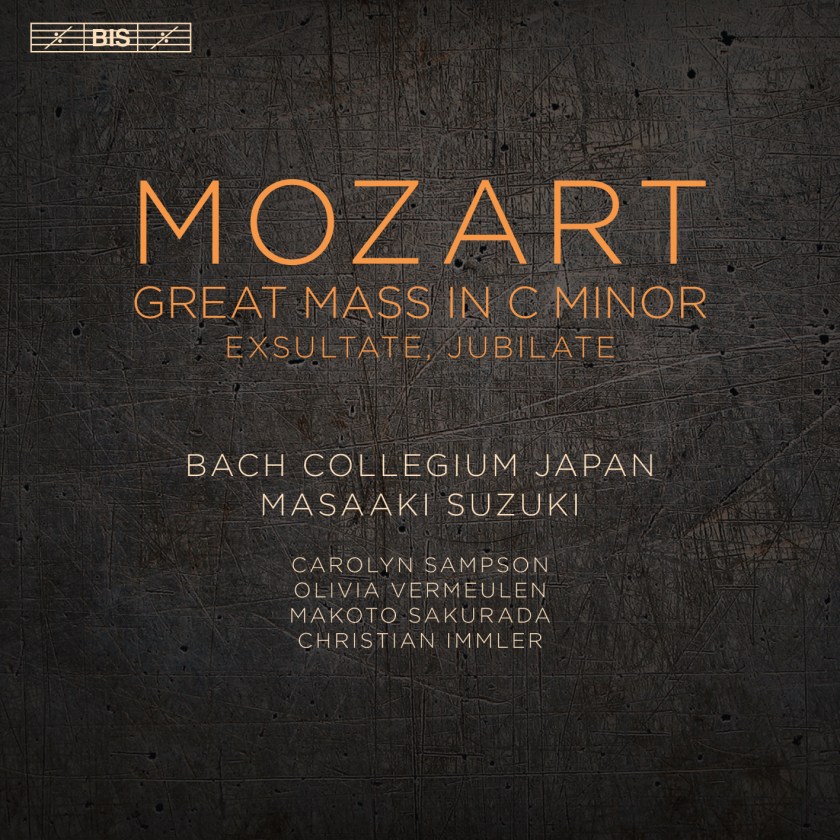
Mozart: Great Mass in C-Minor Exsultate Jubilate Masaaki Suzuki Bach Collegium Japan BIS 2016 24/96

Truly a new reference, see also my review here

Concerto

Let me maybe start by the one recording I can really recommend in here:

Mozart: Violin Concertos – Isabelle Faust

Mozart: Violin Concertos Isabelle Faust Il Giardino Armonico Giovanni Antonini Harmonia Mundi 2016 24/96

I gave it a four star rating, as I don´t consider Mozart´s violin concertos to be essential, but the playing is truly five star.

I´m not a very huge fan of Lisa Batiashvili´s Sibelius and Tchaikovsky album, but this is more due to Barenboim, not Batiashvili´s fault. Augustin Hadelich Tchaikovsky is straightforward, but also not that much my cup of tea.

I will certainly check out Alexandre Tharaud´s Rachmaninov album and report back.

I can´t comment on the albums by Adams and Beach.

I´ll skip the contemporary and early categories, as I don´t feel qualified enough here.


Instrumental

Bach: French Suites – Murray Perahia
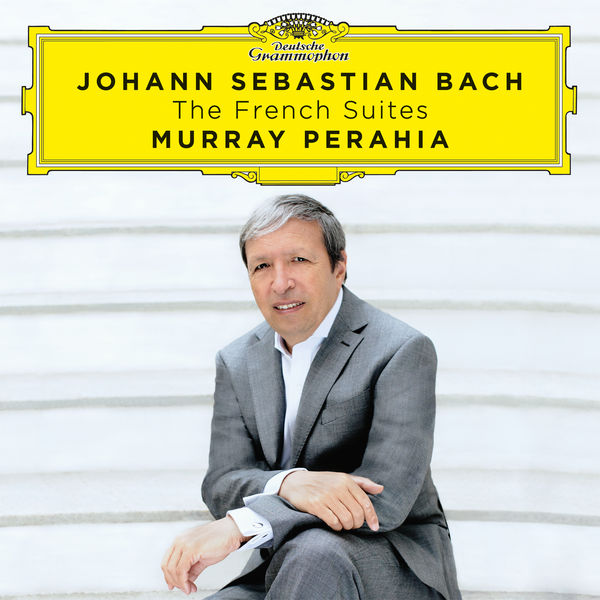
Johann Sebastian Bach: The French Suites - Murray Perahia (24/96) Deutsche Grammophon 2016

Yes, absolutely, great album. A must have. See also here


Bach: Goldberg Variations: Beatrice Rana
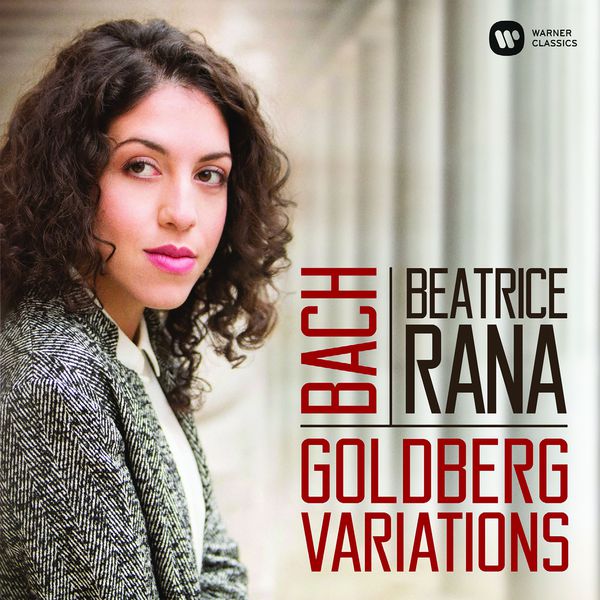
Bach: Goldberg Variations - Beatrice Rana Warner Classics

I´ve now played this album many times, and still haven´t fully made up my mind. I kind of like it, but it´s really not my personal reference.

I´d like to comment about Cedric Tiberghien´s Bartok album and Pavel Koselnikov´s Chopin Mazurkas, but due to Hyperion´s no streaming policy I can´t. Side note: I really understand why labels don´t want to support streaming, as the business model is not very attractive, but on the other hand it really limits discovery. Maybe labels should invent a streaming model where you can listen to an album only 2-3 times and then need to purchase it. I find that album´s I can´t test I often don´t buy.


Liszt: Transcendental Etudes: Daniil Trifonov (Deutsche Grammophon)
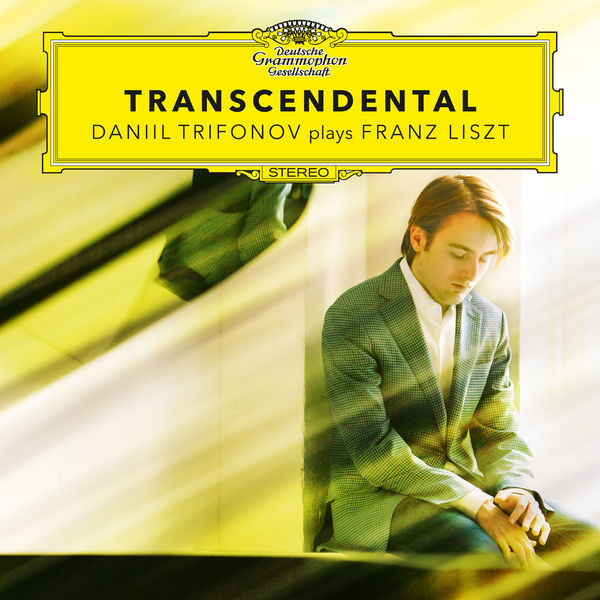
Liszt: Transcendental: Daniel Trifonov Deutsche Grammophon

I haven´t reviewed this album yet, but have listened to it many times. And yes, it is very good, justifying the Artist of the Year he received last year.

Mozart/Schumann: Fantaisies – Piotr Anderszewski (Warner)
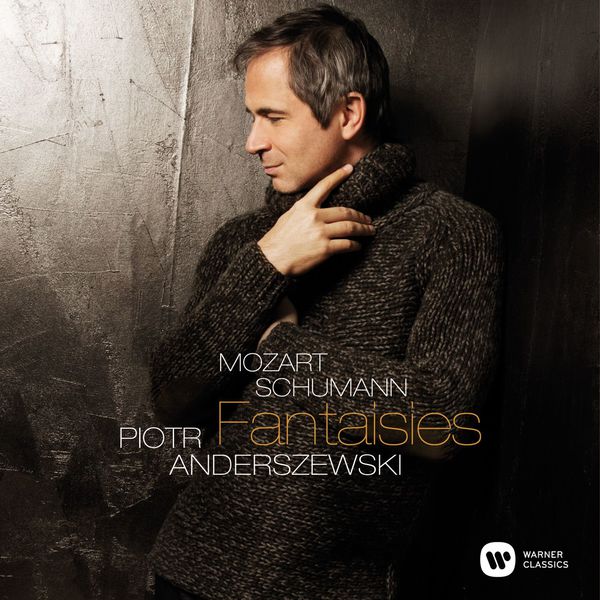
Mozart/Schumann.: Fantaisies - Piotr Anderszewski Warner

I wasn´t such a big fan of Anderszewski´s Bach album that won 2 years ago, but this one (only one listen so far, so beware) sounds really very good. I´ll report back.

Click here for Part II of this article.


One Of My Favorite Handel Oratorios: Il Trionfo Del Tempo E Del Disinganno by Emmanuelle Haïm

Georg Friedrich Händel

I haven’t written that much about Händel yet.

My index (you can find all blog post in relation to any composer on the right, or just do a free text search) shows only 3 articles. Namely, his opera Rinaldo, Christie’s exciting album about Music For Queen Caroline, and, obviously, the Messiah.

This may indicate a lack of interest. Well actually, not at all, Händel is my second favorite baroque composer (JSB takes first place by a large margin).

My “problem” with Händel is that his true masterworks are his operas and oratorios, all of which are quite long, and require quite a long attention span, and time that I don’t always have.

But then again, there truly are pieces that are worth checking out.

Let me write about one of the first I really fell in love with.

Händel: Il Trionfo Del Tempo E Del Disinganno – Emmanuelle Haïm, Il Concert D’Astrée (Erato 2007)


Handel: Il Trinofo Del Tempo E Del Disinganno - Emmanuelle Haïm - Le Concert d'Astree - Natalie Dessay - Ann Hallenberg - Sonia Prina - Pavol Breslik Erato 2007

Il Trionfo Del Tempo E Del Disinganno was Händels very first Oratorio.

I’m not sure you really care about the story. I do speak some Italian and am able to follow, but honestly, like with many of the rather confusing stories (to me) of the baroque operas, you basically have personified Beauty, Pleasure, Time and however you best translate disinganno (probably somewhat around “disillusion”) about their relative merits. The story ends with beauty being frustrated and wanting to become a nun.

So in a nutshell, never mind the story, but just enjoy the outstandingly beautiful music.

Emmanuelle Haïm & Le Concert d’Astrée

Who is playing here?

Emmanuelle Haïm, a French cembalo player, has established herself as one of the leading conductors of baroque music over the last 15 years. She had some great mentors having worked with William Christie and even Simon Rattle. She founded her own baroque ensemble, Le Concert d’Astrée, in 2000. I’ve already written about her outstanding Messiah, and a very beautiful Mozart c-minor mass with Louis Langrée and the same ensemble.

But obviously, an oratorio not only needs outstanding orchestral playing, but also beautiful voices. Nathalie Dessay is truly one of the best baroque singers ever, and Ann Hallenberg and Sonia Prina are of outstanding beauty as well.

One track to look out for is Lascia La Spina, the original version of Lascia ch’io pianga, already mentioned in my post Top 10 Music That Gives Me Goose Bumps.

Again, as mentioned above, you are in for nearly 2h30 of music here, but it is worth taking the time for it.

My review: 4 stars

You can find it here (Prestoclassical)


A pretty useless review of Nézet-Séguin’s Mendelssohn Symphony Box

Spoiler alert

Yes, again no post in 2 weeks, but I assume you don’t want to hear my lame excuses (too much work, family, etc.).

So let me start with a spoiler alert (actually, a bit late given that the title already gives it away), this will be a relatively useless review. I’ll actually be writing only about 2 out of 5 symphonies, and you won’t even get a proper review, just a very subjective “I like it, but”, with out getting any more specific.

Mendelssohn

I haven’t written that much about Mendelssohn yet. And this is not because I don’t like the composer, to the contrary. I adore his Lieder ohne Worte  (Song without Words), and have written about them here.

I also very much like his violin concerto, and have mentioned Janine Jansen’s recording among my 25 Essential Classical albums.

But I haven’t really written about his symphonies yet. Why is that? Well, for once, I really only like symphonies 3 and 4, the Scottish and the Italian. No. 1 and 2 never touched me, and the reformation was with the exception of certain elements also not really my cup of tea.

Furthermore, I have yet to find my preferred set of these two. I still often go back to Christoph von Dohnanyi’s or Claudio Abbado’s old recordings.

I was very hopeful for the recent approach of Heras-Casado with the Freiburgers, but again, wasn’t convinced.

Therefore, I obviously immediately had to check out a new version by Yannick Nézet-Séguin with the COE.

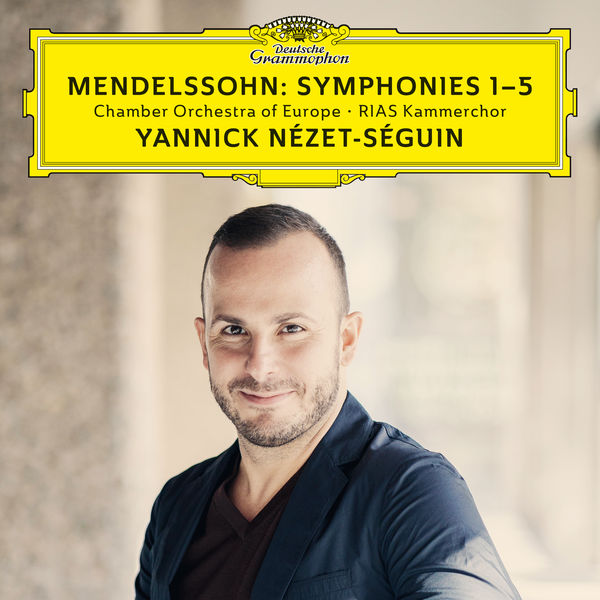
Mendelssohn: The Symphonies – Yannick Nézet-Séguin – Chanber Orchestra of Europe (DG 2017)

Mendelssohn: Symphonies No. 1-5 - Yannick Nézet-Séguin - Chamber Orchestra of Europe - RIAS Kammerchor - Deutsche Grammophon 24/96

It is no secret, I generally like Nézet-Séguin, the dynamic Canadian, and especially so with the COE. Be it for his Cosi Fan Tutte or for example his great Rachmaninov recoring with Daniil Trifonov.

Some critics say he has too many orchestras, having been involved with the COE, the Philadelphia, and the Rotterdam, to just name some, but he still is one of the most promising conductors of our time.

So, after this long intro, what about his Mendelssohn?

As mentioned above, I’m not too familiar with Symphonies 1, 2, and 5, and will leave the judgment to others.

But for 3 and 4, I do have an opinion. I can simply say, after at least 4-5 listenings, this is a 4 star recording to me. Lots of energy, punch at the right places, enough darkness in the Scottish, enough lightness in the Italian (but with a twist).

So what is wrong, why not 5 stars? And here is again where I get useless. There is something missing, but I simply cannot put my finger on it. This will be a version that I’ll go to again many times, but will it be my reference? Probably not.

But then again, as mentioned above, I really don’t have a reference yet. Maybe the seemingly accessible symphonies 3 and 4 have some dirty secret, that just make them impossible to master. I’ll keep looking.

I’m curious what the professional reviewers will be saying (at the time of writing, I haven’t seen any reviews out there yet).

In the meantime, check out this recording. You won’t be disappointed, I promise, in spite of my rather useless review.

My rating: 4 stars

You can find it here (Qobuz) and here (Prestoclassical)

UPDATE Aug 11: In their September issue, Gramophone awards this box a Recording Of The Month. Richard Wigmore is talking about “imaginative, fabulously executed performances” that “guarantee abiding pleasure”.

UPDATE August 26: to add some further confusion: The Guardian give this box a 3 star rating only, calling technically ok but artistically not adding a lot. I guess you’ll really have to make up your own mind on this recording.

UPDATE Sep 3: also only 3 stars from the French Classica. So really your call. In a nutshell: Listen before you buy!

UPDATE Sep 10: Classics Today’s Victor Carr Jr gives 6 out of 10 points for this album, calling it a “rather pathetic drag”.

Quatuor Ebène Plays Mozart & Beethoven – Tonhalle Zürich – June 11, 2017 – A Review

Quatuor Ebène

About a year ago I wrote about Quatuor Ebènes outstanding Schubert recording with Gautier Capuçon. For me, it was the album that should have won the Gramphone awards in 2016 in their category.

My first encounter with this young French quartet was even before that, with their excellent recordings of quartets by Felix and Fanny Mendelssohn.

They really are among the best string quartets out there in 2017, and this is not for a lack of competition.

So I was very pleased when I saw that they’d be coming to Zurich on a day where I’d be close by, yesterday, June 11, 2017

Tonhalle Zürich

A quick word about the Tonhalle Zürich. I’m actually not such a great fan of that venue (Luzern’s modern KKL is much nicer for my taste), but that said, both the big and small concert hall are have their end of 19th century luxury baroque style, and the 1930s incorporation of the old concert halls into the Zurich congress center is an interesting contrast of style.

Quatuor Ebene Tonhalle
Detail of Tonhalle Zürich Lobby


Between the two halls, I quite prefer the smaller one use for chamber music. I’ve had a number of fantastic concerts in here, including the great Quatuor Mosaiques with Haydn.

As a side note, the Tonhalle and the Kongresshaus will be renovated soon, and Zurich is currently preparing the Maag Music Hall in Zurich’s industrial “Kreis 5”, far away from the fancy shores of Lake Zurich, where the Tonhalle is a direct neighbor to the posh Hotel Baur Au Lac, to a completely different environment.

Maag Music Hall
Maag Music Hall back in January 2017


Quatuor Ebène at Tonhalle Zürich, June 11, 2017

But back to the good old Tonhalle.

Quatuor Ebène, dressed in black,  as the name (ebony) implies, started with Mozart.

Quatuor Ebène at Tonhalle Kleiner Saal Jun 11, 2017
Quatuor Ebène

But not with your Kleine Nachtmusik “Happy Mozart”, but with a romantic Sturm and Drang Mozart, the Mozart of Don Giovanni, sharing the same key, d-minor, somehow transporting Mozart directly into the 19th century. There is a lot of chiaroscuro, changing from shadows to the light in this work.

They have recorded this on their 2011 Mozart album, but this live interpretation went beyond what they recorded, there was an enormous passion in the room.

The move to Beethoven felt like a logical next step, with a very intimate connection to the Mozart.

They started with the latest of the “middle quartets”, op. 95, also known as Quartetto Serioso. Unlike some other nicknames like e.g. Moonshine, it appears that this name is genuinely by Beethoven.

It is not the most accessible of the middle quartets, it’s “seriousness” making it one of the most drastic works he’s ever written. This work mentally belongs much more to the late quartets.

Quatuor Ebene put all their energy into this and played as if their lives depended on it. The passion was tangible in the room.

After the break we returned to get the opus magnum of the evening. Just one number later in the list of Beethoven’s string quartets, no. 12 to be precise, op. 127. This work not only has the length of a symphony (and I’m talking Beethoven symphony), but also the power. Who would have thought that only 4 strings can fill a room with so much power?

But there wasn’t only power. The more than 16 minutes long Adagio was all subtleness, which transported the audience out of this world for the moment.

After the final movement, the Swiss audience simply didn’t want to stop clapping, clearly expecting an encore.

At the end, the four musicians came back out, without their instruments this time, explaining in a very friendly way that they felt that after such a work as op. 127, which they compared to the chamber equivalent of Beethoven’s Ode To Joy, there simply wasn’t any music they could play that wouldn’t be out of place.

I couldn’t have said it better.

What a concert. Magnificent


Alexandre Kantorow – A La Russe – Outstanding!

A quick comment on classical reviews

I’ve mentioned this several times before, reviewing classical music is a very subjective business. See examples here and here of cases where professional reviewers disagree a lot about the quality of a recording.

Therefore, it is even more impressive if you find reviews where nearly everybody agrees. Those are the recordings you should truly check out, as these are actually rather rare.

One of these outstanding recordings is the recent Arkadi Volodos recording of Brahms. This album got a “Choc” (i.e. 5 stars) from Classica AND an Album of the Month by Gramophone.

What is even more impressive is that not only these two agree, but 5 other classical reviewers (not counting me) do as well. Classica publishes every month an overview of what the leading critics in the French media (France 3, Le Figaro, Radio Classique, France Musique, and Le Monde) think of a number of recent albums on a scale from “X” (didn’t like at all) to “three hearts” (liked passionately). I check this overview every month, and it is really extremely rare to find that all reviewers give three hearts.

Well, for the Volodos recording, three hearts from all of them. The only outlier I’m aware off is Andrew Clements from the Guardian.

In a nutshell, we have a strong contender here for the piano album of the year (a bit early after only 5 months, but mark my words, I’ll get back to this later).

Why am I writing all this in a review of a completely different album?

Well, a because I just read the overview in the latest Classica, but also because the album I’ll be writing about now is to me the only serious contender for best piano album of the year (again, so far).


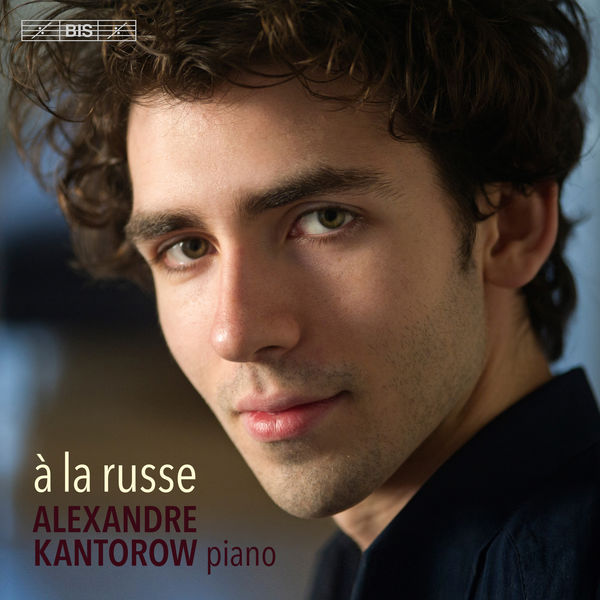
Alexandre Kantorow – A La Russe (BIS 2017)

I first heard about Kantorow, son of the conductor Jean-Jacques Kantorow, from a recent email by Robert von Bahr, the owner of the Swedish independent classical label BIS.

I’m on his mailing list, and on a monthly basis, you’ll get a note about BIS’s most recent releases. Obviously, this being the owner, you have to take his promotional talk with a grain of salt, but actually he has a rather refreshing open style, and more often than not, he can even be sometimes being quite critical of his own releases.

So when I received an email with the following text “I have absolutely no qualms in saying, nay, screaming, that we in ALEXANDRE KANTOROW have a super talent, indeed someone destined for a world career that is now starting (….) Alexandre Kantorow is a genius, and we are going to record as much with him as he can give us“, I at least got curious.

Well, Robert wasn’t overpromising. This album is truly spectacular, and really is so far the only real challenger for Arkadi Volodos this year.

Alexandre Kantorow A La Russe BIS 2017 (24/96)

What do you get? Well, as the title indicates, Russian composers. A sonata by Rachmaninov, some lesser known pieces by Tchaikovsky, and Balakirev’s Islamey.

But to me the absolute highlight of this album is the piano transcriptions of parts of L’Oiseau du Feu (Firebird) by Igor Stravinsky. I’m not a big fan of Stravinsky in general, his music doesn’t speak to me that much.

But here, I cannot be but mesmerized by the mixture of extreme virtuosity and outstanding musicality.

This is a must have album.

My review: 5 stars

You can find it here (eclassical) and here (Qobuz)

A great recording of Bach’s Orchestral Suites by Zefiro

Bach’s Orchestral Suites

I’ve only written once about the Orchestral Suites by Johann Sebastian Bach before, in my 25 Essential Classical Albums. In that brief article, I’ve called them the “pop” music of classical. I still stand by this label, but really don’t mean this in any negative way.

One (or at least me) cannot only listen to advanced intellectually challenging music all day long. You sometimes want stuff that is just enjoyable, including some all time favorites.

The Orchestral Suites, or Overtures, are just that. I can probably (badly) whistle every single note of the well known melodies.

I bet you can too, at least for the second movement of BWV1068. No idea what I’m talking about? Does “Air on a g-string” ring a bell? If not, go to 6:59 in the YouTube Clip below, and I’m sure you’ll go “ahh, that one”.


Yes, that one. Played at numerous weddings and other occasions. Do you now get what I mean by “pop” music?

That said, I can listen to this again, again and again.

Zefiro

Zefiro is an Italian baroque ensemble that I must admit I had never heard of before it popped up among in Gramophone´s April 2017 issue as album of the month.

They are lead by oboist Alfredo Bernadini. I had to check out their website to see that they have already done an impressive number of recordings. I´m surprised I´d never conciously seen them mentioned anywhere so far. I really need to check out more of their recordings.


Bach: Overtures – Zefiro (Outthere Music 2017)

Johann Sebastian Bach: Overtures - Zefiro - Alessandro Bernadini - Arcana - 2017 (24/96)

I actually was not particularly interested when I skimmed through Gramophone’s April issue about a month ago. So, yet another recording of the Orchestral suites? It took me a while to really take notice, as I was very happy with the Freiburger Barockorchester recording mentioned in my 25 Essential albums.

But thanks to streaming, I figured, let´s give it a try at least. And I´m glad I did. This is not a recording that will kick the Freiburgers off their throne, but is very good on its own rights.

The playing is engaging, passionate, and transparent. On top of this great playing, you get two reconstructed movements that you won´t find anywhere else.

This really is a very enjoyable album throughout and I highly suggest you check it out.

My rating: 4 stars

You can find it here (Qobuz) and here (Prostudiomasters)

Volodos Play Brahms – A Fantastic Album

Brahms late solo piano works

Brahms late piano works, starting with the op. 76, but especially his very late works op. 116 – 119 have always been close to my heart.

His piano sonatas, written when he was young, always touched me much less, although I recently found a version I quite liked.

Most of the op. 76 and 116-119 are simply called Klavierstücke, i.e. piano pieces. They are little collections of 4-8 pieces, typically called Cappriccio or Intermezzo, titles that don’t mean a lot.

To me, while I’m well aware that these are composed works, they always reminded me of improvisations. They lack the formal structure of a Beethoven piano sonata, and really just “live in the moment”, if a musical piece can do such a thing.

In a way, they remind me of Keith Jarrett’s solo concertos.

Arcadi Volodos himself calls these pieces “the Summit of piano music”. Brahms himself called op. 117 “lullabies for my sorrows”.

I’ve only written about one recording of these works yet, with Andreas Staier’s excellent recording of op. 118. This is because I was still looking for my favorite version. Murray Perahia and Radu Lupu were both good, I also liked the young French pianist Adam Laloum. But I knew you could do things differently.

Arcadi Volodos

Arcadi Volodos is a Russian pianist and virtuoso. He is pretty well known, but why he doesn’t have more of a reputation escapes me. Maybe it is because he doesn’t search the limelight, and just isn’t present enough in the media.

All of his previous albums were at least good, with some being exceptional, my favorite being Volodos in Vienna, a live recording, and Volodos plays Liszt.

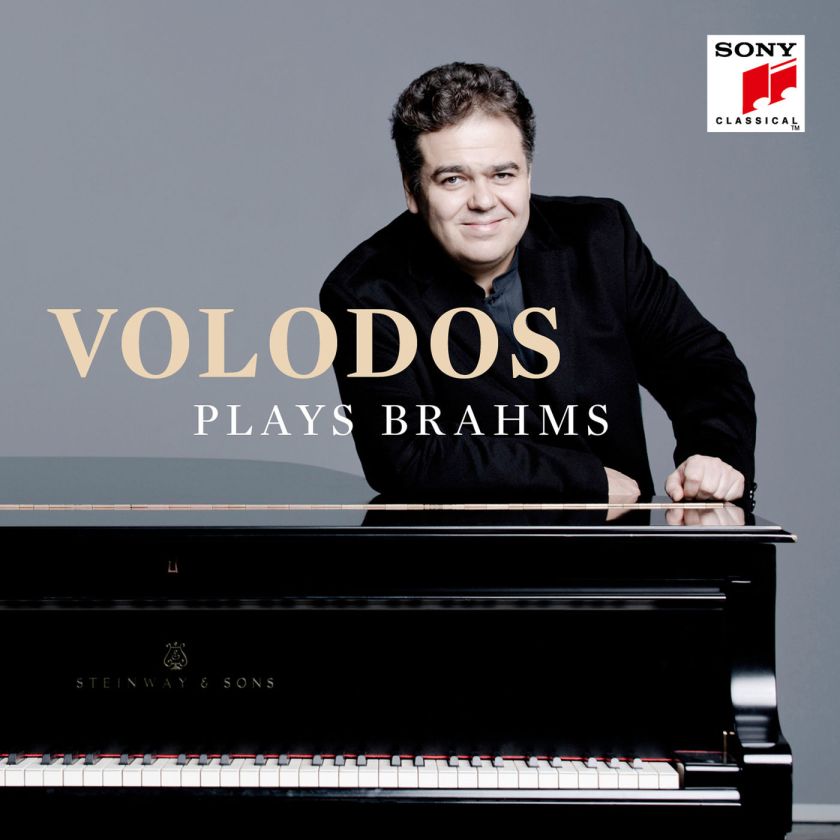
Volodos Plays Brahms

Arcadi Volodos Plays Brahms (24/96) Sony Classical 2017

When I heard this album for the first time, I was a bit puzzled. He really plays these works in a very individual, very different way.

I needed to listen to this at least 5 time before I made up my mind. But now I really just love it. His playing is extremely nuanced, never just showing off the great virtuoso he really is, and in a way, this is probably the recording that gets closest to my idea about playing them like Keith Jarrett plays live.

Nicely enough, the sound quality of this recording matches the musical quality. This was recorded at Berlin’s mythical Teldex Studio, with Volodos playing his personal favorite Steinway. The recording quality captures the intimate nature of these pieces very well.

My rating: 5 stars

Classica agrees by the way, and gives this album a Choc, their highest rating. The Guardian has quite a different opinion, giving it only 3 stars.

You can find it here (Qobuz) and here (HDtracks)


UPDATE May 21: In it’s June 2017 issue, Gramophone agrees and gives this album an Editor’s Choice, and Album of the Month.

UPDATE June 6: Diapason d’or for from Diapason Magazine, and plenty of other good reviews of this album mentioned here.

UPDATE September 10: Jed Distler of Classics Today is also convinced and rates this album 10/10 here.

In a nutshell, while the year is not yet over, this album has very high chances of becoming one of my albums of the year for 2017.

Classical Life

A classical music blog by music critic Tim Mangan

This Week's Music

Making Classical Accessible

From my Macbook to the Net

Evaporation of my thoughts and observations

Elestra

Author: Artienne

My Life in Music

Playing, Singing and Listening

ArsX3

A brand new journal reviewing books, cinema, music

LawrenceEz's Blog

Creative and Performing Arts: Writing, Classical Music, Photography

Laetitia Strauch-Bonart

Contemporary Politics & Culture

sibling revelry

reveling in all things classical

It's A Raggy Waltz

I collect jazz on vinyl, I dig the Dave Brubeck Quartet, & I write about it

La Musica

By two cousins

thejazzbreakfast

Dishing it out from the heart of England

only jazz

random thoughts about music that matters to me

The Culture Project

Exploring the world of literature, wine, art, music and more.

René Spencer Saller

The music causes me to dream of fabulous empires, filled with fabulous sins.

Breaking Baroque

Blog of Tafelmusik Baroque Orchestra and Chamber Choir

Tasting Nirvana

Eating your Dosha

Shadow of Iris

Poetry, fiction, short stories, more ...

The Immortal Jukebox

A Blog about Music and Popular Culture

April Greene

Writer + Editor

a pianist's musings

A history of your favorite classical music.

Classical music for all

Boris Giltburg's blog

I HEAR VOICES

An orchestra seat in the web space